


All Products
-
Thermal Camera Core
-
Thermal Security Camera
-
Plug-in Thermal Camera
-
Cooled Infrared Detectors
-
Cooled Camera Modules
-
Optical Gas Imaging
-
Radiometric Thermal Module
-
High Resolution Thermal Camera Module
-
Thermal Camera For Fever Detection
-
Vehicle Mounted Thermal Camera
-
Integrated Dewar Cooler Assembly
-
Uncooled Infrared Detectors
Contact Person :
Wendy Wang
Phone Number :
+86 27 50185150
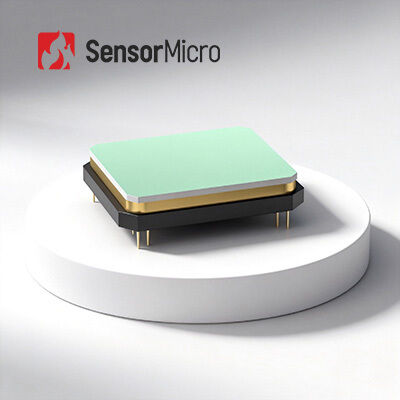
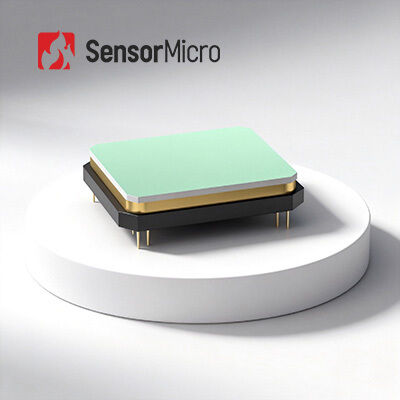
Mega Pixel Large Array Uncooled Infrared Detector with 1280x1024 Resolution and 12μm Pixel Size Using Vanadium Oxide Material

| Place of Origin | Wuhan, Hubei Province, China |
|---|---|
| Brand Name | SensorMicro |
| Certification | ISO9001:2015; RoHS; Reach |
| Model Number | Apex1212C |
| Minimum Order Quantity | 100 Pieces |
| Price | Negotiable |
| Payment Terms | L/C,T/T |
Product Details
| Material | Vanadium Oxide | Resolution | 1280x1024 / 12μm |
|---|---|---|---|
| Type | Ceramic Package | NETD | <35mK |
| Spectral Range | 8~14μm | Size | 31×31×5.1mm(Without Pin) |
| Highlight | Large Array Uncooled Infrared Detectors,Uncooled Infrared Detectors 1280x1024 |
||
Product Description
Mega Pixel Large Array Uncooled Infrared Detectors 1280x1024 12μm Mature Technology
Product Overview
The Apex1212C is a metal-packaged uncooled VOx microbolometer infrared detector featuring large array 1280x1024 resolution with 12μm pixel size. Utilizing international mainstream vanadium oxide material, this long wave infrared sensor delivers outstanding comprehensive performance for demanding applications.
Key Features
- NETD <35mk, High Sensitivity
- Mature Technology
- Stable Performance
- Long Operating Life
- Clear Image Quality & Details
- Strong Environmental Adaptability
Technical Specifications
| Model | Apex1212C |
|---|---|
| Sensitive Material | VOx |
| Package | Ceramic |
| Resolution | 1280*1024 |
| Pixel Size | 12μm |
| Spectral Response | 8μm~14μm |
| NETD | <35mK |
| Output Signal | Built-in 14 bits ADC |
| Thermal Response Time | ﹤12ms |
| Max. Frame Rate | 50Hz |
| Power Consumption | ﹤400mW |
| Size(mm) | 31*31*5.1(Without Pin) |
| Weight(g) | ﹤15 |
| Operating Temperature | -40℃ ~ +85℃ |
Industrial Applications
The Apex1212C uncooled FPA detector is widely used in thermography, security & monitoring, outdoors, law enforcement & rescue, ADAS, and various industrial applications.
About SensorMicro
SensorMicro was founded with a simple but powerful belief: Innovation should serve real-world needs. We empower people and systems to see beyond the surface—into the patterns, problems, and possibilities that lie beneath. By turning invisible heat into visible truth, we help industries make smarter decisions, protect what matters most, and navigate complexity with clarity.
Frequently Asked Questions
What is the difference between uncooled and cooled IR detectors?
There are currently two types of infrared thermal imaging sensors on the market: cooled and uncooled. Uncooled IR detectors operate at ambient temperature and are based on semiconductor technology, allowing for high-volume production with small size and low cost. They are widely used in portable/handheld/mobile devices. Cooled IR detectors are packaged in units that maintain extremely low temperatures using cryo coolers, making them larger, more expensive, and less reliable due to complex cooling systems. However, cooled systems offer incredible sensitivity and typically work with long focal length optics for long-range missions.
Recommended Products
-

-
VIDEO