


All Products
-
Thermal Camera Core
-
Thermal Security Camera
-
Plug-in Thermal Camera
-
Cooled Infrared Detectors
-
Cooled Camera Modules
-
Optical Gas Imaging
-
Radiometric Thermal Module
-
High Resolution Thermal Camera Module
-
Thermal Camera For Fever Detection
-
Vehicle Mounted Thermal Camera
-
Integrated Dewar Cooler Assembly
-
Uncooled Infrared Detectors
Contact Person :
Wendy Wang
Phone Number :
+86 27 50185150
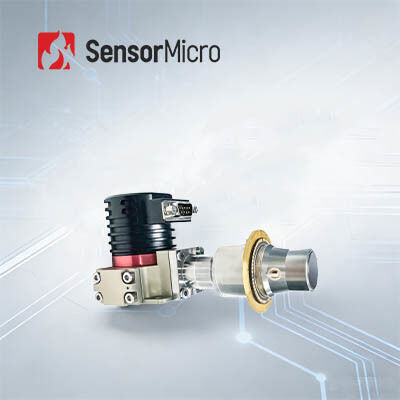
20mK NETD Optical Gas Imaging Detector with 320x256 Resolution and 10.3-10.9μm Spectral Range

| Place of Origin | Wuhan, Hubei Province, China |
|---|---|
| Brand Name | SensorMicro |
| Certification | ISO9001:2015; RoHS; Reach |
| Model Number | LFD330C2 |
| Minimum Order Quantity | 1 Piece |
| Price | Negotiable |
| Payment Terms | L/C,T/T |
Product Details
| *MTTF | ≥10000h | Function | Gas Leak Detection |
|---|---|---|---|
| NETD | 20mK (F1.5) | Detector Resolution | 320x256 |
| Pixel Size | 30μm | Spectral Range | 10.3±0.1μm~10.9±0.1μm |
| Highlight | 10mK NETD MWIR Camera Module,Optical Gas Imaging MWIR Camera Module |
||
Product Description
20mK NETD Optical Gas Imaging Long Wave Infrared Detector for Electric Power Inspection
Sulfur hexafluoride (SF₆) is commonly used in high-voltage power equipment and has a strong greenhouse effect. Ammonia, as a widely used refrigerant in industrial refrigeration systems, is highly toxic and volatile.
The LFD330C2 infrared detector for gas leak detection is developed based on type II superlattice (T2SL) technology, which performs exceptionally well in sensitivity, stability, and integration flexibility. This makes it an ideal choice for detecting gases such as sulfur hexafluoride (SF₆), ammonia, and ethylene.
Main Features
- Advanced Technology: Developed using T2SL technology with high quantum efficiency
- Easy Integration: Supports various interfaces and RAW/YUV image output
- High Sensitivity: Superior detection capabilities for precise gas identification
Product Specifications
| Detector Model | LFD330C2 |
|---|---|
| Resolution | 320*256 |
| Pixel Size | 30μm |
| Spectral Response | 10.3±0.1μm~10.9±0.1μm |
| Typical NETD | 20mK (F1.5) |
| Cooling Time (23℃) | ≤7min@24V |
| Power Consumption (23℃) | ≤25W@24V (Peak) ≤10W@24V (Stable) |
| Size | 142*58.5*71 mm |
| Weight | ≤600g |
| Working Temperature | -45℃~+71℃ |
| Storage Temperature | -55℃~+71℃ |
| MTTF | ≥10000h |
Industrial Applications
The LFD330C2 cooled infrared detector is used for SF₆/NH₃ gas leakage detection and supports detection of 26 types of gases:
- Sulfur hexafluoride
- Anhydrous ammonia
- Cyanoacrylate ethyl ester
- Chlorine dioxide
- Acetic acid
- Freon-12
- Ethylene
- Methyl ethyl ketone
- Acetyl chloride
- Allyl bromide
- Allyl chloride
- Allyl fluoride
- Bromomethane
- Freon-11
- Furan
- Hydrazine
- Methylsilane
- Methylvinyl ketone
- Acrolein
- Propene
- Tetrahydrofuran
- Trichloroethylene
- Uranyl fluoride
- Vinyl chloride
- Vinyl cyanide
Principles of Optical Gas Imaging Technology
With the rapid development of human society and economy and the continuous acceleration of industrialization, a large amount of toxic and harmful gases may leak during production, transportation, and use, causing disasters such as fires and explosions. While polluting the atmospheric environment, it also poses a great threat to personal and property safety.
Optical Gas Imaging (OGI) technology is based on the absorption characteristics of gases toward infrared radiation in specific wavelength bands. By detecting the difference in infrared radiation between gases and the background environment, it achieves visual imaging of leaked gases. This technology can quickly detect the presence of leaked gas without stopping work, accurately locate the source of the leak, promptly detect safety hazards, and avoid accidents.
Frequently Asked Questions
In which industries are focal plane array infrared detectors used?
Infrared focal plane detectors are the core component of thermal imaging systems and are key to detecting, identifying, and analyzing infrared information of objects. They have a wide range of applications in traffic, inspection, security monitoring, meteorology, medicine, and other industries.
What are the characteristics of cooled & uncooled infrared focal plane detectors?
Infrared focal plane detectors can be divided into cooled and uncooled types. Cooled infrared detectors work in a low-temperature vacuum environment with high sensitivity and can distinguish more subtle temperature differences, while uncooled infrared focal plane detectors do not need a cryogenic environment and can work at room temperature.
Recommended Products
