


All Products
-
Thermal Camera Core
-
Thermal Security Camera
-
Plug-in Thermal Camera
-
Cooled Infrared Detectors
-
Cooled Camera Modules
-
Optical Gas Imaging
-
Radiometric Thermal Module
-
High Resolution Thermal Camera Module
-
Thermal Camera For Fever Detection
-
Vehicle Mounted Thermal Camera
-
Integrated Dewar Cooler Assembly
-
Uncooled Infrared Detectors
Contact Person :
Wendy Wang
Phone Number :
+86 27 50185150
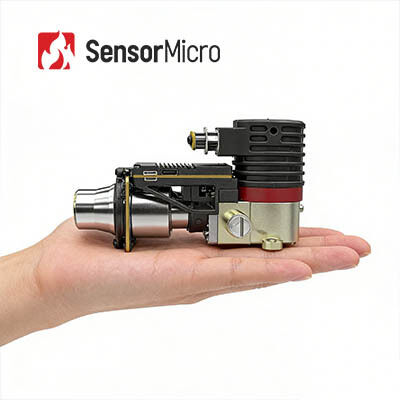
High Sensitivity 320x256 Resolution 30μm Pixel Pitch Cooled Infrared Camera Module for Petrochemical Industry

| Place of Origin | Wuhan, Hubei Province, China |
|---|---|
| Brand Name | SensorMicro |
| Certification | ISO9001:2015; RoHS; Reach |
| Model Number | LFM330Z7 |
| Minimum Order Quantity | 1 Piece |
| Price | Negotiable |
| Payment Terms | L/C,T/T |
Product Details
| Style | Cooled Infrared Module | Resolution | 320x256 / 30μm |
|---|---|---|---|
| NETD | ≤15mK | Spectral Range | 3.2±0.1~3.5±0.1μm |
| Size | 155x67x80mm | Optional Lens | Fixed Zoom |
| Highlight | High Sensitivity Ogi Camera,320x256 Ogi Camera,15mK Ogi Camera |
||
Product Description
High Sensitivity OGI Infrared Camera Module 320x256/30μm for Petrochemical Industry
320x256/30 μm Cooled Gas Leakage Detector Camera with 23mm Lens
LFM330Z7 is a cooled infrared camera module for gas leakage detection. It integrates 320x256 / 30µm cooled MWIR infrared detector to visualize the invisible Carbon monoxide (CO) that cannot be seen by naked eyes.
Gas leakage, especially the harmful Carbon monoxide (CO) is a common gas in high-temperature metallurgy, petroleum refining, and other processes. It is colorless, odorless, easily diffused, and highly toxic. Traditional gas detection methods have large blind spots and high missed detection rates. It is a serious problem that cannot be ignored in safety production. Once these harmful gases escape, people and property will suffer huge losses. Therefore, great attention should be paid to the detection of gas leakage.
Main Features
- Resolution: 320x256
- Pixel Pitch: 30µm
- NETD 10mK (F1.5), High Sensitivity
- Spectral Response: 4.5±0.1μm~4.7±0.1μm
- Support gas enhanced HSM algorithm
- Support various interfaces and RAW/YUV image output
Product Specifications
| Module model | LFM330Z7 |
|---|---|
| Resolution | 320*256 |
| Pixel size | 30μm |
| Spectral response | 4.5±0.1μm~4.7±0.1μm |
| Typical NETD | 10mK (F1.5) |
| Frame rate | 30Hz/60Hz |
| Digital video | Standard: DVP/LVDS/USB2.0 Optional: Cameralink/USB3.0/GigE/SDI/MIPI/Single-mode fiber/Multi-mode fiber |
| Communication | Standard: USB2.0/LV-TTL Optional: RS422/CAN/USB3.0/GigE |
| Cooling time (23 ℃) | ≤8min@12V |
| Stable power consumption (23 ℃) | ≤10W |
| Size (mm) | 142*58.5*80 |
| Weight (g) | ≤680g |
| Working temperature | -40℃~+71℃ |
| Focal length | 23mm/55mm |
Industrial Applications
The LFM330Z7 cooled MWIR infrared camera core has been widely adopted in various industries where CO leaks are a persistent risk, revolutionizing safety monitoring practices:
- In the petrochemical industry, CO leaks often occur during processes such as hydrocarbon combustion, catalytic reforming, and gas storage.
- The metallurgical industry is another major application area. During steelmaking and non-ferrous metal smelting processes, incomplete combustion of fuels generates significant amounts of CO.
- In residential and commercial buildings, CO leaks from gas water heaters, furnaces, and boilers are a common household hazard.
- In scientific research and environmental monitoring, cooled MWIR cameras are used to study CO emission mechanisms and track atmospheric CO distribution.
About Us
Our Vision: To push the boundaries of sensing and transform the way people connect with the world around them.
Our Mission: To harness the power of infrared sensing technology to transform industries worldwide, enabling smarter decisions, safer environments, and a more connected future.
Our Value: To create advanced infrared technology that makes the world a better place.
Frequently Asked Questions
What is infrared thermal imaging?
Infrared thermal imaging is a method which utilizes infrared radiation and thermal energy to gather information about objects. It converts invisible infrared radiation into visible infrared thermal image with temperature distribution of the target surface. Different objects and even different parts of the same object have different radiation ability and infrared reflection strength.
What can infrared imaging be used for?
Infrared imaging has numerous applications including:
- Night vision
- Search & rescue
- Non-destructive test
- Epidemic prevention
- Thermography
- Security & monitoring
- Firefighting
What is thermal imaging module?
A thermal imaging module usually consists of an infrared detector, infrared lens and hardware electronics with software and algorithm embedded. It is the minimum unit of a thermal imaging device.
Recommended Products
