


All Products
-
Thermal Camera Core
-
Thermal Security Camera
-
Drone Thermal Camera
-
Plug-in Thermal Camera
-
Cooled Infrared Detectors
-
Cooled Camera Modules
-
Optical Gas Imaging
-
Infrared Thermal Camera Module
-
High Resolution Thermal Camera Module
-
Thermal Camera For Fever Detection
-
Vehicle Mounted Thermal Camera
-
Integrated Dewar Cooler Assembly
-
Uncooled Infrared Detectors
Contact Person :
Wendy Wang
Phone Number :
+86 27 50185150
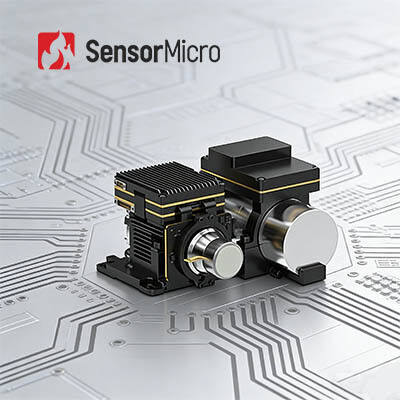
320x256 Cooled Infrared Gas Leak Detection Camera with 30μm Pixel Size and 10mK NETD for Petrochemical Industry

| Place of Origin | Wuhan, Hubei Province, China |
|---|---|
| Brand Name | SensorMicro |
| Certification | ISO9001:2015; RoHS; Reach |
| Model Number | LFM330Z3 |
| Minimum Order Quantity | 1 Piece |
| Price | Negotiable |
| Payment Terms | T/T |
Product Details
| Style | Cooled Infrared Module | Resolution | 320x256 / 30μm |
|---|---|---|---|
| Typical NETD | 10mK (F1.5) | Spectral Range | 3.2±0.1~3.5±0.1μm |
| Frame Rate | 30Hz | Focal Length | 23mm/55mm/25-75mm |
| Highlight | 15mK Infrared Gas Leak Detection,23mm Infrared Gas Leak Detection Camera |
||
Product Description
Petrochemical Industry Infrared Gas Leak Detection Camera With 23mm Lens
Product Overview
320x256/30 μm Cooled Gas Leakage Detector Camera with 23mm Lens for Petrochemical Industry
In the petrochemical industry, gas leak detection scenarios occur frequently. Traditional detection devices have limited detection distance and low detection efficiency, making it difficult to achieve intuitive and accurate identification of common VOCs gas leaks such as methane and benzene.
The LFM330Z3 gas leak detection camera integrates a 320x256/30µm MCT cooled MWIR infrared detector and covers mid wavelength from 3.2 to 3.5μm. This cooled infrared camera module can detect leaks of dozens of volatile organic compounds (VOCs), which are human-made chemicals used in manufacturing paints, and refrigerants, some of which may have adverse health effects.
Designed specifically for VOCs gas leak detection, the LFM330Z3 can remotely and visually detect minor leaks of VOCs gases such as methane, benzene, and ethanol, enabling efficient gas operation monitoring and safety production warning.
By using this thermal module, inspectors can quickly detect harmful gas leakage, playing a crucial role in safe production, efficiency improvement, and cost saving.
Main Features
- Resolution: 320x256
- Pixel Pitch: 30µm
- NETD 10mK, High Sensitivity
- Spectral Response: 3.2µm±0.1µm~3.5µm±0.1µm
- High reliability
- Minor leaks are clearly visible with gas enhanced HSM algorithm
- Multi-scenario application for portable handheld devices or 24/7 online monitoring
- Easy integration with various interfaces and RAW/YUV image output
Product Specifications
| Module model | LFM330Z3 |
|---|---|
| Resolution | 320×256 |
| Pixel size | 30μm |
| Spectral response | 3.2±0.1μm~3.5±0.1μm |
| Typical NETD | 10mK (F1.5) |
| Frame rate | 30Hz |
| Digital video | Standard: DVP/LVDS/USB2.0 Optional: Cameralink/USB3.0/GigE/SDI/MIPI/Single-mode fiber/Multi-mode fiber |
| Communication | Standard: USB2.0/LV-TTL Optional: RS422/CAN/USB3.0/GigE |
| Cryocooler | RS058I | LS713 | LS734 |
| Cooling time (23 ℃) | ≤8min@12V | ≤6.5min@12V | ≤6.5min@24V |
| Stable power consumption (23 ℃) | ≤10W | ≤11W | ≤16W |
| Size (mm) | 142×58.5×80 | 108×116×73 | 130×131×80 |
| Weight (g) | ≤680 | ≤800 | ≤1610 |
| Working temperature | -40℃~+71℃ |
| Focal length | 23mm/55mm/25-75mm |
Industrial Applications
The LFM330Z3 gas leak detection thermal imaging camera is used for visualizing invisible VOCs (volatile organic compounds) and detecting gas leakage including:
Methane, Ethane, Propane, Butane, Pentane, Hexane, Heptane, Octane, Ethylene, Propylene, Isoprene, Methanol, Ethanol, Butanone, Benzene, Xylene, Ethylbenzene and many others.
Product Advantages
Diverse Product Portfolio: A wide range of product formats including infrared detectors, camera cores, and modules to meet various integration requirements.
Rich Product Variety: Multiple array resolutions, pixel sizes, wavebands, and lens options combinations provide greater flexibility for diverse applications.
Outstanding Performance: Clear imaging, compact size, low power consumption, high sensitivity, and strong reliability—designed to perform under a wide range of environmental challenges.
Easy Integration: Multiple interface options make integration straightforward and enable rapid development across multiple application fields.
Frequently Asked Questions
What are the advantages of uncooled infrared detectors?
Uncooled infrared focal plane detectors do not need cooled devices and can work at room temperature. They offer advantages including fast start-up, low power consumption, small size, light weight, long life, and low cost.
What are the key considerations for an infrared detector/thermal module for your application?
- The detector resolution
- The pixel size
- The NETD
- The image quality
- The lens options
- The power consumption
- The size and weight
- The mechanical & electrical interface
- The budget
Recommended Products
