


All Products
-
Thermal Camera Core
-
Thermal Security Camera
-
Plug-in Thermal Camera
-
Cooled Infrared Detectors
-
Cooled Camera Modules
-
Optical Gas Imaging
-
Radiometric Thermal Module
-
High Resolution Thermal Camera Module
-
Thermal Camera For Fever Detection
-
Vehicle Mounted Thermal Camera
-
Integrated Dewar Cooler Assembly
-
Uncooled Infrared Detectors
Contact Person :
Wendy Wang
Phone Number :
+86 27 50185150
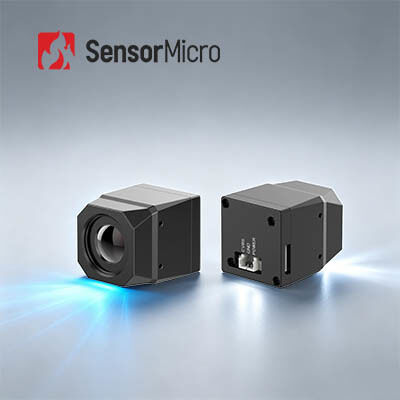
640x512 Resolution Uncooled Thermal Camera Module with 8~14μm Spectral Range and 30mK NETD

| Place of Origin | China |
|---|---|
| Brand Name | SensorMicro |
| Certification | ISO9001:2015; RoHS; Reach |
| Model Number | MICO612 |
| Minimum Order Quantity | 1 Piece |
| Price | Negotiable |
| Payment Terms | T/T |
Product Details
| Resolution | 640x512 / 12μm | NETD | ≤30mK/F1.0/25℃ |
|---|---|---|---|
| Camera Lens | Multiple Available | Frame Rate | 25Hz/30Hz/50Hz |
| Analog Video | PAL(default) / NTSC | Spectral Range | 8~14μm LW |
| Highlight | LWIR Thermal Surveillance Camera,Surveillance LWIR Camera Module,Uncooled LWIR Camera Module 640x512 |
||
Product Description
Uncooled Thermal Surveillance LWIR Camera Module 640x512 8~14μm LW
Product Overview
LWIR 640x512 / 12μm Uncooled Thermal Camera Module for Security and Monitoring
The MICO612 ultra-compact infrared camera core integrates a 640×512 mainstream resolution infrared detector, multiple options of optical lens, image processing board, and robust structural frame. It transmits analog or digital video to backend platforms for integration. With larger array, the MICO612 meets various needs of different customers.
Main Features
- Mainstream Compatibility, Cost-Effective
• Equipped with self-developed mainstream 640×512/12μm wafer-level infrared detector, allowing wide adoption
• Integrated with a dedicated ASIC chip for high energy efficiency - Optimized SWaP Design
• Sectional dimension: only 22.2×22.2×27.2mm (excluding lens)
• Weighing just 30.3±2g
• Low power consumption: 680mW - Easy Development & Quick Integration
• Native analog video or digital video output, supporting both CVBS /USB/MIPI standards--no additional development required
• Easy mounting with minimal structural design effort
Product Specifications
| Model | MICO612 |
|---|---|
| IR Detector | Sensitive Material: VOx |
| Resolution: 640×512 | |
| Pixel Size: 12µm | |
| NETD: ≤30mK/F1.0/25℃ | |
| Spectral Response: 8~14μm | |
| Optical Lens | Focus/F#: 4.8/F1.0 | 9.1mm/F1.0 | 13mm/F1.0 |
| FOV: 91°(H)×73°(V) | 47.7°(H)×38.2°(V) | 33°(H)×26°(V) | |
| Detection Range (8 pixels): 99m (5'11" tall person) 360m (4m×3m vehicle) | |
| Type: Fixed Focus Athermal First lens sealing/coating: IP67 | |
| Image Processing | Analog Video: PAL(default) / NTSC |
| Digital Video: USB / MIPI | |
| Frame Rate: 25Hz/30Hz/50Hz | |
| Start-up Time: ≤6s Image Algorithm: NUC/DRC/DNS/DDE/SFFC Pseudo Color: 11 types - customizable | |
| Electrical Interface | Standard External Interface: 3PIN interface (A1251-WV-S-3P) | 9PIN interface(A1251-WV-S-9P) | 26PIN interface(DF56C-26S-0.3V-51) |
| Video Interface: CVBS | USB | MIPI | |
| Power Supply | Supply Voltage: DC: 5V~24V |
| Steady Power Consumption: ≤680mW@5V, 23±3℃ | |
| Mechanical | Size: 22.2mm×22.2mm×27.2mm (L×W×H) |
| Weight: 30.3±2g | |
| Environmental Adaptability | Operating Temperature: -40℃~+70℃ |
| Storage Temperature: -45℃~+85℃ | |
| Humidity: 5%~95%, non-condensing | |
| Vibration: Random Vibration, 5.35grms, 3-axis | |
| Impact: Half Sine Wave, 40g/11ms, 3 Axis, 6 Direction Certification: RoHS2.0/Reach |
Industrial Applications
The MICO612 thermal camera module can be integrated into security cameras with temperature monitoring from short distance to ultra distance, such as PTZ Camera, Box Camera, Speed Dome Camera.
Customized Service
- Product Customization: Adjust configurations and adapt algorithms to meet industry-specific requirements
- On-Site Technical Support & Training: Provide core customers with hands-on system setup and operational training
- Joint Innovation for New Products & Markets: Collaborate with customers to co-develop innovative infrared application solutions
Frequently Asked Questions
How does an infrared detector work?
Infrared detectors work by sensing electromagnetic radiation in the infrared range. The exact mechanism of detection varies depending on the type of infrared detector.
Thermal detectors work by measuring the temperature change caused by absorbing the infrared radiation. For example, microbolometers consist of a matrix of tiny resistive elements that are sensitive to heat. When infrared radiation is absorbed by the detector, it causes the temperature of the resistive element to increase, resulting in a change in electrical resistance that can be detected and converted into an image.
Photon detectors, on the other hand, work by converting photons from the infrared radiation into electrical signals. Two common types of photon detectors are photovoltaic detectors and photoconductors. Photovoltaic detectors generate a voltage when infrared photons are absorbed, while photoconductors increase their conductivity when photons are absorbed.
Infrared detectors can also utilize other detection mechanisms, such as pyroelectricity, where changes in temperature induce a charge in a material, or thermoelectric effects, where a temperature difference between two materials generates a voltage.
The output signal from the infrared detector can be processed and displayed as an image, which can be used for a variety of purposes, such as thermal imaging in medical or industrial applications, remote sensing of the environment, and thermal scanning in security systems.
Recommended Products
