


All Products
-
Thermal Camera Core
-
Thermal Security Camera
-
Plug-in Thermal Camera
-
Cooled Infrared Detectors
-
Cooled Camera Modules
-
Optical Gas Imaging
-
Radiometric Thermal Module
-
High Resolution Thermal Camera Module
-
Thermal Camera For Fever Detection
-
Vehicle Mounted Thermal Camera
-
Integrated Dewar Cooler Assembly
-
Uncooled Infrared Detectors
Contact Person :
Wendy Wang
Phone Number :
+86 27 50185150
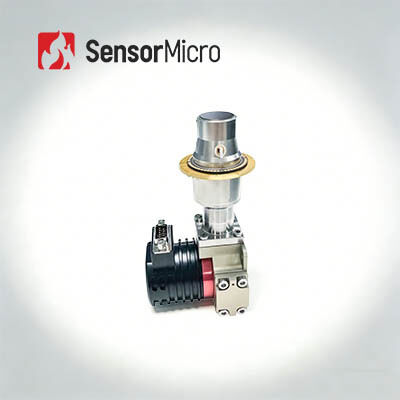
High Sensitivity 320x256/30μm 10mK NETD MWIR Cooled Infrared Detector for CO₂ Gas Leak Detection

| Place of Origin | Wuhan, Hubei Province, China |
|---|---|
| Brand Name | SensorMicro |
| Certification | RoHS; Reach |
| Model Number | LFD330Z6 |
| Minimum Order Quantity | 1 Piece |
| Price | Negotiable |
| Payment Terms | L/C,T/T |
Product Details
| Function | Gas Leak Detection | Cooling Time (23 ℃) | ≤7min@12V |
|---|---|---|---|
| Detector Resolution | 320x256 | Pixel Size | 30μm |
| NETD | 10mK (F1.5) | Spectral Range | 4.2±0.1~4.4±0.1μm |
| Highlight | LS734 Thermal Imaging Sensor,LS734 Thermal Imaging Sensor,Gas Leak Detection MWIR Imaging Sensor |
||
Product Description
High Sensitive 320x256/30μm MWIR Cooled Infrared Detector for CO₂ Gas Leak Detection
Product Overview
In carbon capture, power equipment operation, and industrial production processes, CO₂ leakage not only leads to the failure of carbon reduction targets, but long-term accumulation may also cause equipment failures. Traditional detection methods are invisible, unsafe, and prone to omission, making it difficult to achieve accurate detection.
The LFD330Z6 infrared detector for gas leak detection provides high-precision and sensitive detection. It professionally targets extremely low concentration CO₂ leakage scenarios, achieving non-contact, long-distance, and visual leakage positioning to overcome the shortcomings of traditional detection methods. CO₂ can also be used as a tracer gas for indirect detection of hydrogen gas, further expanding the equipment's application capabilities.
Main Features
- Optical Gas Imaging: Long-range non-contact detection with high efficiency, security, and wide coverage for gas leak detection
- High Sensitivity: Cooled infrared detector technology provides exceptional performance for low gas concentration and slow gas flow applications
- Easy Integration: Supports various interfaces and RAW/YUV image output formats
Product Specifications
| Detector model | LFD330Z6 |
|---|---|
| Resolution | 320*256 |
| Pixel size | 30μm |
| Spectral response | 4.2±0.1μm~4.4±0.1μm |
| Typical NETD | 10mK (F1.5) |
| Cooling time (23 ℃) | ≤7min@12V |
| Power consumption (23 ℃) | ≤15W@12V (Peak) ≤7W@12V (Stable) |
| Size (mm) | 142*58.5*71 |
| Weight (g) | ≤600 |
| Working temperature | -45℃~+71℃ |
| Storage temperature | -55℃~+71℃ |
| MTTF | ≥10000h |
Industrial Applications
The LFD330Z6 gas leak detection thermal imaging detector provides reliable visualization of invisible CO₂ plumes even in harsh environments. Applications include: Carbon Capture, Utilization and Storage (CCUS), Enhanced Oil Recovery (EOR), Power Generation Industry, Food & Beverage Industry, Semiconductor & Electronics Manufacturing, Greenhouse Agriculture, Waste Treatment & Biogas Plants, and more.
Our Strengths
- Diversified Product Portfolio
- Deep Technical Expertise
- Rigorous Reliability Validation Ensures Quality Assurance
- Focused on Innovation and Practical Implementation in Infrared Sensing
- Professional Technical Support and Joint Development Services
Frequently Asked Questions
What is thermal sensitivity?
Thermal Sensitivity, also known as NETD (Noise Equivalent Temperature Difference), is a key parameter for evaluating medium wave (MWIR) and long wave (LWIR) thermal imaging cameras. It directly relates to the clarity measured by the thermal imager and represents the signal-to-noise ratio of the temperature difference measured in milliKelvins (mK). The smaller the thermal sensitivity value, the higher the sensitivity and the clearer the image.
What are the applications of thermal imaging?
Temperature measurement and all-weather imaging are two basic functions of infrared thermal imaging technology. Products developed based on these technologies are widely used in security & monitoring, payloads, industrial inspection, firefighting, predictive maintenance, ADAS, epidemic prevention, AIoT, and many other fields.
Recommended Products
