


All Products
-
Thermal Camera Core
-
Thermal Security Camera
-
Plug-in Thermal Camera
-
Cooled Infrared Detectors
-
Cooled Camera Modules
-
Optical Gas Imaging
-
Radiometric Thermal Module
-
High Resolution Thermal Camera Module
-
Thermal Camera For Fever Detection
-
Vehicle Mounted Thermal Camera
-
Integrated Dewar Cooler Assembly
-
Uncooled Infrared Detectors
Contact Person :
Wendy Wang
Phone Number :
+86 27 50185150
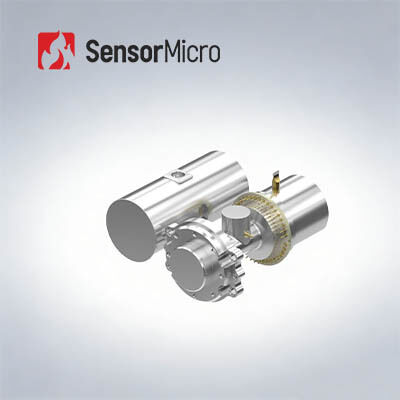
3.2μm~3.5μm MWIR Cooled FPA Infrared Detector with 640x512 Resolution for Methane Gas Leak Detection

| Place of Origin | Wuhan, Hubei Province, China |
|---|---|
| Brand Name | SensorMicro |
| Certification | RoHS; Reach |
| Model Number | LFD615HZ3 |
| Minimum Order Quantity | 1 Piece |
| Price | Negotiable |
| Payment Terms | L/C,T/T |
Product Details
| Spectral Range | 3.2±0.1~3.5±0.1μm | Weight (g) | ≤235g |
|---|---|---|---|
| Function | Gas Leak Detection | Size (mm) | Compressor: φ26×56; Dewar: φ40×71 |
| Detector Resolution | 640x512 | Pixel Size | 15μm |
| Highlight | 5um MWIR Thermal Imaging Sensor,Non Contact MWIR Imaging Sensor,MCT Optical Gas Imaging Sensor |
||
Product Description
3.2μm~3.5μm MWIR Cooled FPA Infrared Detector for Methane Gas Leak Detection
Product Overview
Volatile organic compounds (VOCs), widely distributed in industries such as petrochemicals, are easily volatile, flammable, explosive, and toxic. Traditional detection methods generally have shortcomings such as short detection distance, limited search range, and difficulty in intuitive detection.
Long distance, wide range, and visualization are the unique advantages of infrared gas imaging technology compared to traditional detection techniques.
LFD615HZ3 infrared detector for gas leak detection is based on the industry-leading T2SL technology route and HOT device technology, with prominent SWaP³ performance advantages, achieving more accurate leak detection performance, comprehensively covering common VOCs gas types, and greatly improving the level of safe operation.
Main Features
- SWaP³ optimization - Smaller size, lighter weight, lower power consumption
- Clear & identifiable leakage - 640×512 resolution, support gas enhanced HSM algorithm (for module)
- High reliability & high sensitivity
- Easy integration - Support various interfaces and RAW/YUV image output
- Full scene coverage - Support various scenarios such as handheld and long-term online use
Product Specifications
| Detector model | LFD615HZ3 |
|---|---|
| Resolution | 640×512 |
| Pixel size | 15μm |
| Spectral response | 3.2±0.1μm~3.5±0.1μm |
| Typical NETD | 25mK (F1.5) |
| Cooling time (23 ℃) | ≤3.5min@20℃@12V |
| Stable power consumption (23 ℃) | ≤4W |
| Size (mm) | Compressor φ26×56; Dewar φ40×71 |
| Weight (g) | ≤235g |
| Working temperature | -45℃~+71℃ |
| Storage temperature | -55℃~+71℃ |
| MTTF | ≥30000h |
Industrial Applications
The LFD615HZ3 gas leak detection cooled MWIR thermal imaging detector is used for customers who have strong development ability. By integrating this cooled thermal sensor, the invisible VOCs (volatile organic compounds) can be detected and visualized so that further damage can be avoided.
These gases include: Methane, Ethane, Propane, Butane, Pentane, Hexane, Heptane, Octane, Ethylene, Propylene, Isoprene, Methanol, Ethanol, Butanone, Benzene, Xylene, Ethylbenzene, etc.
Technological Advantages of Optical Gas Imaging
- Non-contact & remote detection - Stay away from dangerous and complex areas, conduct non-contact non-destructive testing to ensure personnel safety
- Quickly locate the leakage source - Support wide area real-time detection and quickly locate the leakage source, so that production will not be interrupted
- Visualize gas leakage - Intuitively display the location of leakage with high efficiency to avoid point-by-point inspection
- Improve inspection safety - Safer detection helps reduce the risk of accidents and minimize operational losses
Frequently Asked Questions
What is the difference between low light, active IR and thermal imaging?
Low light needs natural light and transforms weak natural light image into enhanced electronic image through image intensifier;
Active IR actively emits infrared light and uses infrared beam reflected by the target. It has very poor concealment;
Thermal imaging doesn't need any light and is a passive infrared night vision that detects infrared radiation difference between targets and scene or different parts of an object. not be affected by the changes of the surrounding lighting conditions, during night or even in fog, rain and other harsh environments.
Can you block thermal imaging?
In most cases, you cannot. But infrared rays can't penetrate walls, and also the glass can block IR. So, if you don't want to be detected, you can conceal behind glass or walls to block the thermal imaging.
Recommended Products
