


All Products
-
Thermal Camera Core
-
Thermal Security Camera
-
Plug-in Thermal Camera
-
Cooled Infrared Detectors
-
Cooled Camera Modules
-
Optical Gas Imaging
-
Radiometric Thermal Module
-
High Resolution Thermal Camera Module
-
Thermal Camera For Fever Detection
-
Vehicle Mounted Thermal Camera
-
Integrated Dewar Cooler Assembly
-
Uncooled Infrared Detectors
Contact Person :
Wendy Wang
Phone Number :
+86 27 50185150
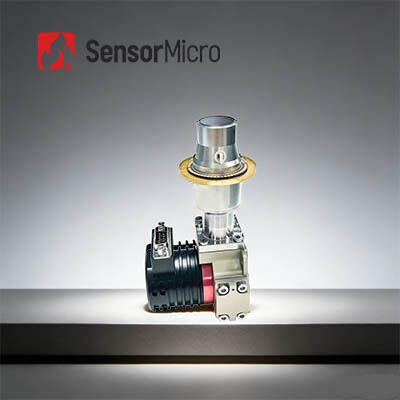
Cooled MWIR Infrared Thermal Imaging Detector with 320x256/30μm for High Temperature Flame Penetration

| Place of Origin | Wuhan, Hubei Province, China |
|---|---|
| Brand Name | SensorMicro |
| Certification | RoHS; Reach |
| Model Number | LFD330Z5 |
| Minimum Order Quantity | 1 Piece |
| Price | Negotiable |
| Payment Terms | L/C,T/T |
Product Details
| Spectral Range | 3.8±0.1~4.1±0.1μm | Function | Gas Leak Detection |
|---|---|---|---|
| Size (mm) | 142×58.5×71 | Detector Resolution | 320x256 |
| Pixel Size | 30μm | NETD | 20mK (F3) |
| Highlight | Rotary Stirling Cooler Thermal Imaging Sensor,Cooled MWIR Thermal Imaging Sensor |
||
Product Description
Cooled MWIR Infrared Thermal Imaging Detector 320x256/30μm
Designed for high-temperature observation in flame environments, this detector converts 3.8~4.1μm infrared radiation into electrical signals for precise thermal imaging.
Product Overview
In industrial environments like metallurgy and petrochemical plants, traditional detection methods struggle with high-temperature combustion areas and strong flame interference. The LFD330Z5 infrared detector overcomes these challenges with specialized flame penetration capabilities.
Key Applications
Temperature monitoring in petrochemical plants and refineries, providing accurate imaging of high-temperature surfaces including furnaces, furnace walls, and heating furnaces.
Main Features
- Optical Gas Imaging: Long-range non-contact detection with efficient, secure wide-range coverage
- High Sensitivity: Cooled infrared detector technology for precise temperature measurement
- High Reliability & Easy Integration: Supports various interfaces and RAW/YUV image output
- Wide Application Scenarios: Suitable for handheld, mobile, or fixed platform integration
Technical Specifications
| Detector model | LFD330Z5 |
| Resolution | 320×256 |
| Pixel size | 30μm |
| Spectral response | 3.8±0.1μm~4.1±0.1μm |
| Typical NETD | 20mK (F3) |
| Cooling time (23℃) | ≤7min@12V |
| Power consumption (23℃) | ≤15W@12V (Peak) ≤7W@12V (Stable) |
| Size (mm) | 142×58.5×71 |
| Weight (g) | ≤600 |
| Working temperature | -45℃~+71℃ |
| Storage temperature | -55℃~+71℃ |
| MTTF | ≥10000h |
Industrial Applications
The LFD330Z5 cooled MWIR thermal imaging detector is designed for customers with strong development capabilities. It enables rapid detection of high-temperature surfaces in challenging industrial environments, significantly improving inspection efficiency while reducing operational risks.
Core Technology
SensorMicro is one of China's earliest companies researching antimonide-based Type-II superlattice (T2SL) cooled infrared detectors, pioneering domestic mass production and engineering applications.
Technological Leadership
Leading SWaP³ technology development with advanced capabilities in large-format arrays, small pixels, high-temperature operation, miniaturization, high performance, and low power consumption.
Complete Supply Chain
Integrated technology from chip design and cooler manufacturing to high vacuum packaging ensures stable supply, reliable quality, and significant cost advantages.
Frequently Asked Questions
How does uncooled focal plane array microbolometer work?
Using the principle of infrared radiant thermal effect, uncooled infrared detectors convert infrared radiation energy into heat energy through infrared absorption material. This temperature change alters physical parameters of the sensitive material, which are then converted into electrical signals for object detection.
What's the advantage of uncooled infrared detector?
Uncooled infrared focal plane detectors operate at room temperature without Integrated Dewar Cooler Assembly (IDCA) devices. They offer fast startup, low power consumption, compact size, light weight, long lifespan, and lower cost. While sensitivity is lower than cooled detectors, their cost-performance ratio makes them suitable for broader applications.
Recommended Products
