


All Products
-
Thermal Camera Core
-
Thermal Security Camera
-
Plug-in Thermal Camera
-
Cooled Infrared Detectors
-
Cooled Camera Modules
-
Optical Gas Imaging
-
Radiometric Thermal Module
-
High Resolution Thermal Camera Module
-
Thermal Camera For Fever Detection
-
Vehicle Mounted Thermal Camera
-
Integrated Dewar Cooler Assembly
-
Uncooled Infrared Detectors
Contact Person :
Wendy Wang
Phone Number :
+86 27 50185150
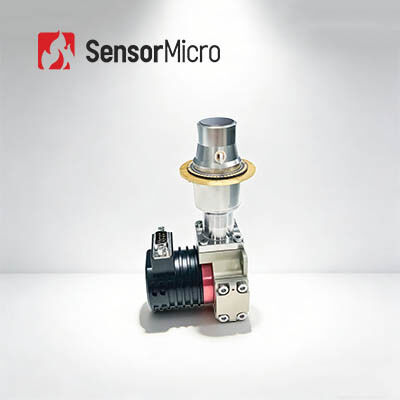
MWIR Cooled Thermal Imaging Detector with 320×256/30μm for High Inspection Efficiency

| Place of Origin | Wuhan, Hubei Province, China |
|---|---|
| Brand Name | SensorMicro |
| Certification | RoHS; Reach |
| Model Number | LFD330Z5 |
| Minimum Order Quantity | 1 Piece |
| Price | Negotiable |
| Payment Terms | L/C,T/T |
Product Details
| Size (mm) | 142×58.5×71 | Cooling Time (23 ℃) | ≤7min@12V |
|---|---|---|---|
| Detector Resolution | 320x256 | Pixel Size | 30μm |
| NETD | 20mK (F3) | Spectral Range | 3.8±0.1~4.1±0.1μm |
| Highlight | RS058 Cooled Thermal Imaging Sensor,Alkanes Leak Detection MWIR Sensor |
||
Product Description
MWIR Cooled 320*256/30μm Thermal Imaging Detector for High Inspection Efficiency
The LFD330Z5 infrared detector is specifically engineered for high-temperature observation applications in challenging flame environments. This advanced thermal imaging detector converts infrared radiation from targets within the 3.8~4.1μm wavelength range into electrical signals, enabling effective monitoring where traditional detection methods fail.
Advanced Flame Penetration Capability
In industrial environments such as metallurgy and petrochemical plants, equipment including furnaces, furnace walls, and heating furnaces operate in high-temperature combustion conditions with significant flame interference. The LFD330Z5 detector overcomes these challenges with exceptional flame penetration capabilities, providing clear imaging and accurate monitoring of high-temperature surfaces to significantly improve inspection efficiency and reduce operational risks.
Key Product Features
- Optical Gas Imaging: Long-range non-contact detection with efficient, secure, and wide-ranging coverage
- High Sensitivity: Cooled infrared detector technology delivering exceptional temperature measurement accuracy
- High Reliability & Easy Integration: Supports various interfaces and RAW/YUV image output formats
- Versatile Applications: Suitable for integration across handheld, mobile, and fixed platform configurations
Technical Specifications
| Detector Model | LFD330Z5 |
|---|---|
| Resolution | 320*256 |
| Pixel Size | 30μm |
| Spectral Response | 3.8±0.1μm~4.1±0.1μm |
| Typical NETD | 20mK (F3) |
| Cooling Time (23℃) | ≤7min@12V |
| Power Consumption (23℃) | ≤15W@12V (Peak) ≤7W@12V (Stable) |
| Dimensions | 142*58.5*71 mm |
| Weight | ≤600g |
| Operating Temperature | -45℃~+71℃ |
| Storage Temperature | -55℃~+71℃ |
| MTTF | ≥10000h |
*MTTF: Mean Time To Failure
Industrial Applications
Designed for customers with strong development capabilities, the LFD330Z5 cooled MWIR thermal imaging detector enables rapid detection of high-temperature surfaces in metallurgical and petrochemical environments. By integrating this advanced thermal sensor, operators can quickly monitor furnace chambers and walls, significantly improving inspection efficiency while reducing operational risks.
Optical Gas Imaging Technology Principles
As industrial development accelerates, the risk of toxic and harmful gas leaks during production, transportation, and usage increases, potentially leading to fires, explosions, and environmental pollution. Optical Gas Imaging (OGI) technology leverages the absorption characteristics of gases within specific infrared wavelength bands. By detecting infrared radiation differences between gases and their background environment, OGI achieves visual imaging of leaked gases without requiring work stoppages, enabling rapid leak detection, accurate source location, and timely hazard identification.
Frequently Asked Questions
In which industries are focal plane array infrared detectors used?
Infrared focal plane detectors serve as the core component of thermal imaging systems, enabling the detection, identification, and analysis of object infrared information. These detectors find extensive applications across traffic monitoring, industrial inspection, security systems, meteorological analysis, medical diagnostics, and numerous other industries.
What are the characteristics of cooled & uncooled infrared focal plane detectors?
Infrared focal plane detectors are categorized into cooled and uncooled types. Cooled infrared detectors operate in low-temperature vacuum environments, delivering superior sensitivity and the ability to distinguish subtle temperature differences. Uncooled infrared focal plane detectors function at room temperature without requiring cryogenic cooling systems.
Recommended Products
