


All Products
-
Thermal Camera Core
-
Thermal Security Camera
-
Plug-in Thermal Camera
-
Cooled Infrared Detectors
-
Cooled Camera Modules
-
Optical Gas Imaging
-
Radiometric Thermal Module
-
High Resolution Thermal Camera Module
-
Thermal Camera For Fever Detection
-
Vehicle Mounted Thermal Camera
-
Integrated Dewar Cooler Assembly
-
Uncooled Infrared Detectors
Contact Person :
Wendy Wang
Phone Number :
+86 27 50185150
Cooled MWIR Infrared Detector with 320x256/30μm for Flame Penetration in High-Temperature Environments

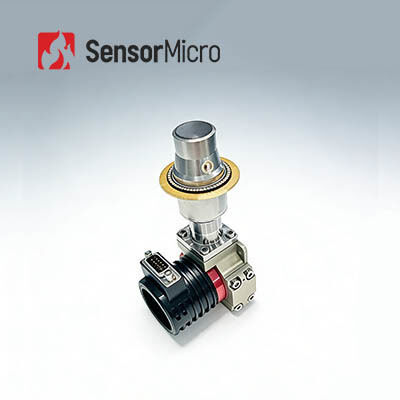
| Place of Origin | Wuhan, Hubei Province, China |
|---|---|
| Brand Name | SensorMicro |
| Certification | RoHS; Reach |
| Model Number | LFD330Z5 |
| Minimum Order Quantity | 1 Piece |
| Price | Negotiable |
| Payment Terms | L/C,T/T |
Product Details
| Function | Temperature Measurement Through Flames | Spectral Range | 3.8±0.1~4.1±0.1μm |
|---|---|---|---|
| MTTF | ≥10000h | Detector Resolution | 320x256 |
| Pixel Size | 30μm | NETD | 20mK (F3) |
| Highlight | Detection MWIR Thermal Imaging Sensor,Gas Thermal Imaging Sensor 320x256 |
||
Product Description
Measurement through Flames Cooled MWIR 320x256/30μm Infrared Detector
In industrial environments such as metallurgy and petrochemical plants, equipment including furnaces, furnace walls, and heating furnaces operate in high-temperature combustion conditions with significant flame interference. Traditional detection methods often fail to provide effective observation of internal structures or surface conditions.
The LFD330Z5 infrared detector is specifically engineered for high-temperature observation applications in flame environments. It converts infrared radiation from targets within the 3.8~4.1μm wavelength range into electrical signals. Featuring standard mechanical, optical, and electronic interfaces, the LFD330Z5 offers excellent expandability and is widely applicable for temperature monitoring in petrochemical plants and refineries. Its superior flame penetration capability enables precise imaging and monitoring of high-temperature surfaces such as furnaces and furnace walls, significantly enhancing inspection efficiency while reducing operational risks.
Main Features
- Optical Gas Imaging - Long-range non-contact detection with high efficiency, security, and wide detection range
- High Sensitivity - Utilizes high-sensitivity cooled infrared detector for efficient temperature measurement
- High Reliability & Easy Integration - Supports various interfaces and RAW/YUV image output formats
- Wide Application Scenarios - Suitable for integration into handheld, mobile, or fixed platform applications
Product Specifications
| Detector model | LFD330Z5 |
|---|---|
| Resolution | 320*256 |
| Pixel size | 30μm |
| Spectral response | 3.8±0.1μm~4.1±0.1μm |
| Typical NETD | 20mK (F3) |
| Cooling time (23℃) | ≤7min@12V |
| Power consumption (23℃) | ≤15W@12V (Peak) ≤7W@12V (Stable) |
| Size (mm) | 142*58.5*71 |
| Weight (g) | ≤600 |
| Working temperature | -45℃~+71℃ |
| Storage temperature | -55℃~+71℃ |
| MTTF | ≥10000h |
Industrial Applications
The LFD330Z5 cooled MWIR thermal imaging detector is designed for customers with strong development capabilities. In industrial settings such as metallurgy and petrochemical plants, where equipment operates in high-temperature combustion environments with strong flame interference, this cooled thermal sensor enables rapid detection of high-temperature surfaces including furnace chambers and walls. This integration significantly improves inspection efficiency while reducing operational risks.
Technological Advantages of Optical Gas Imaging
Non-contact & Remote Detection
Conduct non-contact non-destructive testing from safe distances, ensuring personnel safety in hazardous and complex areas
Quickly Locate Leakage Source
Supports wide-area real-time detection to rapidly identify leakage sources without interrupting production
Visualize Gas Leakage
Intuitively displays leakage locations with high efficiency, eliminating the need for point-by-point inspection
Improve Inspection Safety
Enhanced safety measures help reduce accident risks and minimize operational losses
Frequently Asked Questions
What is infrared thermal imaging?
Infrared thermal imaging utilizes infrared radiation and thermal energy to gather information about objects. It converts invisible infrared radiation into visible thermal images displaying temperature distribution across target surfaces. Different objects and even various parts of the same object exhibit different radiation capabilities and infrared reflection strengths.
What can infrared imaging be used for?
- Night vision
- Search & rescue operations
- Non-destructive testing
- Epidemic prevention
- Thermography
- Security & monitoring systems
- Firefighting applications
What is a thermal imaging module?
A thermal imaging module typically consists of an infrared detector, infrared lens, and hardware electronics with embedded software and algorithms. It represents the fundamental building block of thermal imaging devices.
Recommended Products
