


All Products
-
Thermal Camera Core
-
Thermal Security Camera
-
Plug-in Thermal Camera
-
Cooled Infrared Detectors
-
Cooled Camera Modules
-
Optical Gas Imaging
-
Radiometric Thermal Module
-
High Resolution Thermal Camera Module
-
Thermal Camera For Fever Detection
-
Vehicle Mounted Thermal Camera
-
Integrated Dewar Cooler Assembly
-
Uncooled Infrared Detectors
Contact Person :
Wendy Wang
Phone Number :
+86 27 50185150
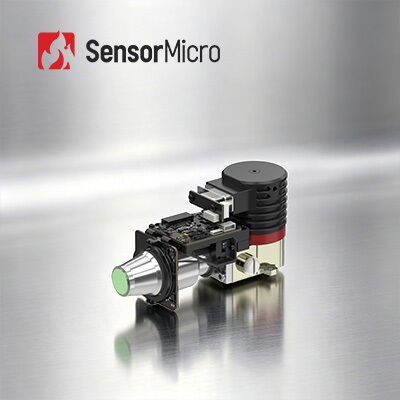
640x512 Resolution 15μm Pixel Size Cooled AD Module with 1~120Hz Adjustable Frame Rate for Thermal Imaging

| Place of Origin | China |
|---|---|
| Brand Name | SensorMicro |
| Certification | ISO9001:2015; RoHS; Reach |
| Model Number | EYAS G615MA |
| Minimum Order Quantity | 1 Piece |
| Price | Negotiable |
| Payment Terms | T/T |
Product Details
| Resolution | 640x512 / 15μm | Frame Rate | 1~ 120Hz,adjustable |
|---|---|---|---|
| IR Detector NETD (23℃) | 16mK(F2); 18mK(F4) | Spectral Range | 3.7μm±0.2μm~4.8μm±0.2μm |
| Size | 142×59×78mm | Weight | ≤650g |
| Highlight | 640x512 Cooled AD Module,Infrared Detector Cooled AD Module,Accelerator For Cooled Infrared Detector |
||
Product Description
Accelerator for Cooled Infrared Detector 640x512/15μm Cooled AD Module
Product Overview
Cooled AD Module with 640x512 / 15 μm MCT MWIR Cooled Infrared Detector for Fast Integration
EYAS G series cooled AD modules feature pre-amplifier functionality to convert analog signals from cooled IR detectors into digital video stream outputs. Available in various resolution formats and wave bands.
The EYAS G615MA cooled AD module integrates a 640×512/15μm MWIR cooled infrared detector with an AD circuit board and RS058 rotary Stirling cryocooler. It converts analog output signals into digital video streams while providing drive power and control timing, enabling OEM customers to quickly test and verify detectors, simplify integration processes, and accelerate development progress.
With EYAS G series cooled AD modules, OEM integrators can perform fast acceptance testing on SensorMicro infrared detectors, initiate rapid secondary development, and shorten development cycles for modules and complete products based on cooled infrared detectors.
Main Features
- Analog-to-Digital Conversion, Accelerated Development - Based on 640x512 MWIR cooled infrared detectors with integrated AD circuit for analog-to-digital conversion and consistent detector dimensions
- Mid-wave Cooled Infrared for High Versatility - Mid-wave cooling with excellent consistency, stable supply, and mainstream resolution for broad adaptability
- Excellent Performance, Easy Integration - Cameralink interface outputs 16-bit raw data with serial port control, adjustable high frame rate from 1 to 120 Hz for capturing fast-moving targets
Product Specifications
| Model | EYAS G615MA |
| Indicators | |
| Resolution | 640×512 |
| Pixel Size | 15μm |
| Spectral Response | 3.7μm±0.2μm~4.8μm±0.2μm |
| IR Detector NETD(23℃) | 16mK(F2); 18mK(F4) |
| Working Mode | |
| Frame Rate | 1~ 120Hz, adjustable |
| Working Mode | Snapshot |
| ITR/IWR Integration Modes | Anti-blooming, Windows Mode |
| Electrical | |
| Standard External Interface | 60pin: 37201-SM060-032W1R01 5pin: A1257WR-S-5P-LCP |
| Digital Video | 16 bit CameraLink (CameraLink Base mode) |
| External Sync | CC1: External frame synchronous |
| Communication | CameraLink UART (Default)/ RS232 (customizable) Baud rate: 9600bps (Default) |
| Power Supply | AD Board: 5V Cryocooler: 24V |
| Steady Power (23℃) | ≤8.5W |
| Cooling Time (23℃) | ≤6min30s |
| Size (mm) | 142×59×78 |
| Weight (g) | ≤650 |
| Operating Temperature | -40℃~+71℃ |
Industrial Applications
The EYAS G615MA thermal imaging module is widely used in many areas including NDT, Environmental Monitoring, Long-Range Surveillance, Scientific Research, and more.
Our Infrared Detector Line
- High sensitivity and excellent performance - World-leading technology in infrared industry
- Various infrared detectors available - Both uncooled and cooled IR detectors in different formats and pixel sizes
- Volume production to ensure fast delivery - Three production lines with annual production capability up to millions of detectors
Frequently Asked Questions
What is thermal sensitivity?
Thermal Sensitivity, also named NETD (Noise Equivalent Temperature Difference), is a key parameter for evaluating medium wave (MWIR) and long wave (LWIR) thermal imaging cameras. It is directly related to the clarity measured by the thermal imager. It is a numerical value representing the signal-to-noise ratio of the temperature difference and measured in milliKelvins (mK). The smaller the thermal sensitivity value, the higher the sensitivity and the clearer the image.
What is the difference between uncooled and cooled IR detectors?
There are currently two types of infrared thermal imaging sensors on the market: cooled and uncooled. Uncooled IR detectors operate at ambient temperature and are based on semiconductor technology, enabling volume production with small size and low cost. They are widely used in portable/handheld/mobile devices. Cooled IR detectors are packaged in units that maintain extremely low temperatures using cryo coolers. They are larger, more expensive, and less reliable than uncooled sensors due to complex cooling systems. However, cooled systems offer incredible sensitivity and typically work with long focal length optics for long-range missions.
Recommended Products
-
VIDEO

-