


All Products
-
Thermal Camera Core
-
Thermal Security Camera
-
Plug-in Thermal Camera
-
Cooled Infrared Detectors
-
Cooled Camera Modules
-
Optical Gas Imaging
-
Radiometric Thermal Module
-
High Resolution Thermal Camera Module
-
Thermal Camera For Fever Detection
-
Vehicle Mounted Thermal Camera
-
Integrated Dewar Cooler Assembly
-
Uncooled Infrared Detectors
Contact Person :
Wendy Wang
Phone Number :
+86 27 50185150
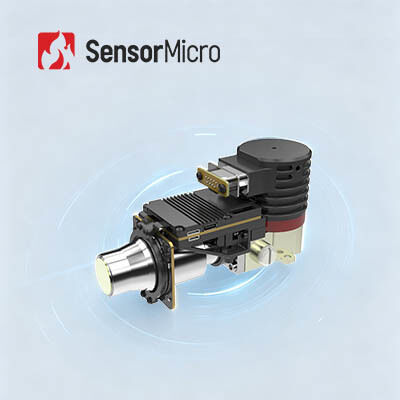
320x256 Resolution 30μm Pixel Size Cooled Infrared Camera Module for SF₆ Gas Leak Detection

| Place of Origin | Wuhan, Hubei Province, China |
|---|---|
| Brand Name | SensorMicro |
| Certification | ISO9001:2015; RoHS; Reach |
| Model Number | LFM330C2 |
| Minimum Order Quantity | 1 Piece |
| Price | Negotiable |
| Payment Terms | T/T |
Product Details
| Style | Cooled Infrared Module | Resolution | 320x256 / 30μm |
|---|---|---|---|
| Typical NETD | 20mK(F1.5) | Spectral Range | 10.3μm±0.1μm~10.9μm±0.1μm |
| Size | ≤142×58.5×80mm | Frame Rate | 60Hz |
| Highlight | 320x256 Cooled Camera Modules,55mm Lens Cooled Camera Modules,VOCs Gas Cooled Camera Modules |
||
Product Description
320x256/30μm Cooled Infrared Camera Module for Sulfur Hexafluoride Gas Leak Detection
Product Overview
Sulfur hexafluoride (SF₆) is widely used in high-voltage power equipment and has a strong greenhouse effect, while ammonia is a common industrial refrigerant that is highly toxic and easily volatile. The LFM330C2 gas leak detection infrared camera core, equipped with the high-performance LFD330C2 detector based on Type-II Superlattice (T2SL) technology, operates in the 10.3-10.9μm spectral band.
This solution offers high sensitivity, excellent stability, and flexible integration, enabling long-range, non-contact, visualized detection of SF₆, ammonia, ethylene, and other typical industrial gases. It provides an efficient solution for equipment safety monitoring and environmental management.
Main Features
- Long-Wave Gas Detection: Equipped with self-developed LFD330C2 LWIR infrared detector, optimized for SF₆/NH₃ detection
- Broad Gas Identification: Covers SF₆, NH₃, and 26+ industrial gases within the same spectral band
- Enhanced Imaging: Integrated gas-enhancement HSM algorithm significantly improves image contrast
- Easy Integration: Multiple interfaces supported including RAW/YUV image output for fast system integration
- Comprehensive Detection: Supports identification of at least 26 different gases
Product Specifications
| Model | LFM330C2 |
|---|---|
| Resolution | 320×256 |
| Pixel Size | 30μm |
| Spectral Response | 10.3μm±0.1μm~10.9μm±0.1μm |
| Typical NETD | 20mK(F1.5) |
| Effective Pixel Rate | ≥99.5% |
| Frame Rate | 60Hz |
| Digital Video | Standard: DVP/LVDS/USB2.0 Option: Cameralink/USB3.0/GigE/SDI/MIPI/Single-mode Optical Fiber/Multi-mode Optical Fiber |
| Communication | Standard: USB2.0/LV-TTL Option: RS422/CAN/USB3.0/GigE |
| Cooling Time (23℃) | ≤8min@24V |
| Steady Power (23℃) | ≤13W |
| Size (mm) | ≤142×58.5×80 |
| Weight (g) | ≤680 |
| Operating Temperature | -40℃~+71℃ |
| Storage Temperature | -55℃~+71℃ |
| Focal Length | 25mm |
Industrial Applications
The LFM330C2 gas leak detection thermal imaging camera is used for detecting Sulfur hexafluoride (SF₆) and detecting gas leakage including:
- Sulfur hexafluoride (SF₆)
- Anhydrous ammonia
- Ethyl cyanoacrylate ("super glue")
- Chlorine dioxide
- Acetic acid
- R-12 (Freon)
- Ethylene
- Methyl ethyl ketone (MEK)
- Acetyl chloride
- Allyl bromide
- Allyl chloride
- Allyl fluoride
- Methyl bromide
- R-11 (Freon)
- Furan
- Hydrazine
- Methylsilane
- Methyl vinyl ketone
- Acrolein
- Propylene
- Tetrahydrofuran
- Trichloroethylene
- Uranium hexafluoride
- Vinyl chloride
- Vinyl cyanide
Product Advantages
- Diverse Product Portfolio: Wide range of product formats including infrared detectors, camera cores, and modules
- Rich Product Variety: Multiple array resolutions, pixel sizes, wavebands, and lens options combinations
- Outstanding Performance: Clear imaging, compact size, low power consumption, high sensitivity, and strong reliability
- Easy Integration: Multiple interface options for straightforward integration and rapid development
Frequently Asked Questions
What is infrared thermal imaging?
In nature, all objects whose temperature is higher than absolute zero (-273℃) can radiate infrared rays. By using the infrared camera detector to measure the infrared radiation temperature difference between the target itself and the background, you can get different infrared images, which are also called thermal images.
How do infrared detectors work?
Infrared radiation that emitted by target enters the sensing range of the thermal detector, then the infrared detector converts the radiation signal of different intensity into the corresponding electrical signal, and then through amplification and video processing, forms the infrared image that can be observed by the naked eyes.
What are the advantages of cooled infrared detectors?
The cooled infrared focal plane detector operates at a low temperature which is provided by a detector dewar cooler (DDC). It has high sensitivity and can distinguish more subtle temperature difference than uncooled infrared detector. It can detect, identify and recognize objects at a very long range which is more than ten kilometers away. The structure of cooled detector is very complex which results in a relatively high cost than uncooled detector.
Recommended Products
-
VIDEO

-