


All Products
-
Thermal Camera Core
-
Thermal Security Camera
-
Plug-in Thermal Camera
-
Cooled Infrared Detectors
-
Cooled Camera Modules
-
Optical Gas Imaging
-
Radiometric Thermal Module
-
High Resolution Thermal Camera Module
-
Thermal Camera For Fever Detection
-
Vehicle Mounted Thermal Camera
-
Integrated Dewar Cooler Assembly
-
Uncooled Infrared Detectors
Contact Person :
Wendy Wang
Phone Number :
+86 27 50185150
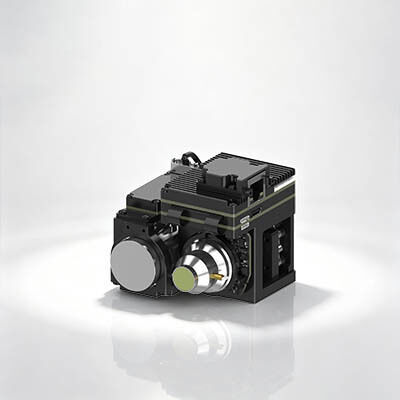
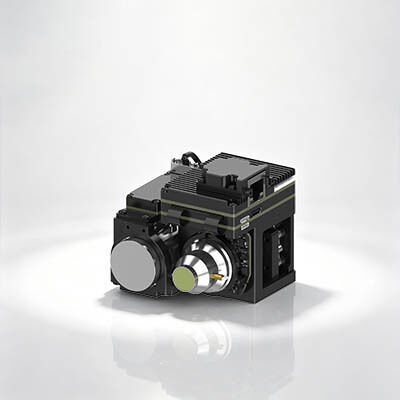
640x512 Resolution 15μm Pixel Size High Operating Temperature Cooled Infrared Camera Module LWIR Camera Core

| Place of Origin | China |
|---|---|
| Brand Name | SensorMicro |
| Certification | ISO9001:2015; RoHS; Reach |
| Model Number | GAVIN GC615HMG |
| Minimum Order Quantity | 1 Piece |
| Price | Negotiable |
| Payment Terms | T/T |
Product Details
| Resolution | 640x512 / 15μm | IR Detector NETD (23℃) | 20mK (F4) |
|---|---|---|---|
| Spectral Range | 3.7μm±0.2μm~4.8μm±0.2μm | Size | 71×55×84mm |
| Weight(g) | ≤350 | Steady Power Consumption(23℃) | ≤7W |
| Highlight | 640x512 Cooled Camera Modules,RS058 Cooled Camera Modules,T2SL LWIR Camera Core |
||
Product Description
640x512 15μm Cooled Infrared Camera Module High Operating Temperature LWIR Camera Core
Product Overview
The GAVIN GC615HMG infrared camera core integrates a 640×512/15μm HOT MWIR cooled infrared detector with next-generation image processing algorithms. The HOT technology enables high-quality stable imaging while delivering compact size, lightweight design, and low power consumption for optimized SWaP performance. With broad compatibility across multiple digital video interfaces and easy secondary development, it is suitable for handheld devices, mobile payloads, and long-duration monitoring applications.
Main Features
- Mainstream FPA, Clear Imaging: Developed with 640×512/15μm large-format HOT MWIR cooled infrared detector offering excellent versatility. Equipped with next-generation image processing algorithms including DRC, 2D/3D noise reduction, and edge enhancement for clearer images.
- HOT Technology Leading SWaP Optimization: Supports high-temperature operation up to 150K with cooling time ≤ 3min30s. Compact size: 71×55×84 mm, weight: 350g, power consumption: 7W.
- Rich Interfaces, Easy Integration: Supports CameraLink/USB 3.0/GigE/HDMI/SDI/MIPI/Fiber optic interfaces. Flexible RAW/YUV image output.
Product Specifications
| Model | GAVIN GC615HMG |
|---|---|
| Performance Indicators | |
| Resolution | 640×512 |
| Pixel Size | 15μm |
| Cryocooler | RS058 |
| Spectral Response | 3.7μm±0.2μm~4.8μm±0.2μm |
| IR Detector NETD (23℃) | 20mK (F4) |
| Image Processing | |
| Frame Rate | 50Hz (F4) / 30Hz (F5.5) |
| Digital Zoom | 1× to 8× continuous digital zoom |
| Image Direction | Horizontally/Vertically/Diagonally Flip |
| Image Algorithm | DRC, 2D/3D Image Noise Reduction, EE |
| Electrical | |
| Analog Video | PAL/NTSC |
| Digital Video | Standard: DVP/LVDS/USB2.0 Option: Cameralink/USB3.0/GigE/SDI/HDMI/MIPI/Single-mode Optical Fiber/Multi-mode Optical Fiber |
| External Sync | Standard: LV-TTL Option: RS422/LVDS |
| Communication | Standard: USB2.0/LV-TTL Option: RS422/CAN/USB3.0/GigE |
| Power Supply | 12V±1V |
| Steady Power Consumption (23℃) | ≤7W |
| Cooling Time (23℃) | ≤3min30s |
| Size (mm) | 71×55×84 |
| Weight (g) | ≤350 |
| Operating Temperature | -40℃~+71℃ |
| Optical Lens | |
| Lens Options | Fixed focus: 25mm/F2 Continuous zoom: 18~275mm/F5.5 110~1100mm/F5.5 15~300mm/F4 23~450mm/F4 |
Industrial Applications
The GAVIN GC615HMG thermal imaging module is widely used in many areas such as NDT, Environmental Monitoring, Long-Range Surveillance, Scientific Research, and more.
Our Advantages
- High sensitivity and excellent performance
- World-leading technology in infrared industry
- Various infrared detectors available - both uncooled and cooled IR detectors in different formats and pixel sizes
- Volume production to ensure fast delivery - three production lines with annual production capability up to millions of detectors
Frequently Asked Questions
What is the difference between uncooled and cooled IR detectors?
There are currently two types of infrared thermal imaging sensors on the market: cooled and uncooled.
Uncooled IR detectors operate at ambient temperature. They are based on semiconductor technology and can be fabricated in large volumes with small size and low cost. Uncooled IR detectors are widely used in portable/handheld/mobile devices.
Cooled IR detectors are packaged in a unit that keeps them at extremely low temperatures supported by a cryo cooler. They are larger, more expensive, and less reliable than uncooled sensors due to complex cooling systems. However, cooled systems are incredibly sensitive and typically work with long focal length optics to achieve long-range missions.
Uncooled IR detectors operate at ambient temperature. They are based on semiconductor technology and can be fabricated in large volumes with small size and low cost. Uncooled IR detectors are widely used in portable/handheld/mobile devices.
Cooled IR detectors are packaged in a unit that keeps them at extremely low temperatures supported by a cryo cooler. They are larger, more expensive, and less reliable than uncooled sensors due to complex cooling systems. However, cooled systems are incredibly sensitive and typically work with long focal length optics to achieve long-range missions.
Recommended Products
-
VIDEO

-