


All Products
-
Thermal Camera Core
-
Thermal Security Camera
-
Plug-in Thermal Camera
-
Cooled Infrared Detectors
-
Cooled Camera Modules
-
Optical Gas Imaging
-
Radiometric Thermal Module
-
High Resolution Thermal Camera Module
-
Thermal Camera For Fever Detection
-
Vehicle Mounted Thermal Camera
-
Integrated Dewar Cooler Assembly
-
Uncooled Infrared Detectors
Contact Person :
Wendy Wang
Phone Number :
+86 27 50185150
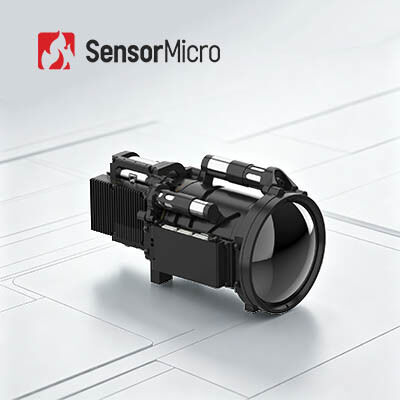
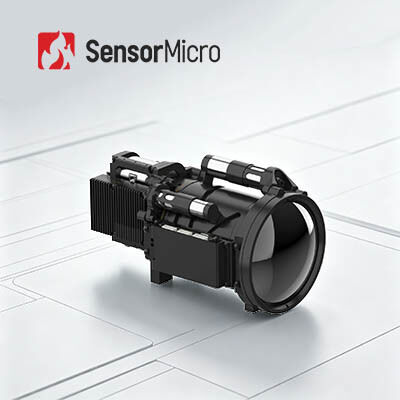
Cooled HOT MWIR Infrared Thermal Camera Module with 640x512 Resolution and 15μm Pixel Pitch

| Place of Origin | China |
|---|---|
| Brand Name | SensorMicro |
| Certification | ISO9001:2015; RoHS; Reach |
| Model Number | GAVIN GC615HMG |
| Minimum Order Quantity | 1 Piece |
| Price | Negotiable |
| Payment Terms | T/T |
Product Details
| Type | HOT MWIR Cooled Infrared Camera Core | Resolution | 640x512 / 15μm |
|---|---|---|---|
| IR Detector NETD (23℃) | 20mK (F4) | Size | 71×55×84mm |
| Mid Wavelength | 3.7μm±0.2μm~4.8μm±0.2μm | Characteristics | Easy Integration |
| Highlight | Cooled Camera Modules 30um,320x256 30um Cooled Camera Modules,OEM Infrared Camera Module |
||
Product Description
Cooled HOT MWIR 640x512 / 15μm Infrared Thermal Camera Module
Product Overview
GAVIN GC615HMG is a high-temperature operable MWIR cooled infrared camera core built on 640×512 resolution, 15μm pixel pitch FPA detector. Adopting advanced DRC, 2D/3D noise reduction and edge enhancement algorithms, the module delivers high-clarity, low-noise and high-fidelity thermal imaging. Its proprietary HOT technology supports 150K maximum operating temperature and ≤3min30s fast cooling, while maintaining optimized SWaP metrics: 71×55×84mm size, 350g weight and 7W typical power consumption.
Main Features
- Mainstream FPA, Clear Imaging - Developed based on 640×512/15μm large-format HOT MWIR cooled infrared detector with excellent versatility. Equipped with next-generation image processing algorithms including DRC, 2D/3D noise reduction, and edge enhancement for superior image clarity.
- HOT Technology Leading SWaP Optimization - Supports high-temperature operation up to 150K with cooling time ≤3min30s. Compact design: 71×55×84mm size, 350g weight, and 7W power consumption.
- Rich Interfaces, Easy Integration - Supports CameraLink/USB 3.0/GigE/HDMI/SDI/MIPI/Fiber optic interfaces with flexible RAW/YUV image output options.
Product Specifications
| Model | GAVIN GC615HMG |
|---|---|
| Performance Indicators |
Resolution: 640×512 Pixel Size: 15μm Cryocooler: RS058 Spectral Response: 3.7μm±0.2μm~4.8μm±0.2μm IR Detector NETD (23℃): 20mK (F4) |
| Image Processing |
Frame Rate: 50Hz (F4) / 30Hz (F5.5) Digital Zoom: 1× to 8× continuous digital zoom Image Direction: Horizontally/Vertically/Diagonally Flip Image Algorithm: DRC, 2D/3D Image Noise Reduction, EE |
| Electrical |
Analog Video: PAL/NTSC Digital Video: Standard: DVP/LVDS/USB2.0 Option: Cameralink/USB3.0/GigE/SDI/HDMI/MIPI/Single-mode Optical Fiber/Multi-mode Optical Fiber External Sync: Standard: LV-TTL, Option: RS422/LVDS Communication: Standard: USB2.0/LV-TTL, Option: RS422/CAN/USB3.0/GigE Power Supply: 12V±1V Steady Power Consumption (23℃): ≤7W Cooling Time (23℃): ≤3min30s |
| Physical |
Size: 71×55×84mm Weight: ≤350g Operating Temperature: -40℃~+71℃ |
| Optical Lens Options |
Fixed focus: 25mm/F2 Continuous zoom: 18~275mm/F5.5, 110~1100mm/F5.5, 15~300mm/F4, 23~450mm/F4 |
Industrial Applications
The GAVIN GC615HMG thermal imaging module is widely used in many areas including NDT, Environmental Monitoring, Long-Range Surveillance, Scientific Research, and other industrial applications.
Our Advantages
- Product Customization - Adjust configurations and adapt algorithms to meet industry-specific requirements
- On-Site Technical Support & Training - Provide core customers with hands-on system setup and operational training
- Joint Innovation for New Products & Markets - Collaborate with customers to co-develop innovative infrared application solutions
Frequently Asked Questions
1. In which industries are focal plane array infrared detectors used?
Infrared focal plane detector is the core component of thermal imaging systems and is essential for detecting, identifying and analyzing infrared information of objects. It has wide applications in traffic, inspection, security monitoring, meteorology, medicine and other industries.
2. What are the characteristics of cooled & uncooled infrared focal plane detectors?
Infrared focal plane detectors are divided into cooled and uncooled types. Cooled infrared detectors operate in low temperature vacuum environments with high sensitivity and can distinguish more subtle temperature differences. Uncooled infrared focal plane detectors work at room temperature without requiring cryogenic environments.
3. How do infrared detectors work?
Infrared radiation emitted by targets enters the sensing range of the thermal detector. The infrared detector converts the radiation signals of different intensities into corresponding electrical signals, which are then amplified and processed to form infrared images visible to the naked eye.
4. What are the advantages of cooled infrared detectors?
Cooled infrared focal plane detectors operate at low temperatures provided by detector dewar coolers (DDC). They offer high sensitivity and can distinguish more subtle temperature differences than uncooled detectors. They can detect, identify and recognize objects at ranges exceeding ten kilometers. The complex structure of cooled detectors results in relatively higher costs compared to uncooled detectors.
Recommended Products
-
VIDEO

-