


All Products
-
Thermal Camera Core
-
Thermal Security Camera
-
Plug-in Thermal Camera
-
Cooled Infrared Detectors
-
Cooled Camera Modules
-
Optical Gas Imaging
-
Radiometric Thermal Module
-
High Resolution Thermal Camera Module
-
Thermal Camera For Fever Detection
-
Vehicle Mounted Thermal Camera
-
Integrated Dewar Cooler Assembly
-
Uncooled Infrared Detectors
Contact Person :
Wendy Wang
Phone Number :
+86 27 50185150
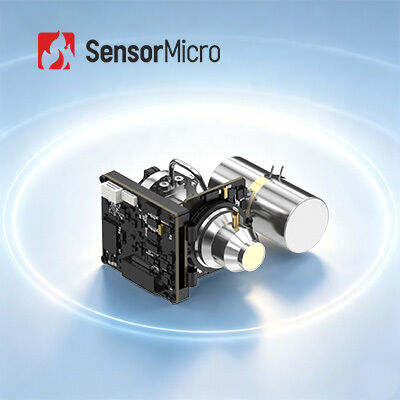
EYAS G615HMG HOT MWIR Cooled Infrared AD Module with 640x512 Resolution and 15μm Pixel Size

| Place of Origin | Wuhan, Hubei Province, China |
|---|---|
| Brand Name | SensorMicro |
| Certification | ISO9001:2015; RoHS; Reach |
| Model Number | EYAS G615HMG |
| Minimum Order Quantity | 1 Piece |
| Price | Negotiable |
| Payment Terms | T/T |
Product Details
| Size | 72×87×51mm | Resolution | 640x512 / 15μm |
|---|---|---|---|
| NETD | 20mK(F4) | Mid Wavelength | 3.7~4.8μm |
| Characteristics | Easy Integration | Type | Cooled AD Modules |
| Highlight | EYAS 330 Cooled Camera Modules,RoHS Cooled Camera Modules,320x256 Infrared Camera Core |
||
Product Description
EYAS G615HMG HOT MWIR Cooled Infrared AD Module 640x512/15μm
Product Overview
The EYAS G615HMG cooled AD module integrates a 640×512/15μm HOT (High Operating Temperature) MWIR cooled infrared detector with an analog-to-digital circuit board. Featuring a high-performance linear Stirling cryocooler, this module converts analog output signals into digital video streams while providing essential driving power and timing control.
This solution enables OEM customers to streamline infrared detector acceptance testing, simplify system integration, and accelerate development cycles. HOT technology (operating temperature up to 150K) delivers optimized Size, Weight, and Power (SWaP) characteristics with enhanced reliability, making it ideal for lightweight applications requiring high stability.
Key Features
Mainstream Compatibility, Accelerated Development
- Based on mainstream 640×512/15μm HOT MWIR cooled infrared detector for broad platform compatibility
- Integrated AD circuit for analog-to-digital conversion enables rapid system integration
- All-in-one design with identical dimensions to the detector
HOT Technology Enables Optimized SWaP
- Focal plane operating temperature increased to 150 K
- Compact dimensions: ≤ 72×87×51 mm
- Lightweight: ≤ 250 g
- Low power consumption: ≤ 4.5 W
Outstanding Performance, Easy Integration
- Adjustable frame rate from 1-120 Hz for capturing fast-moving targets
- Camera Link interface outputs 16-bit raw data
- Serial port control capability
Technical Specifications
| Parameter | Specification |
|---|---|
| Model | EYAS G615HMG |
| Resolution | 640×512 |
| Pixel Size | 15μm |
| Spectral Response | 3.7μm±0.2μm~4.8μm±0.2μm |
| IR Detector NETD(23℃) | 20mK(F4) |
| Frame Rate | 1~120Hz, adjustable |
| Working Mode | Snapshot, ITR/IWR Integration Modes, Anti-blooming, Windows Mode |
| Standard External Interface | 60pin: 37201-SM060-032W1R01 5pin: A1257WR-S-5P-LCP |
| Digital Video | 16 bit CameraLink (CameraLink Base mode) |
| External Sync | CC1: External frame synchronous |
| Communication | CameraLink UART (Default)/ RS232 (customizable) Baud rate: 9600bps (Default) |
| Power Supply | AD Board: 5V Cryocooler: 12V |
| Steady Power (23℃) | ≤4.5W |
| Cooling Time (23℃) | ≤3min |
| Size | 72×87×51 mm |
| Weight | ≤250 g |
| Operating Temperature | -40℃~+71℃ |
Industrial Applications
The EYAS G615HMG thermal imaging module is widely used in numerous applications including Non-Destructive Testing (NDT), Environmental Monitoring, Long-Range Surveillance, Scientific Research, and various industrial inspection processes.
Manufacturing Capabilities
- High sensitivity and excellent performance: World-leading technology in infrared industry
- Various infrared detectors available: Both uncooled and cooled IR detectors in different formats and pixel sizes
- Volume production to ensure fast delivery: Three production lines with annual production capability up to millions of detectors
- Advanced facilities: 30,000 square meter facility with 20,000 square meters of clean room space
Frequently Asked Questions
What is infrared thermal imaging?
Infrared thermal imaging utilizes infrared radiation and thermal energy to gather information about objects. By detecting radiation differences between objects and their background environment, as well as variations within objects themselves, infrared thermal images display radiation fluctuations that reveal scene characteristics.
What are the applications of infrared thermal imaging?
Temperature measurement and all-weather imaging represent the two fundamental functions of infrared thermal imaging technology. Products developed using these technologies are widely deployed in electric power, security & monitoring, industrial manufacturing, scientific research, medical treatment, and other traditional fields.
How does infrared thermal imaging work?
In nature, all objects with temperatures above absolute zero (-273℃) emit infrared radiation. Infrared camera detectors measure temperature differences between targets and their background, generating distinct infrared images known as thermal images.
How do infrared detectors work?
Infrared radiation emitted by targets enters the thermal detector's sensing range. The infrared detector converts varying intensity radiation signals into corresponding electrical signals, which are then amplified and processed to form visible infrared images.
What are the advantages of cooled infrared detectors?
Cooled infrared focal plane detectors operate at low temperatures provided by detector dewar coolers (DDC). They offer superior sensitivity, distinguishing more subtle temperature differences than uncooled detectors. This enables detection, identification, and recognition of objects at distances exceeding ten kilometers. While their complex structure results in higher costs compared to uncooled detectors, they deliver exceptional performance for demanding applications.
Recommended Products
