


All Products
-
Thermal Camera Core
-
Thermal Security Camera
-
Plug-in Thermal Camera
-
Cooled Infrared Detectors
-
Cooled Camera Modules
-
Optical Gas Imaging
-
Radiometric Thermal Module
-
High Resolution Thermal Camera Module
-
Thermal Camera For Fever Detection
-
Vehicle Mounted Thermal Camera
-
Integrated Dewar Cooler Assembly
-
Uncooled Infrared Detectors
Contact Person :
Wendy Wang
Phone Number :
+86 27 50185150
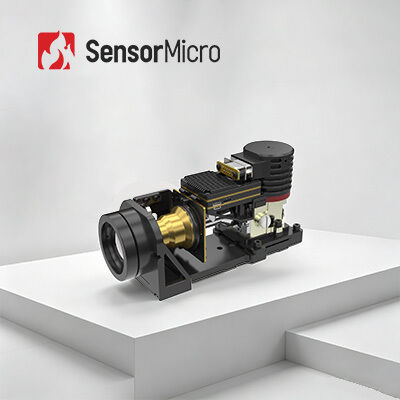
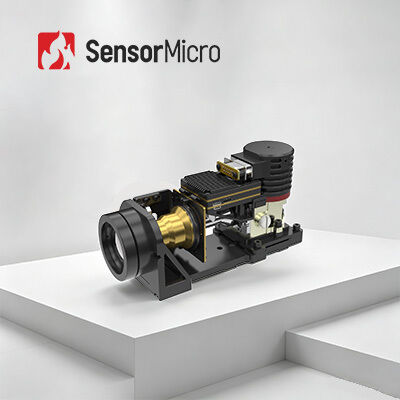
High Resolution 1280x1024 LWIR Cooled Infrared Camera Module with Type-II Superlattice Technology and 50Hz Frame Rate

| Place of Origin | Wuhan, Hubei Province, China |
|---|---|
| Brand Name | SensorMicro |
| Certification | ISO9001:2015; RoHS; Reach |
| Model Number | GAVIN GC1210LC |
| Minimum Order Quantity | 1 Piece |
| Price | Negotiable |
| Payment Terms | T/T |
Product Details
| Resolution | 1280x1024 | Spectral Range | 7.7μm±0.2μm~9.4μm±0.3μm |
|---|---|---|---|
| Frame Rate | 50Hz | Pixel Pitch | 10μm |
| NETD | 35mK(F2) | Size | 148×59×82mm |
| Highlight | Cooled Camera Module 1280x1024,OEM MCT Cooled Camera Module,12um MWIR Camera Modules |
||
Product Description
High Resolution 1280x1024/12μm LWIR Cooled Infrared Camera Module
Product Overview
The GAVIN GC1210LC infrared camera core utilizes a Type-II Superlattice 1280*1024/10μm LWIR cooled infrared detector. Compared to traditional 640*512/15μm long-wave products, it reduces pixel size by one-third and increases resolution by four times, significantly enhancing spatial resolution and image clarity. Combined with advanced image processing algorithms, it delivers high-definition, detailed megapixel infrared images, making it particularly suitable for long-range target detection in poor visibility and harsh weather conditions.
Main Features
- Megapixel, High-Definition Imaging - Developed with 1280*1024/10μm megapixel long-wave detector for exceptional detail capture
- Advanced Image Processing - Enhanced with next-generation algorithms including DRC, 2D/3D noise reduction, and EE edge enhancement for superior clarity
- LWIR with Resilience Against Interference - Strong resistance to dust and glare, adaptable to complex environments
- Low-Temperature Detection - Capable of detecting low-temperature objects with high precision
- Type-II Superlattice Technology - Excellent quantum efficiency and uniformity for superior performance
Product Specifications
| Model | GAVIN GC1210LC |
|---|---|
| Indicators | |
| Resolution | 1280*1024 |
| Pixel Size | 10μm |
| Spectral Response | 7.7μm±0.2μm~9.4μm±0.3μm |
| IR Detector NETD(23℃) | 35mK(F2) |
| Image Processing | |
| Frame Rate | 50Hz |
| Dimming Mode | Linear/Histogram/Mixed |
| Digital Zoom | 1* to 8* continuous digital zoom |
| Image Direction | Horizontally/Vertically/Diagonally Flip |
| Image Algorithm | DRC, 2D/3D Image Noise Reduction, EE |
| Electrical | |
| Digital Video | Standard: DVP Option: Cameralink/USB3.0/GigE/SDI/HDMI/MIPI/Single-mode Optical Fiber/Multi-mode Optical Fiber |
| External Sync | Standard: LV-TTL Option: RS422/LVDS |
| Communication | Standard: USB2.0/LV-TTL Option: RS422/CAN/USB3.0/GigE |
| Power Supply | 24V±4V |
| Steady Power Consumption(23℃) | ≤15W |
| Cooling Time(23℃) | ≤8min |
| Size(mm) | 148*59*82 |
| Weight(g) | ≤730 |
| Operating Temperature | -40℃~+71℃ |
| Optical Lens | |
| Lens Options | Fixed focus: 45mm/F2 Continuous zoom: 30~300/F2 |
Industrial Applications
The GAVIN GC1210LC thermal imaging module is widely used in numerous applications including NDT (Non-Destructive Testing), Environmental Monitoring, Long-range Surveillance, Scientific Research, and other critical industrial sectors.
Company Profile
SensorMicro is a world-leading infrared detector manufacturer and service provider, committed to delivering high-performance uncooled and cooled thermal imaging detectors to customers worldwide while sharing professional application expertise.
SensorMicro provides advanced infrared detectors, camera cores, and modules with versatile formats and wavebands. Designed for clarity, sensitivity, and efficiency, our products integrate seamlessly into diverse systems—empowering next-generation imaging and sensing applications across multiple industries.
SensorMicro detectors have been widely adopted in thermography, security & surveillance, personal vision, automotive, and consumer infrared products. Our volume production capability enables us to meet the growing demand from all existing and emerging markets.
Frequently Asked Questions
1. What is MCT/HgCdTe detector?
MCT, also called HgCdTe, refers to Mercury-Cadmium-Telluride which is a chemical compound of cadmium telluride (CdTe) and mercury telluride (HgTe) and a common material in photodetectors. MCT/HgCdTe detector is a photoconductive detector that operates at a cryogenic environment and can detect infrared radiation. It is more sensitive than thermal sensors.
2. What is T2SL detector?
T2SL refers to Type-II Superlattice, which is an artificial material with alternating growth periodic heterojunction at nanometer size. It has high uniformity and superior optical properties, such as large electron effective mass, large absorption coefficient and high quantum efficiency. Compared with MCT infrared detector, the T2SL infrared detector has good material uniformity, lower cost, and similar performance to MCT infrared detector in medium and long wave bands, but has significant advantages in very long wave bands.
3. What is the difference between low light, active IR and thermal imaging?
Low light requires natural light and transforms weak natural light images into enhanced electronic images through image intensifiers. Active IR actively emits infrared light and uses infrared beams reflected by targets, offering very poor concealment. Thermal imaging doesn't require any light and is a passive infrared night vision technology that detects infrared radiation differences between targets and scenes or different parts of an object. It is not affected by changes in surrounding lighting conditions, during night operations, or even in fog, rain and other harsh environments.
4. Can you block thermal imaging?
In most cases, you cannot block thermal imaging effectively. However, infrared rays cannot penetrate walls, and glass can block IR radiation. Therefore, if concealment from thermal detection is required, you can position yourself behind glass or walls to block thermal imaging detection.
Recommended Products
-
VIDEO

-