


All Products
-
Thermal Camera Core
-
Thermal Security Camera
-
Plug-in Thermal Camera
-
Cooled Infrared Detectors
-
Cooled Camera Modules
-
Optical Gas Imaging
-
Radiometric Thermal Module
-
High Resolution Thermal Camera Module
-
Thermal Camera For Fever Detection
-
Vehicle Mounted Thermal Camera
-
Integrated Dewar Cooler Assembly
-
Uncooled Infrared Detectors
Contact Person :
Wendy Wang
Phone Number :
+86 27 50185150
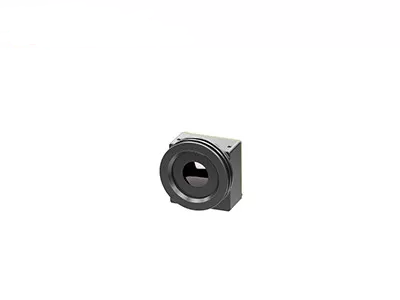
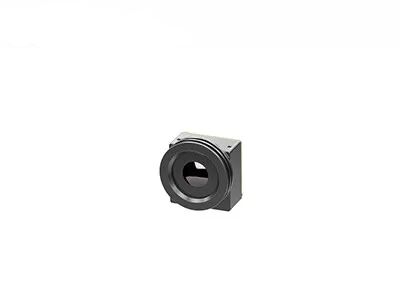
Optimized SWaP-C iLC212 Thermal Camera Module with 3.2mm Lens
| Place of Origin | Wuhan, Hubei Province, China |
|---|---|
| Brand Name | SensorMicro |
| Certification | ISO9001:2015; RoHS; Reach |
| Model Number | iLC212 |
| Minimum Order Quantity | 1 Piece |
| Price | Negotiable |
| Payment Terms | L/C,T/T |
Product Details
| Resolution | 256x192 | Power Consumption | 700mW |
|---|---|---|---|
| Spectral Range | 8~14μm | Pixel Pitch | 12μm |
| NETD | ≤65mK | Frame Rate | 25Hz/30Hz |
| Highlight | iLC212 Thermal Camera Module,3.2mm Lens Thermal Camera Module,SWaP-C Infrared Camera Module |
||
Product Description
Optimized SWaP-C iLC212 Thermal Camera Module with 3.2mm Lens
Product Description
iLC212 uncooled IR imaging module integrates the 256x192 / 12μm focal plane array wafer level package (WLP) infrared detector and can capture long-wave infrared (LWIR) spectrum that ranges from 8 to 14μm.
Oriented for fully optimized SWaP-C, the iLC212 thermal camera module is specially designed for those customers who has strict requirements about size, weight and cost in the area of security and surveillance. Due to its miniature size, light weight and very low price, the iLC212 thermal core greatly meets the customers' low price demands, shorten their developement time and save costs for them.
SensorMicro specializes in the design, manufacture, sales and marketing of thermal imaging detectors and infrared modules. We can provide our customers a variety of infrared thermal imaging solutions which shorten secondary development time and greatly reduce the cost for customers.
Main Features
- Fully optimized SWaP-C application
- Suitable for various security thermal cameras
- A wide range of thermal imaging applications
- Low Power Consumption
Product Specifications
| Model | iLC212 |
| IR Detector Performance | |
| Material | Uncooled Vanadium Oxide |
| Resolution | 256×192 |
| Pixel Size | 12μm |
| Spectral Response | 8μm ~14μm |
| NETD | ≤65mK@F1.0@25℃@50Hz |
| Image Processing | |
| Digital Video | RAW/YUV/BT656; Support USB2.0 Video Transmission; Temperature Measurement Support Parameter Line |
| Digital Frame Rate | 25Hz/30Hz |
| Image Display | Black-hot/white-hot/Pseudo-color |
| Image Algorithm | Nonuniformity Correction (NUC) 3D Image Noise Reduction (3DNR) 2D Noise Reduction (DNS) Dynamic Range Compression (DRC) EE Enhancement |
| Start-up Time | ≤3s |
| Temperature Measurement | |
| Operating Temperature Range | -10℃~+50℃ |
| Temperature Measurement Range | -20℃~+150℃, Support Temperature Measurement Range Expansion and Customization |
| Temperature Measurement Accuracy | ±3℃/±3% (take the larger value) @23℃±5℃; the Temperature Measurement Distance is 1.5m |
| Regional Temperature Measurement | Support Any Area Temperature Measurement, Output Area Maximum Value, Minimum Value and Average Value |
| SDK | Windows / Linux Version, Achieve Video Stream Analysis and Gray to Temperature Conversion |
| Electrical Interface | |
| External Interface | 30pin_HRS Connector Power Input Digital Video RS232-TTL/USB2.0 GPIO etc. |
| Communication | RS232-TTL/USB2.0 |
| Expansion Component | VPC Board |
| PC Software | |
| ICC Software | Module Control and Video Display |
| Power System | |
| Power Supply | DC 3.3V±0.1V |
| Power Dissipation | Steady State: 0.70W/3.3V @23±3℃ |
| Physical Property | |
| Connectors | External Connector Model: DF40C-30DP-0.4V (51), (HRS-Male) Mating Connector Model: DF40C (2.0)-30DS-0.4V (51), (HRS-Female) |
| Size | 21mm×21mm×12.8mm (including 3.2mm lens) |
| Weight | 8.9g±0.5g (including 3.2mm lens) |
| Environmental Adaptability | |
| Operation Temperature | -40℃~+70℃ |
| Storage Temperature | -45℃~+85℃ |
| Humidity | 5%~95%, non-condensing |
| Impact & Vibration Resistance | Impact: half sine wave, 40g/11ms, 3-axis, 6-direction Vibration: 5.35grms, 3 axis |
| Certification | ROHS2.0/REACH |
| Lens | |
| Optional Lens | 3.2mm/F1.1, HFOV: 55.6±2.8°; Coating: AR |
Industrial Applications
The iLC212 thermal imaging module is applied to the field of Security Monitoring, Thermography, Wearable Device, Vehicle Electronics, Smart Home, Living Creatures Detection etc.
About Us
SensorMicro was founded with a simple but powerful belief:
Innovation should serve real-world needs.
SensorMicro exists to empower people and systems to see beyond the surface—into the patterns, the problems, and the possibilities that lie beneath.
By turning invisible heat into visible truth, we help industries make smarter decisions, protect what matters most, and navigate complexity with clarity.
Heeding to our insistence on being self-made and customer-first has become a sure recipe for SensorMicro's momentum. As our business spans much of the globe, we've charged ahead on all fronts—from security, firefighting, industrial inspection, medical care, and machine vision, to environmental monitoring and key aspects of carbon neutrality—helping partners unlock the full potential of intelligent infrared sensing, and connecting the dots of life.
We are more than an infrared technology company.
We are a community of people committed to building a sustainable, ethical, and human-centered future.
Every pixel of innovation we create is a promise — a promise to protect, to empower, and to serve.
FAQs
1. Can thermal cameras see through walls or other solid objects?
No, thermal cameras cannot see through walls or solid objects. They detect and measure infrared radiation emitted or reflected by objects in their field of view. However, certain materials, such as glass, allow infrared radiation to pass through, so thermal cameras can “see” through these transparent materials.
2. What are cooled and uncooled thermal modules?
Cooled and uncooled thermal modules are types of infrared (IR) imaging systems used for capturing and analyzing thermal radiation. They are commonly used in applications such as surveillance, firefighting, industrial inspections
3. What is the difference between cooled and uncooled thermal modules?
The main difference lies in the type of sensor technology used. Cooled thermal modules incorporate a cryogenic cooling mechanism to maintain the sensor at extremely low temperatures, typically below -200 degrees Celsius. This cooling enhances the sensitivity and reduces the noise of the sensor, resulting in higher image quality and better performance in long-range and high-resolution applications. However, cooled thermal modules are more expensive, larger, and require periodic maintenance.
On the other hand, uncooled thermal modules use microbolometer sensors that operate at room temperature. These sensors detect the changes in temperature and convert them into electrical signals, which are then processed to create thermal images. Uncooled thermal modules are smaller, more compact, less expensive, and require no maintenance. However, they offer lower sensitivity and may not perform as well in demanding scenarios.
Recommended Products