


All Products
-
Thermal Camera Core
-
Thermal Security Camera
-
Plug-in Thermal Camera
-
Cooled Infrared Detectors
-
Cooled Camera Modules
-
Optical Gas Imaging
-
Radiometric Thermal Module
-
High Resolution Thermal Camera Module
-
Thermal Camera For Fever Detection
-
Vehicle Mounted Thermal Camera
-
Integrated Dewar Cooler Assembly
-
Uncooled Infrared Detectors
Contact Person :
Wendy Wang
Phone Number :
+86 27 50185150
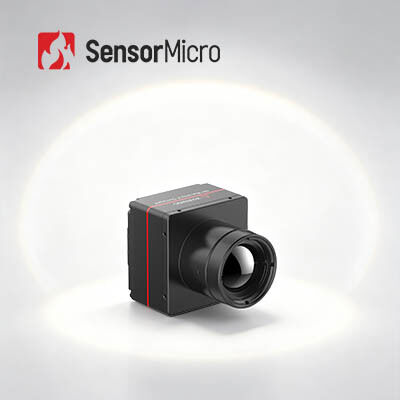
Uncooled Infrared Camera Core with 1280x1024 Resolution and 12μm Pixel Size for High Stability Thermal Imaging

| Place of Origin | China |
|---|---|
| Brand Name | SensorMicro |
| Certification | ISO9001:2015; RoHS; Reach |
| Model Number | iSE1212 |
| Minimum Order Quantity | 1 Piece |
| Price | Negotiable |
| Payment Terms | T/T |
Product Details
| Resolution | 1280x1024/12μm | Digital Frame Rate | 25Hz/30Hz/50Hz |
|---|---|---|---|
| Spectral Range | 8~14μm | Typical NETD | ≤30mK |
| Supply Voltage | 2.7V~5.3V | Typical Power Consumption | 1.2W@25Hz@23±3℃ |
| Highlight | Uncooled Infrared Camera Core 1280x1024,Thermal Imaging Camera Core 12um,Uncooled HD Infrared Camera Core |
||
Product Description
Uncooled Infrared Camera Core 1280x1024/12μm for High Stability Thermal Imaging
Product Overview
The iSE1212 uncooled thermal camera core delivers high-resolution thermal images up to 1280x1024 pixels with exceptional detail clarity. Featuring a reduced 12μm pixel size, it provides superior spatial resolution and compatibility with shorter optical lens focus for enhanced range performance.
Unlike traditional cooled thermal imaging systems, this uncooled HD LWIR 1280x1024/12μm VOx Thermal Imaging Module operates without cryogenic cooling, resulting in significant cost savings, increased portability, and simplified maintenance. The module utilizes advanced uncooled microbolometer sensor technology based on VOx (Vanadium Oxide) for reliable, continuous thermal imaging performance.
With its compact, optimized dimensions, the module is ideal for integration into various platforms including handheld devices, security systems, and portable equipment. The lightweight design ensures seamless integration into existing systems, offering flexibility and versatility across multiple thermal imaging applications.
Main Features
- High-Definition Imaging with Smooth Visuals: Delivers megapixel thermal imaging with smooth, lag-free performance. Provides wider field of view, larger angle coverage, longer detection range, and enhanced detail.
- Shutterless Operation for Silent Performance: No shutter calibration required during use, eliminating image stuttering common in traditional designs. Silent operation helps avoid detection by targets.
- Feature-Rich and Integration-Friendly: Supports super-resolution algorithms, picture-in-picture, customizable OSD, sleep mode, one-click calibration, and compatibility with various Micro OLED displays. Compatible with wide range of optical lenses and extended components for easy secondary development and flexible system integration.
Product Specifications
| Model | iSE1212 |
|---|---|
| IR Detectors Indicators | |
| Sensitive Material | VOx |
| Resolution | 1280×1024 |
| Pixel Size | 12μm |
| Spectral Response | 8μm ~ 14μm |
| Typical NETD | ≤30mK |
| Image Processing | |
| Effective Pixels | 1280×1024 |
| Digital Frame Rate | 25Hz/30Hz/50Hz |
| Start-up Time | 7s |
| Digital Video | YUV420/YUV422/RGB888/RAW |
| Image Algorithm | NUC/DRC/DNS/DDE/SFFC |
| Shutterless | Supported |
| Image Display | 10 Types (White Hot/Lava/Iron Red/Hot Iron/Medical/Arctic/Rainbow 1/Rainbow 2/Tint/Black Hot) |
| Image Direction | Horizontal/Vertical/Diagonal |
| Digital Zoom | 1x/2x/4x/8x |
| Image Brightness | Auto/Manual |
| Image Contrast | Auto/Manual |
| Compensation Mode | Manual |
| Reticle | Supported |
| System Function | |
| Sleep Mode | Supported |
| Menu Setting | Customizable |
| Menu Language | Chinese / English |
| Offset calibration | Supported |
| Keypads | ≥4 (Button functions customizable) |
| OLED Driving | Support I2C, 16bit/24bit Parallel Port, datavalid and other drive screen signals. Direct Drive Micro OLED MDP03/Micro OLED MDP02/OLiGHTEK SVGA060/Sony ECX334A. Supports MIPI display signals and can directly drive the IBOE VX039FHP-NH4 screen. |
| PC Software | Computer Software - Module Control & Video Display |
| Electrical | |
| Standard External Interface | 50pin: BP040SB-50-0114-B-R0 |
| Communication Interface | TTL-232/USB |
| Digital Video Interface | DVP16/BT.1120/USB3.0/MIPI-DSI-4LANE |
| Extension Components | USB3.0/SDI/HDMI/GIGE/Cameralink/VPC/MIPI-CSI-2LANE |
| Electrical Interface | Supply Voltage: 2.7V~5.3V |
| Typical Power Consumption | 1.2W@25Hz@23±3℃ |
| Mechanical/Lens | |
| Bare Core Size(mm) | 38×39×28 | 68×69×30.2 |
| Bare Core Weight(g) | 65±3 | 88.5±3 |
| Optical Lens | Fixed Focus Athermal: 14mm/19mm/25mm/35mm | Fixed Focus Athermal: 50mm/100mm Motorized Lens: 75mm/100mm/150mm Continuous Zoom: 15~100mm/25~75mm/28~90mm/30~180mm/25~225mm/30~300mm |
| Shutter Components | Optional |
| Protection Level | IP67 (Front Lens) |
| Environmental Adaptability | |
| Operating Temperature | -40℃~+70℃ |
| Storage Temperature | -45℃~+85℃ |
| Humidity | 5%~95%, non-condensing |
| Vibration | 5.35g, Random Vibration, 3-axis |
| Impact | Half Sine Wave, 40g/11ms, Impact Direction X Axis, 3 times | 500g@1ms |
| Certification | ROHS2.0/REACH |
Industrial Applications
The iSE1212 thermal imaging module is widely used in Industrial Vision, Firefighting and Rescue, Security Surveillance, Outdoor Observation, Machine Vision, Consumer Electronics, and more.
Product Portfolio Advantages
- Diverse Product Portfolio: Comprehensive range of product formats including infrared detectors, camera cores, and modules to meet various integration requirements.
- Rich Product Variety: Multiple array resolutions, pixel sizes, wavebands, and lens options combinations provide greater flexibility for diverse applications.
- Outstanding Performance: Clear imaging, compact size, low power consumption, high sensitivity, and strong reliability—designed to perform under a wide range of environmental challenges.
- Easy Integration: Multiple interface options make integration straightforward and enable rapid development across multiple application fields.
Frequently Asked Questions
What is an infrared detector?
An infrared detector is a device that detects and measures infrared radiation. Infrared radiation is a type of electromagnetic radiation that has a longer wavelength than visible light and is therefore not visible to the naked eye. Infrared detectors can detect and analyze the distribution of infrared radiation across a range of wavelengths. They are used in a variety of applications, including thermal imaging, spectroscopy, remote sensing, and security systems. Infrared detectors can be classified into several types, including photon detectors (such as photovoltaic detectors or photoconductors) and thermal detectors (such as microbolometers or thermopiles).
Recommended Products
