


All Products
-
Thermal Camera Core
-
Thermal Security Camera
-
Plug-in Thermal Camera
-
Cooled Infrared Detectors
-
Cooled Camera Modules
-
Optical Gas Imaging
-
Radiometric Thermal Module
-
High Resolution Thermal Camera Module
-
Thermal Camera For Fever Detection
-
Vehicle Mounted Thermal Camera
-
Integrated Dewar Cooler Assembly
-
Uncooled Infrared Detectors
Contact Person :
Wendy Wang
Phone Number :
+86 27 50185150
LC130 Infrared Thermal Camera Module With 120x90 17μm Uncooled Detector
| Place of Origin | Wuhan, Hubei Province, China |
|---|---|
| Brand Name | SensorMicro |
| Certification | ISO9001:2015; RoHS; Reach |
| Model Number | LC130 |
| Minimum Order Quantity | 1 Piece |
| Price | Negotiable |
| Payment Terms | L/C,T/T |
Product Details
| Resolution | 120x90 | Pixel Pitch | 17μm |
|---|---|---|---|
| Temperature Range | -20℃~+400℃ | Power Consumption | ≤150mW |
| Highlight | LC130 Infrared Thermal Camera Module,Infrared Thermal Camera Module 17um,Infrared Thermal Camera Core 120x90 |
||
Product Description
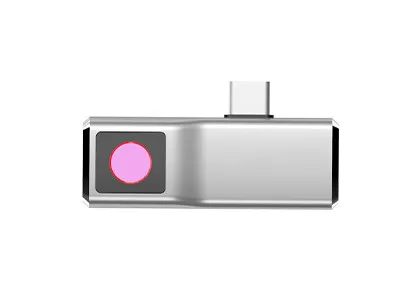
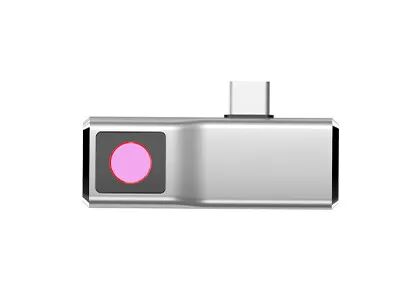
LC130 Thermal Camera Core
LC130 Thermal Camera Core with 120x90 / 17μm Uncooled Detector for Industrial Temperature Measurement
Product Description
Specially designed for industrial temperature measurement, the LC130 infrared module has two optional temperature ranges that are divided into standard and professional version. Its standard version ranges from -20℃~+150℃, while the professional version is from -20℃~+400℃ (-20~150℃/100~400℃ t auto switch)
This tiny infrared module integrates the wafer level packaging 120x90 / 17μm uncooled infrared detector. With SDK and USB interface, the LC130 uncooled thermal module can be easy to be integrated for secondary development.
Main Features
- IR resolution120×90
- IR module for industrial temperature measurement
- Selectable temperature range: standard / professional version
- The color of exterior of the device is Aluminum alloy silver
- With SDK and USB interface, easy for integrated development
Product Specifications
| Version | Standard | Professional |
| IR Resolution | 120×90@17μm | |
| FOV | 50°×38° | |
| Focal Length | 2.3mm #F1.1 | |
| Interface | USB, Type-C Male Connector, USB 2.0 Protocol | |
| Power Consumption | ≤150mW | |
| Temperature Accuracy | ±2℃ or ±2% (Environment Temperature 5℃~30℃ ) | |
| Temperature Range | -20℃~+150℃ | -20℃~+400℃ (-20-150℃ / 100-400℃ Auto Switch) |
| Measuring Distance | 0.5~1.2 Meters | |
| SDK | Android / Linux x86&x64 / Windows x86&x64 | |
| Authentication | CE, FCC, RoHS | |
Industrial Applications
The target user groups are power inspection supporting manufacturer, industrial handset terminal manufacturer, tool maker, electric power AR glasses inspection tool maker.
About Us
Our Vision: To push the boundaries of sensing and transform the way people connect with the world around them.
Our Mission: To harness the power of infrared sensing technology to transform industries worldwide, enabling smarter decisions, safer environments, and a more connected future.
Our Value: To create advanced infrared technology that makes the world a better place.
FAQs
1. Thermal Image Vs. Visual Image
Visible light is an electromagnetic wave that can be seen by humans. Its wavelength range generally falls between 360-400 nm~760-830nm. This electromagnetic spectrum is also called the visible spectrum, and its frequency range is 830-750THz~395-360THz.
Infrared is an electromagnetic wave with a wavelength between microwave and visible light. Its wavelength is between 760 nanometers (nm) and 1 millimeter (mm). It is an invisible light with a wavelength longer than red light. The frequencies are approximately in the range of 430 THz to 300 GHz.
2. Detector of Thermal Image & Visual Image
For the core detectors of imaging device, visible light devices use the CCD and CMOS detector, while thermal imaging uses cooled and uncooled detector. The main difference is that visible light CCD/CMOS can perceive light waves in the visible light band, and thermal imaging detectors can sense thermal radiation light waves in the infrared band. Infrared thermal imaging detectors are divided into many types according to different manufacturing processes and packaging materials. The more macroscopic feeling is that infrared thermal imaging detectors are more expensive than visible light CCDs.
Recommended Products
