


All Products
-
Thermal Camera Core
-
Thermal Security Camera
-
Plug-in Thermal Camera
-
Cooled Infrared Detectors
-
Cooled Camera Modules
-
Optical Gas Imaging
-
Radiometric Thermal Module
-
High Resolution Thermal Camera Module
-
Thermal Camera For Fever Detection
-
Vehicle Mounted Thermal Camera
-
Integrated Dewar Cooler Assembly
-
Uncooled Infrared Detectors
Contact Person :
Wendy Wang
Phone Number :
+86 27 50185150
LC160 Uncooled 120x90 / 17μm Thermal Camera Core for Temperature Measurement
| Place of Origin | Wuhan, Hubei Province, China |
|---|---|
| Brand Name | SensorMicro |
| Certification | ISO9001:2015; RoHS; Reach |
| Model Number | LC160 |
| Minimum Order Quantity | 1 Piece |
| Price | Negotiable |
| Payment Terms | L/C,T/T |
Product Details
| Resolution | 120x90 | Pixel Pitch | 17μm |
|---|---|---|---|
| Temperature Range | 20℃~50℃ | Power Consumption | ≤150mW |
| Highlight | LC160 Uncooled Thermal Camera Core,Temperature Measurement Thermal Camera Core,120x90 Uncooled IR Module |
||
Product Description
LC160 Thermal Camera Core
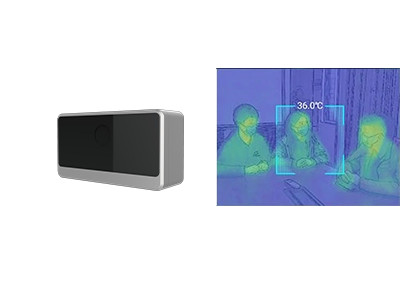
LC160 Uncooled 120x90 / 17μm Thermal Camera Core for Human Body Temperature Measurement
Product Description
Specially designed for body temperature measurement, the LC160 infrared module has an temperature range from 20℃~50℃ and an accurate temperature range from 28℃~42℃. Its measuring distance could reach 0.5~1.2meters
This tiny infrared module integrates the wafer level packaging 120x90 / 17μm uncooled infrared detector. With SDK and USB interface, the LC160 uncooled thermal module can be easy to be integrated for secondary development.
Main Features
- IR resolution120×90
- IR module for body temperature measurement
- Aluminum alloy exterior, enhancing the heat dissipation efficiency
- IP54, higher protection grade
- With SDK and USB interface, easy for integrated development
Product Specifications
| Version | LC160 |
| IR Resolution | 120×90@17μm |
| FOV | 50°×38° |
| Focal Length | 2.3mm #F1.1 |
| Interface | 4PIN Connector, USB 2.0protocal |
| Power Consumption | ≤150mW |
| Temperature Accuracy | ±0.5℃ (Environment Temeprature10℃~35℃) |
| Temperature Range | 20℃ ~50℃ | Accurate Temperature Range 28~42℃ |
| Measuring Distance | 0.5~1.2 meters |
| SDK | Android / Linux x86&x64 / Windows x86&x64 |
| Authentication | RoHS |
Industrial Applications
The target customer group is mainly low-end face recognition panel manufacturers (such as clock attendance, access control, gates, etc.) such as this 4-5 inch face recognition panel.
Diverse Product Portfolio
A wide range of product formats including infrared detectors, camera cores, and modules to meet various integration requirements.
Rich Product Variety
Multiple array resolutions, pixel sizes, wavebands, and lens options combinations provide greater flexibility for diverse applications.
Outstanding Performance
Clear imaging, compact size, low power consumption, high sensitivity, and strong reliability—designed to perform under a wide range of environmental challenges.
Easy Integration
Multiple interface options make integration straightforward and enable rapid development across multiple application fields.
FAQs
1. Thermal Image Vs. Visual Image
Visible light is an electromagnetic wave that can be seen by humans. Its wavelength range generally falls between 360-400 nm~760-830nm. This electromagnetic spectrum is also called the visible spectrum, and its frequency range is 830-750THz~395-360THz.
Infrared is an electromagnetic wave with a wavelength between microwave and visible light. Its wavelength is between 760 nanometers (nm) and 1 millimeter (mm). It is an invisible light with a wavelength longer than red light. The frequencies are approximately in the range of 430 THz to 300 GHz.
2. Detector of Thermal Image & Visual Image
For the core detectors of imaging device, visible light devices use the CCD and CMOS detector, while thermal imaging uses cooled and uncooled detector. The main difference is that visible light CCD/CMOS can perceive light waves in the visible light band, and thermal imaging detectors can sense thermal radiation light waves in the infrared band. Infrared thermal imaging detectors are divided into many types according to different manufacturing processes and packaging materials. The more macroscopic feeling is that infrared thermal imaging detectors are more expensive than visible light CCDs.
Recommended Products
