


All Products
-
Thermal Camera Core
-
Thermal Security Camera
-
Plug-in Thermal Camera
-
Cooled Infrared Detectors
-
Cooled Camera Modules
-
Optical Gas Imaging
-
Radiometric Thermal Module
-
High Resolution Thermal Camera Module
-
Thermal Camera For Fever Detection
-
Vehicle Mounted Thermal Camera
-
Integrated Dewar Cooler Assembly
-
Uncooled Infrared Detectors
Contact Person :
Wendy Wang
Phone Number :
+86 27 50185150
Cooled Thermal Camera Core 320x256 Resolution 30μm Pixel Size for VOCs Gas Leak Detection

| Place of Origin | China |
|---|---|
| Brand Name | SensorMicro |
| Certification | ISO9001:2015; RoHS; Reach |
| Model Number | LFM330Z3 |
| Minimum Order Quantity | 1 Piece |
| Price | Negotiable |
| Payment Terms | T/T |
Product Details
| Style | Cooled Infrared Module | Resolution | 320x256 / 30μm |
|---|---|---|---|
| NETD | 10mK | Spectral Range | 3.2±0.1~3.5±0.1μm |
| Frame Rate | 30Hz | Optional Lens | Fixed Zoom |
| Highlight | Cooled Thermal Camera Core 320x256,VOCs Thermal Camera Core,Gas Leak Detection Camera Core |
||
Product Description
Cooled Thermal Camera Core 320x256 30μm for VOCs Gas Leak Detection
Product Overview
Volatile Organic Compounds (VOCs) are gases emitted into the air from products or processes. Some VOCs are harmful by themselves, including carcinogens, and can react with other gases to form additional air pollutants.
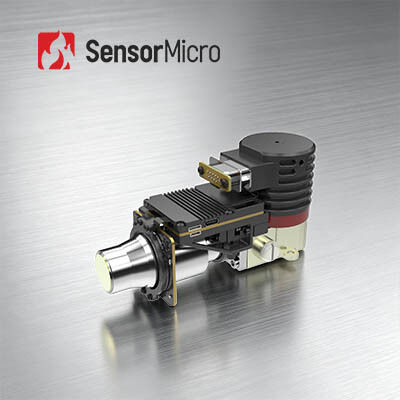
The LFM330Z3 is a cooled infrared thermal imaging module specifically engineered for gas leakage detection. It integrates a 320x256/30µm MCT cooled MWIR infrared detector and employs spectral wavelength filtering technology to visualize invisible VOCs that cannot be detected by the naked eye.
We specialize in the design, manufacture, sales, and marketing of thermal detector sensors and thermal image sensor modules. Our solutions provide customers with various infrared thermal imaging options that shorten secondary development time and significantly reduce costs.
Main Features
High Sensitivity Detection
- Highly sensitive infrared detector with NETD 10mK
- Highly efficient for low gas concentration and slow gas flow applications
- Long-distance non-contact detection of VOCs including alkanes, alkenes, alcohols, benzenes, ketones, and more
Superior Performance
- Professional gas detection image processing algorithm
- Various lens options for multiple FOV and application scenarios
Easy Integration
- Support for various interfaces and RAW/YUV image output
Product Specifications
| Module model | LFM330Z3 |
|---|---|
| Resolution | 320×256 |
| Pixel size | 30μm |
| Spectral response | 3.2±0.1μm~3.5±0.1μm |
| Typical NETD | 10mK (F1.5) |
| Frame rate | 30Hz |
| Digital video | Standard: DVP/LVDS/USB2.0 Optional: Cameralink/USB3.0/GigE/SDI/MIPI/Single-mode fiber/Multi-mode fiber |
| Communication | Standard: USB2.0/LV-TTL Optional: RS422/CAN/USB3.0/GigE |
| Cryocooler | RS058I | LS713 | LS734 |
| Cooling time (23℃) | ≤8min@12V | ≤6.5min@12V | ≤6.5min@24V |
| Stable power consumption (23℃) | ≤10W | ≤11W | ≤16W |
| Size (mm) | 142×58.5×80 | 108×116×73 | 130×131×80 |
| Weight (g) | ≤680 | ≤800 | ≤1610 |
| Working temperature | -40℃~+71℃ |
| Focal length | 23mm/55mm/25-75mm |
Industrial Applications
The LFM330Z3 gas leak detection thermal imaging camera is used for visualizing invisible VOCs (volatile organic compounds) and detecting gas leakage including:
- Methane, Ethane, Propane, Butane, Pentane, Hexane, Heptane, Octane
- Ethylene, Propylene, Isoprene
- Methanol, Ethanol, Butanone
- Benzene, Toluene, Xylene, Ethylbenzene
Our Product Line
High sensitivity and excellent performance
World-leading technology in infrared industry
Various infrared detectors available
Both uncooled and cooled IR detectors in different formats and pixel sizes
Volume production to ensure fast delivery
Three production lines with annual production capability up to millions of detectors
Frequently Asked Questions
What is thermal sensitivity?
Thermal Sensitivity, also named NETD (Noise Equivalent Temperature Difference), is a key parameter for evaluating medium wave (MWIR) and long wave (LWIR) thermal imaging cameras. It is directly related to the clarity measured by the thermal imager. It is a numerical value representing the signal-to-noise ratio of the temperature difference and measured in milliKelvins (mK). The smaller the thermal sensitivity value, the higher the sensitivity and the clearer the image.
What are the applications of thermal imaging?
Temperature measurement and all-weather imaging are two basic functions of infrared thermal imaging technology. Products developed based on these technologies are widely used in security & monitoring, industrial inspection, firefighting, predictive maintenance, ADAS, epidemic prevention, and AIoT applications.
Recommended Products
