


All Products
-
Thermal Camera Core
-
Thermal Security Camera
-
Plug-in Thermal Camera
-
Cooled Infrared Detectors
-
Cooled Camera Modules
-
Optical Gas Imaging
-
Radiometric Thermal Module
-
High Resolution Thermal Camera Module
-
Thermal Camera For Fever Detection
-
Vehicle Mounted Thermal Camera
-
Integrated Dewar Cooler Assembly
-
Uncooled Infrared Detectors
Contact Person :
Wendy Wang
Phone Number :
+86 27 50185150
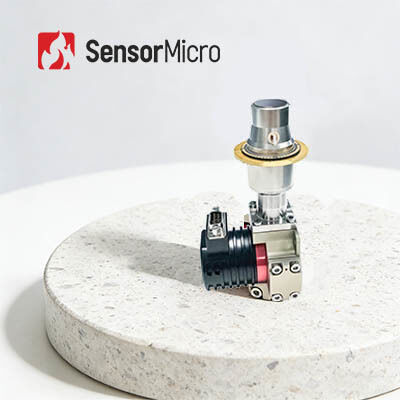
320x256/30μm Pixel Size 20mK NETD Optical Gas Imaging Cooled Infrared Detector for Gas Leak Detection

| Place of Origin | Wuhan, Hubei Province, China |
|---|---|
| Brand Name | SensorMicro |
| Certification | RoHS; Reach |
| Model Number | LFD330C2 |
| Minimum Order Quantity | 1 Piece |
| Price | Negotiable |
| Payment Terms | L/C,T/T |
Product Details
| Size (mm) | 142×58.5×71 | Detector Resolution | 320x256 |
|---|---|---|---|
| Spectral Range | 10.3±0.1μm~10.9±0.1μm | Function | Gas Leak Detection |
| Pixel Size | 30μm | NETD | 20mK (F1.5) |
| Highlight | 7W MWIR Cooled Ir Detector,320x256 Cooled Ir Detector,Optical Gas Imaging MWIR Detector |
||
Product Description
320*256 Optical Gas Imaging LWIR Cooled IR Detector for Gas Leak Detection
Product Overview
The LFD330C2 infrared detector utilizes advanced Type II Superlattice (T2SL) technology, delivering exceptional sensitivity, stability, and integration flexibility for detecting gases including sulfur hexafluoride (SF₆), ammonia, and ethylene. Its strong ability to penetrate smoke and dust allows it to work normally even in harsh environments such as chemical fumes.
LFD330C2 cooled LWIR infrared detector realizes non-contact, long-distance, real-time and high-precision detection of SF₆/NH₃ gas leakage, greatly improving the efficiency and reliability of leakage detection.
Key Features
- Advanced Technology: Built on T2SL technology with high quantum efficiency
- Easy Integration: Supports multiple interfaces and RAW/YUV image output
- High Sensitivity: Superior detection capabilities for gas visualization
Technical Specifications
| Parameter | Specification |
|---|---|
| Detector Model | LFD330C2 |
| Resolution | 320*256 |
| Pixel Size | 30μm |
| Spectral Response | 10.3±0.1μm – 10.9±0.1μm |
| Typical NETD | 20mK (F1.5) |
| Cooling Time (23℃) | ≤7min@24V |
| Power Consumption (23℃) | ≤25W@24V (Peak) ≤10W@24V (Stable) |
| Dimensions | 142*58.5*71 mm |
| Weight | ≤600g |
| Operating Temperature | -45℃ to +71℃ |
| Storage Temperature | -55℃ to +71℃ |
| MTTF | ≥10,000 hours |
*MTTF: Mean Time To Failure
Industrial Applications
The LFD330C2 cooled infrared detector is designed for SF₆ and NH₃ gas leak detection and supports detection of 26 different gas types:
- Sulfur hexafluoride
- Anhydrous ammonia
- Cyanoacrylate ethyl ester
- Chlorine dioxide
- Acetic acid
- Freon-12
- Ethylene
- Methyl ethyl ketone
- Acetyl chloride
- Allyl bromide
- Allyl chloride
- Allyl fluoride
- Bromomethane
- Freon-11
- Furan
- Hydrazine
- Methylsilane
- Methylvinyl ketone
- Acrolein
- Propene
- Tetrahydrofuran
- Trichloroethylene
- Uranyl fluoride
- Vinyl chloride
- Vinyl cyanide
Optical Gas Imaging Advantages
- Non-Contact & Remote Detection: Conduct safe, non-destructive testing from a distance in hazardous or complex environments
- Rapid Leak Source Location: Support wide-area real-time detection to quickly identify leak sources without interrupting production
- Visual Gas Leak Display: Intuitively display leak locations with high efficiency, eliminating the need for point-by-point inspection
- Enhanced Inspection Safety: Reduce accident risks and minimize operational losses through safer detection methods
Frequently Asked Questions
How does an uncooled focal plane array microbolometer work?
Using the principle of infrared radiant thermal effect, uncooled infrared detectors convert infrared radiation energy into heat energy through infrared absorption material, increasing the temperature of the sensitive material. This causes specific physical parameters to change accordingly, which are then converted into electrical or visible light signals through designed conversion mechanisms to enable object detection.
What are the advantages of uncooled infrared detectors?
Uncooled infrared focal plane detectors operate at room temperature without requiring an Integrated Dewar Cooler Assembly (IDCA) device. They offer benefits including fast startup, low power consumption, compact size, light weight, long lifespan, and cost-effectiveness. While their sensitivity may not match cooled detectors, years of development have made their cost-performance ratio significantly better than cooled detectors, providing broader application prospects.
Recommended Products
