


All Products
-
Thermal Camera Core
-
Thermal Security Camera
-
Plug-in Thermal Camera
-
Cooled Infrared Detectors
-
Cooled Camera Modules
-
Optical Gas Imaging
-
Radiometric Thermal Module
-
High Resolution Thermal Camera Module
-
Thermal Camera For Fever Detection
-
Vehicle Mounted Thermal Camera
-
Integrated Dewar Cooler Assembly
-
Uncooled Infrared Detectors
Contact Person :
Wendy Wang
Phone Number :
+86 27 50185150
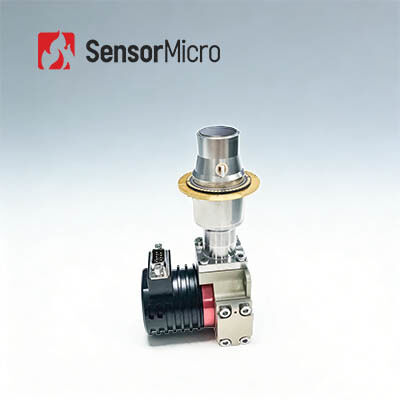
Cooled MWIR Optical Gas Imaging Detector with 10mK NETD and 320x256 Resolution for Gas Leak Detection

| Place of Origin | Wuhan, Hubei Province, China |
|---|---|
| Brand Name | SensorMicro |
| Certification | RoHS; Reach |
| Model Number | LFD330Z7 |
| Minimum Order Quantity | 1 Piece |
| Price | Negotiable |
| Payment Terms | L/C,T/T |
Product Details
| Function | Gas Leak Detection | Size (mm) | 142×58.5×71 |
|---|---|---|---|
| NETD | 10mK (F1.5) | Pixel Size | 30μm |
| Spectral Range | 4.5±0.1μm~4.7±0.1μm | Detector Resolution | 320x256 |
| Highlight | 16bit Raw Data MWIR Module,10mK Optical Gas Imaging Camera,MWIR Gas Imaging Camera |
||
Product Description
16bit Raw Data MWIR Optical Gas Imaging Infrared Detector 10mK for Visualizing Gas Leaks
320x256/30 μm MWIR Cooled Optical Gas Imaging Thermal Detector
Carbon monoxide (CO) is a common gas in high-temperature metallurgy, petroleum refining, and industrial processes. It is colorless, odorless, easily diffused, and highly toxic. Traditional gas detection methods often have significant blind spots and high missed detection rates.
The LFD330Z7 infrared detector for gas leak detection quickly scans wide areas, accurately locates leak sources from a distance, and provides clear imaging. This enables inspection personnel to efficiently identify hidden dangers and ensure operational safety.
Main Features
High sensitivity & reliability
High effective pixel rate
Clear visualization of minor leaks
Gas enhanced HSM algorithm support (for module)
Easy integration with various interfaces
RAW/YUV image output support
Product Specifications
| Detector model | LFD330Z7 |
| Resolution | 320*256 |
| Pixel size | 30μm |
| Spectral response | 4.5±0.1μm~4.7±0.1μm |
| Typical NETD | 10mK (F1.5) |
| Cooling time (23℃) | ≤7min@12V |
| Power consumption (23℃) | ≤15W@12V (Peak) ≤7W@12V (Stable) |
| Size (mm) | 142*58.5*71 |
| Weight (g) | ≤600g |
| Working temperature | -45℃~+71℃ |
| Storage temperature | -55℃~+71℃ |
| MTTF | ≥10000h |
Industrial Applications
Petrochemical industry: Monitoring CO leaks during hydrocarbon combustion, catalytic reforming, and gas storage processes
Metallurgical industry: Detection during steelmaking and non-ferrous metal smelting where incomplete combustion generates significant CO
Residential and commercial buildings: Identifying CO leaks from gas water heaters, furnaces, and boilers
Scientific research and environmental monitoring: Studying CO emission mechanisms and tracking atmospheric CO distribution
Customized Services
Product Customization: Adjust configurations and adapt algorithms for industry-specific requirements
On-Site Technical Support & Training: Provide hands-on system setup and operational training for core customers
Joint Innovation: Collaborate with customers to co-develop innovative infrared application solutions
Frequently Asked Questions
What is the difference between uncooled and cooled IR detectors?
There are currently two types of infrared thermal imaging sensors on the market: cooled and uncooled.
Uncooled IR detectors operate at ambient temperature. Based on semiconductor technology, they can be manufactured in large volumes with small size and low cost. Uncooled IR detectors are widely used in portable, handheld, and mobile devices.
Cooled IR detectors are packaged in units that maintain extremely low temperatures using cryo coolers. They are larger, more expensive, and less reliable than uncooled sensors due to complex cooling systems. However, cooled systems offer exceptional sensitivity and typically work with long focal length optics for long-range applications.
Uncooled IR detectors operate at ambient temperature. Based on semiconductor technology, they can be manufactured in large volumes with small size and low cost. Uncooled IR detectors are widely used in portable, handheld, and mobile devices.
Cooled IR detectors are packaged in units that maintain extremely low temperatures using cryo coolers. They are larger, more expensive, and less reliable than uncooled sensors due to complex cooling systems. However, cooled systems offer exceptional sensitivity and typically work with long focal length optics for long-range applications.
Recommended Products
