


All Products
-
Thermal Camera Core
-
Thermal Security Camera
-
Plug-in Thermal Camera
-
Cooled Infrared Detectors
-
Cooled Camera Modules
-
Optical Gas Imaging
-
Radiometric Thermal Module
-
High Resolution Thermal Camera Module
-
Thermal Camera For Fever Detection
-
Vehicle Mounted Thermal Camera
-
Integrated Dewar Cooler Assembly
-
Uncooled Infrared Detectors
Contact Person :
Wendy Wang
Phone Number :
+86 27 50185150
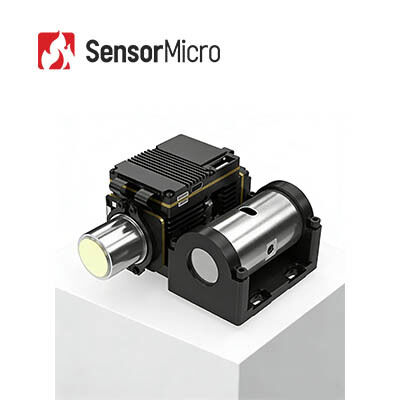
320x256 Resolution 30μm Pixel Size Cooled IR Camera Module with 10mK NETD for Gas Leak Detection

| Place of Origin | China |
|---|---|
| Brand Name | SensorMicro |
| Certification | ISO9001:2015; RoHS; Reach |
| Model Number | LFM330Z3 |
| Minimum Order Quantity | 1 Piece |
| Price | Negotiable |
| Payment Terms | T/T |
Product Details
| Type | Gas Leakage Detection | Spectral Range | 3.2±0.1~3.5±0.1μm |
|---|---|---|---|
| Focal Length | 23mm/55mm/25-75mm | Frame Rate | 30Hz |
| Resolution | 320x256 / 30μm | Typical NETD | 10mK (F1.5) |
| Highlight | Cooled IR Camera Module 320x256,Cooled IR Camera Module 30um,Gas Leak Detection Cooled Camera Modules |
||
Product Description
Thermal Camera Core Cooled IR Camera Module 320x256/30μm for Gas Leak Detection
Product Overview
In the petrochemical industry, gas leak detection scenarios occur frequently. Traditional detection devices have limited detection distance and low efficiency, making it difficult to achieve intuitive and accurate identification of common VOCs gas leaks such as methane and benzene.
The LFD330Z3 infrared thermal module is specifically designed for VOCs gas leak detection. It can remotely and visually detect minor leaks of VOCs gases such as methane, benzene, and ethanol, enabling efficient gas operation monitoring and safety production warnings.
We are a supplier of infrared detector sensors and OEM thermal camera cores with many years of experience in infrared thermal imaging industries. Our professional after-sales service team provides expert support. For any questions or problems, please contact us at any time.
Main Features
- High reliability
- Clear visualization of minor leaks with gas enhanced HSM algorithm
- Multi-scenario application for portable handheld devices or 24/7 online monitoring
- Easy integration with various interfaces and RAW/YUV image output
Product Specifications
| Module model | LFM330Z3 |
|---|---|
| Resolution | 320*256 |
| Pixel size | 30μm |
| Spectral response | 3.2±0.1μm~3.5±0.1μm |
| Typical NETD | 10mK (F1.5) |
| Frame rate | 30Hz |
| Digital video | Standard: DVP/LVDS/USB2.0 Optional: Cameralink/USB3.0/GigE/SDI/MIPI/Single-mode fiber/Multi-mode fiber |
| Communication | Standard: USB2.0/LV-TTL Optional: RS422/CAN/USB3.0/GigE |
| Cryocooler | RS058I | LS713 | LS734 |
| Cooling time (23 ℃) | ≤8min@12V | ≤6.5min@12V | ≤6.5min@24V |
| Stable power consumption (23 ℃) | ≤10W | ≤11W | ≤16W |
| Size (mm) | 142*58.5*80 | 108*116*73 | 130*131*80 |
| Weight (g) | ≤680 | ≤800 | ≤1610 |
| Working temperature | -40℃~+71℃ |
| Focal length | 23mm/55mm/25-75mm |
Industrial Applications
The LFM330Z3 gas leak detection thermal imaging camera is used for visualizing invisible VOCs (volatile organic compounds) and detecting gas leakage including: Methane, Ethane, Propane, Butane, Pentane, Hexane, Heptane, Octane, Ethylene, Propylene, Isoprene, Methanol, Ethanol, Butanone, Benzene, Toluene, Xylene, Ethylbenzene, and more.
Our Services
- Product Customization: Adjust configurations and adapt algorithms to meet industry-specific requirements
- On-Site Technical Support & Training: Provide core customers with hands-on system setup and operational training
- Joint Innovation for New Products & Markets: Collaborate with customers to co-develop innovative infrared application solutions
Frequently Asked Questions
What is NETD?
NETD refers to "Noise Equivalent Temperature Difference". It measures how well a thermal imaging detector can distinguish between very small differences in thermal radiation. NETD is typically expressed in milli-Kelvin (mK). Lower NETD values indicate higher thermal sensitivity.
What is OGI (Optical Gas Imaging)?
Optical gas imaging uses thermal infrared cameras to visualize gases, including methane and many other organic gases. Thermal cameras for gas leakage are fast-acting detection devices that can conduct non-destructive testing and protect inspector safety.
What is infrared thermal imaging?
In nature, all objects with temperatures above absolute zero (-273℃) radiate infrared rays. By using infrared camera detectors to measure infrared radiation temperature differences between targets and backgrounds, different infrared images (thermal images) are obtained.
How do infrared detectors work?
Infrared radiation emitted by targets enters the thermal detector's sensing range. The infrared detector converts radiation signals of different intensities into corresponding electrical signals, which are then amplified and processed to form infrared images visible to the naked eye.
What are the advantages of cooled infrared detectors?
Cooled infrared focal plane detectors operate at low temperatures provided by detector dewar coolers (DDC). They offer high sensitivity and can distinguish more subtle temperature differences than uncooled detectors. They can detect, identify, and recognize objects at ranges exceeding ten kilometers. The complex structure of cooled detectors results in relatively higher costs compared to uncooled detectors.
Recommended Products
-
VIDEO

-