


All Products
-
Thermal Camera Core
-
Thermal Security Camera
-
Plug-in Thermal Camera
-
Cooled Infrared Detectors
-
Cooled Camera Modules
-
Optical Gas Imaging
-
Radiometric Thermal Module
-
High Resolution Thermal Camera Module
-
Thermal Camera For Fever Detection
-
Vehicle Mounted Thermal Camera
-
Integrated Dewar Cooler Assembly
-
Uncooled Infrared Detectors
Contact Person :
Wendy Wang
Phone Number :
+86 27 50185150
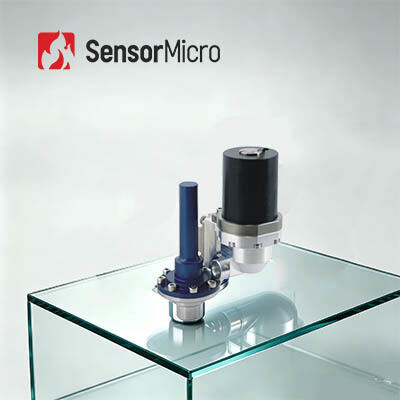
RS046H Split Integrated Dewar Cooler Assembly with 400mW Cooling Power, Compact 45x34x67mm Size, and Low Power Consumption <3.5W

| Place of Origin | Wuhan, Hubei Province, China |
|---|---|
| Brand Name | SensorMicro |
| Certification | ISO9001:2015; RoHS; Reach |
| Model Number | RS046H |
| Minimum Order Quantity | 1 Piece |
| Price | Negotiable |
| Payment Terms | L/C,T/T |
Product Details
| Cooling Power | (@100K@20℃)>400mW | Stable Power Consumption | <3.5W (130mW@100K@20°C) |
|---|---|---|---|
| Working Temperature | -45℃~+85℃ | Size | 45x34x67mm |
| Weight | <250g | MTTF | >10000h |
| Highlight | Split Integrated Dewar Cooler Assembly,RS046H Integrated Dewar Cooler Assembly |
||
Product Description
RS046H Split Integrated Dewar Cooler Assembly
RS046H Cryo Cooler
RS046H 400mW Split Rotary Stirling Cryocooler for Cooled Infrared Detectors
Product Description
RS046H is a split version of the RS046 rotary stirling cooler developed by SensorMicro. With the same compressor structure as RS046, the split format RS046H features an even more compact size.
The cold finger in RS046H dewar cooler maintains the same diameter as the RS046 cooler but with a shorter length. The split design separating the compressor and cold finger provides flexibility for specialized infrared system designs. Additionally, separating the cooled detector from the vibration source makes RS046H optimal for applications requiring minimal vibration and specific environmental conditions.
Due to its lightweight construction, miniaturization, and low power consumption, the RS046H cryo cooler integrates easily into various terminal products, significantly reducing costs while meeting diverse customer customization requirements.
Main Features
- MTTF > 10,000 hours
- Cooling Power: (@100K@20℃) > 400mW
- Cooling Time: < 5 minutes (110J@100K@20℃)
- Small Size
- Low Noise
- Low Power Consumption
Product Specifications
| Model | RS046H |
|---|---|
| Type | Split Rotary Stirling Cryocooler |
| MTTF | > 10,000 hours |
| Size (mm) | 45*34*67 Φ38*70 |
| Weight | < 250g |
| Cooling Power | (@100K@20°C) > 400mW |
| Working Temperature | -45°C ~ +85°C |
| Storage Temperature | -56°C ~ +85°C |
| Environmental Specification | MIL-STD-810 |
| Input Voltage | 24-32VDC |
| Max Power Consumption | < 12W |
| Steady Power Consumption | < 3.5W (130mW@100K@20°C) |
| Cooling Time | < 5 minutes (110J@100K@20°C) |
| Cold Finger Dimension | Φ6.4mm |
| Electronics | External |
| Integration Method | IDDCA |
Industrial Applications
The RS046H integrated dewar cooler assembly provides cryogenic environments for cooled infrared detectors.
About SensorMicro
SensorMicro is a world-leading infrared detector manufacturer and service provider, committed to delivering high-performance uncooled and cooled thermal imaging detectors to customers worldwide while sharing professional application expertise.
We deliver advanced infrared detectors, camera cores, and modules with versatile formats and wavebands. Designed for clarity, sensitivity, and efficiency, our products integrate seamlessly into diverse systems—empowering next-generation imaging and sensing applications across industries.
SensorMicro detectors are widely used in thermography, security & surveillance, personal vision, automotive, and consumer infrared products. Our volume production capabilities meet growing demands across all existing and emerging markets.
Frequently Asked Questions
What is infrared thermal imaging?
In nature, all objects with temperatures above absolute zero (-273℃) radiate infrared rays. Using infrared camera detectors to measure temperature differences between targets and backgrounds produces different infrared images, also known as thermal images.
How do infrared detectors work?
Infrared radiation emitted by targets enters the thermal detector's sensing range. The infrared detector converts varying radiation intensities into corresponding electrical signals, which are then amplified and processed to form infrared images visible to the naked eye.
What are the advantages of cooled infrared detectors?
Cooled infrared focal plane detectors operate at low temperatures provided by detector dewar coolers (DDC). They offer high sensitivity, distinguishing more subtle temperature differences than uncooled detectors, and can detect, identify, and recognize objects over distances exceeding ten kilometers. While their complex structure results in higher costs than uncooled detectors, their performance advantages are significant for demanding applications.
Recommended Products
