


All Products
-
Thermal Camera Core
-
Thermal Security Camera
-
Plug-in Thermal Camera
-
Cooled Infrared Detectors
-
Cooled Camera Modules
-
Optical Gas Imaging
-
Radiometric Thermal Module
-
High Resolution Thermal Camera Module
-
Thermal Camera For Fever Detection
-
Vehicle Mounted Thermal Camera
-
Integrated Dewar Cooler Assembly
-
Uncooled Infrared Detectors
Contact Person :
Wendy Wang
Phone Number :
+86 27 50185150
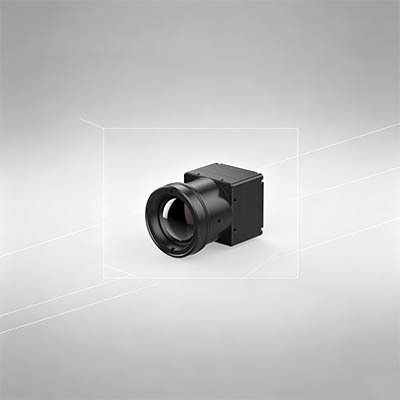
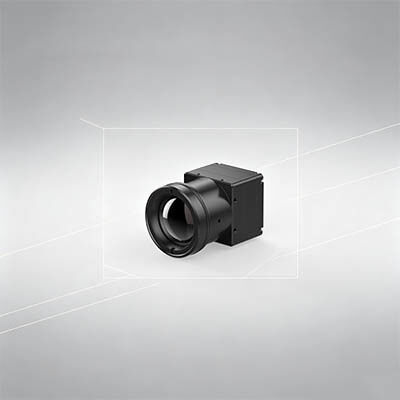
LWIR Uncooled Thermal Imaging Module 384x288 / 17μm with 25mm Lens
| Place of Origin | China |
|---|---|
| Brand Name | SensorMicro |
| Certification | ISO9001:2015; RoHS; Reach |
| Model Number | COIN417G3 |
| Minimum Order Quantity | 1 Piece |
| Price | Negotiable |
| Payment Terms | T/T |
Product Details
| Resolution | 384x288 | Power Consumption | 0.65W |
|---|---|---|---|
| Spectral Range | 8~14μm | Pixel Pitch | 17μm |
| NETD | ≤30mK/F1.0/25℃ | Frame Rate | 25/30/50Hz |
| Highlight | Thermal Camera Module 12um,640x512 LWIR Thermal Camera Module,Compact LWIR Camera Core |
||
Product Description
LWIR Uncooled 384x288 17μm Thermal Imaging Module with 25mm Lens
Product Overview
Equipped with a 384×288 17μm wafer-level packaged infrared detector, the COIN417G3 thermal camera core features NETD≤30mK ultra-high thermal sensitivity and optimized imaging algorithms. With multi-format image output and low power consumption design, this infrared camera core supports flexible lens matching and convenient secondary integration. It is widely adopted for night security monitoring, firefighting rescue, industrial machine vision and vehicle ADAS peripheral systems.
Main Features
- Comprehensive Functionality, Cost-Effective Design - Developed using a high cost-performance wafer-level packaging detector with integrated advanced image processing algorithms to enhance image quality
- Outstanding Performance, Superior Imaging - High sensitivity with typical NETD≤30mK and next-generation image algorithms delivering clearer, sharper thermal images
- Flexible Extension, Rapid Integration - Multiple optical lens options available to suit diverse application scenarios with support for USB2.0/DVP/LVDS/BT.656 image output interfaces and RAW/YUV image data output with serial port control
Product Specifications
| Model | COIN417G3 |
|---|---|
| IR Detectors Indicators | |
| Sensitive Material | VOx |
| Resolution | 384×288 |
| Pixel Size | 17μm |
| Spectral Response | 8μm ~ 14μm |
| Typical NETD | ≤30mK/F1.0/25℃ |
| Image Processing | |
| Digital Frame Rate | 25/30/50Hz |
| Start-up Time | 6s |
| Analog Video | PAL/NTSC |
| Digital Video | RAW/YUV422 |
| Image Algorithm | Non-uniformity Correction (NUC) 3D Noise Reduction (3DNR) 2D Noise Suppression (DNS) Dynamic Range Compression (DRC) Edge Enhancement (EE) |
| Image Display | 10 Types (White Hot/Lava/Iron Red/Hot Iron/Medical/Arctic/Rainbow 1/Rainbow 2/Tint/Black Hot) |
| PC Software | |
| ICC Software | Module Control & Video Display |
| Electrical | |
| Standard External Interface | 50Pin: DF40C-50DP-0.4V(51), (HRS,Male) |
| Extension Board | USB3.0/USB2.0/VPC/USB2.0&VPC |
| Communication Interface | TTL-232/USB2.0 |
| Digital Video Interface | DVP8/DVP16/USB2.0/BT.656/LVDS |
| Supply Voltage | 4.5~5.5V |
| Typical Power Consumption | 0.65W |
| Mechanical | |
| Bare Core Size(mm) | 25.4mm×25.4mm×16.5mm |
| Bare Core Weight(g) | 16.6±1 |
| Environmental Adaptability | |
| Operating Temperature | -40℃~+70℃ |
| Storage Temperature | -45℃~+85℃ |
| Humidity | 5%~95%, non-condensing |
| Vibration | Random Vibration, 5.35grms, 3-axis |
| Impact | Half Sine Wave, 40g/11ms, Impact Direction X Axis, 3 times |
| Certification | ROHS2.0/REACH |
| Optical Lens | |
| Optical Lens | Fixed Focus Athermal: 4.8mm/7mm/9.1mm/13mm/19mm/25mm/35mm |
| Protection Level | IP67(Front Lens) |
Industrial Applications
The COIN417G3 thermal imaging module is applied in the field of Industrial Vision, Security Monitoring, Firefighting & rescue, Outdoors, Machine Vision, ADAS etc.
Product Advantages
- Diverse Product Portfolio - Wide range of product formats including infrared detectors, camera cores, and modules to meet various integration requirements
- Rich Product Variety - Multiple array resolutions, pixel sizes, wavebands, and lens options combinations provide greater flexibility for diverse applications
- Outstanding Performance - Clear imaging, compact size, low power consumption, high sensitivity, and strong reliability designed to perform under a wide range of environmental challenges
- Easy Integration - Multiple interface options make integration straightforward and enable rapid development across multiple application fields
Frequently Asked Questions
Can thermal imaging cameras detect through glass?
You might be surprised to know that thermal imagers often fail to detect through glass.
From a physics point of view, it is difficult to explain the technical reasons for this problem, but its principle is very simple. Essentially, visible light passes through glass, but glass acts like a mirror for infrared wavelengths (which is why thermal imaging camera lenses are often made of germanium or zinc selenide rather than glass).
If you point the thermal imaging camera at a window, the screen won't show the image on the other side clearly, you'll most likely see a blur, and it's likely a blurry reflection of the lens you're holding.
But this is not absolute, some infrared frequencies can pass through glass, and certain types and configurations of glass allow different degrees of infrared light to pass through. For example, car windshields tend to yield better results than standard household glass.
Recommended Products
