


All Products
-
Thermal Camera Core
-
Thermal Security Camera
-
Plug-in Thermal Camera
-
Cooled Infrared Detectors
-
Cooled Camera Modules
-
Optical Gas Imaging
-
Radiometric Thermal Module
-
High Resolution Thermal Camera Module
-
Thermal Camera For Fever Detection
-
Vehicle Mounted Thermal Camera
-
Integrated Dewar Cooler Assembly
-
Uncooled Infrared Detectors
Contact Person :
Wendy Wang
Phone Number :
+86 27 50185150
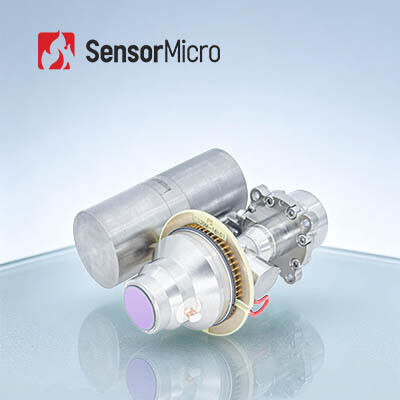
1280x1024 10μm HOT Cooled Infrared Detector MWIR Infrared Detector for Long-Range Surveillance

| Place of Origin | China |
|---|---|
| Brand Name | SensorMicro |
| Certification | ISO9001:2015; RoHS; Reach |
| Model Number | C1201H |
| Minimum Order Quantity | 1 Piece |
| Price | Negotiable |
| Payment Terms | T/T |
Product Details
| NETD | 20mK (F2)/25mK(F4) | Resolution | 1280x1024/10μm |
|---|---|---|---|
| Spectral Range8~14μm | 3.7~4.8μm MW | Steady Power Consumption(23℃) | ≤3W |
| Cryocooler | LS713 | Operation Temperature | -45℃~+71℃ |
| Highlight | Cooled MWIR Infrared Detector,640x512 Cooled MWIR Infrared Detector,15um Cooled Infrared Detector |
||
Product Description
Product Overview
The C1210H HOT cooled infrared detector adopts state-of-the-art linear cryocooler technology and delivers 1280×1024 megapixel resolution with a 10μm pixel size. The megapixel sensor supports a wide field of view, while the fine 10μm pixel pitch enables high spatial resolution and long-distance detection. By elevating the focal plane operating temperature to 150K, it retains premium imaging performance and delivers excellent SWaP (Size, Weight, and Power) benefits. It achieves quick cooldown within 3 minutes and operates stably at 3W power consumption. Featuring an MTTF of up to 25,000 hours to guarantee high reliability, this infrared detector fully addresses market requirements for long-duration operation, compact system design, and high-definition thermal imaging.
Main Features
Megapixel Resolution, Smaller Pixel Size
- 1280×1024 megapixel resolution for a wide field of view
- 10μm small pixel size for high spatial resolution and long-range detection
Fast Cooling, Lower Power Consumption
- Cooling time as low as 3 minutes
- Stable power consumption down to 3W
High Reliability, Durable Detection
- Mean Time To Failure (MTTF) up to 25,000 hours
Product Specifications
| Model | C1210H |
|---|---|
| Sensitive Material | T2SL |
| Resolution | 1280×1024 |
| Pixel Size | 10μm |
| Spectral Response | 3.7±0.2μm~4.8±0.2μm |
| Typical NETD | 20mK (F2) / 25mK (F4) |
| Max. Frame Rate | 100Hz |
| Effective Pixel Rate | ≥99.5% |
| Response Non-uniformity | ≤8% |
| Operating Temperature | -45℃~+71℃ |
| Cryocooler | LS713 |
| Cooling Time (23℃) | ≤3min |
| Max. Power Consumption (71℃) | ≤20W |
| Steady Power Consumption (23℃) | ≤3W |
| Size (mm) | Cryocooler: φ33.5×72.5 Dewar: 34×34×86 |
| Weight (g) | ≤355 |
Industrial Applications
The C1210H HOT MWIR cooled infrared detector is widely used in many areas such as NDT (Non-Destructive Testing), environmental monitoring, long-range surveillance, scientific research, and more.
About SensorMicro
SensorMicro is a world-leading infrared detector manufacturer and service provider. The company is committed to providing customers all over the world with high-performance uncooled and cooled thermal imaging detectors, sharing its professional application experience.
SensorMicro delivers advanced infrared detectors, camera cores, and modules with versatile formats and wavebands. Designed for clarity, sensitivity, and efficiency, these products integrate seamlessly into diverse systems—empowering next-generation imaging and sensing applications across industries.
SensorMicro detectors have been widely used in thermography, security and surveillance, personal vision, automotive, and consumer infrared products. The volume production capability of SensorMicro enables it to meet the growing demand from all existing and emerging markets.
Frequently Asked Questions
1. What is thermal sensitivity?
Thermal sensitivity, also known as NETD (Noise Equivalent Temperature Difference), is a key parameter for evaluating medium wave (MWIR) and long wave (LWIR) thermal imaging cameras. It is directly related to the clarity measured by the thermal imager. It is a numerical value representing the signal-to-noise ratio of the temperature difference and is measured in milliKelvins (mK). The smaller the thermal sensitivity value, the higher the sensitivity and the clearer the image.
2. What are the applications of thermal imaging?
Temperature measurement and all-weather imaging are two basic functions of infrared thermal imaging technology. Products developed based on these two technologies are widely used in security and monitoring, industrial inspection, firefighting, predictive maintenance, ADAS, epidemic prevention, AIoT, and more.
Recommended Products
