


All Products
-
Thermal Camera Core
-
Thermal Security Camera
-
Drone Thermal Camera
-
Plug-in Thermal Camera
-
Cooled Infrared Detectors
-
Cooled Camera Modules
-
Optical Gas Imaging
-
Infrared Thermal Camera Module
-
High Resolution Thermal Camera Module
-
Thermal Camera For Fever Detection
-
Vehicle Mounted Thermal Camera
-
Integrated Dewar Cooler Assembly
-
Uncooled Infrared Detectors
Contact Person :
Wendy Wang
Phone Number :
+86 27 50185150
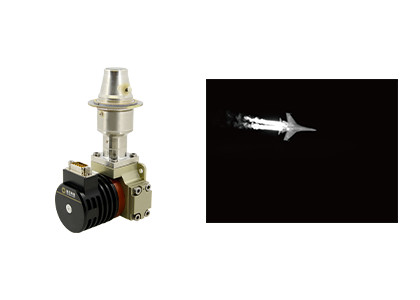
Type II Superlattice Cooled Infrared Detectors Long Wave 320x256 / 30μm
| Place of Origin | Wuhan, Hubei Province, China |
|---|---|
| Brand Name | SensorMicro |
| Certification | ISO9001:2015; RoHS; Reach |
| Model Number | C330S LWIR |
| Minimum Order Quantity | 1 Piece |
| Price | Negotiable |
| Payment Terms | L/C,T/T |
Product Details
| Resolution | 320x256 / 30μm | NETD | ≤25mK (F2) |
|---|---|---|---|
| Spectral Range | 7.7~9.5μm LW | Size | 142x58.5x71mm |
| Highlight | Superlattice Cooled Infrared Detector,Cooled Infrared Detectors 320x256,25mK Cooled Infrared Detectors |
||
Product Description
Product Description
C330S LWIR is one of T2SL lwir cooled infrared detectors. It consists of a 320x256/30µm Type II Superlattice (T2SL) cooled photon detector, Integrated Detector Cooler Assembly (IDCA), designed for high performance 7.7~9.5μm Long Wave Infrared (LWIR) wavebands.
Without fear of interference, C330S LWIR cooled lwir detector is suitable for target detection in complex background, such as ships on the sea in the scene of light reflection on the water surface, aircraft in the background of clouds in the sky, etc.
T2SL cooled detectors adopts the world's leading T2SL technology which enables mass production capability and thus ultimately it will benefit the users with more affordable price but never compromise in performance. The industrial standard size and interface enables customers to switch to and benefit from the most advanced T2SL technology without further R&D investment.
Main Features:
- Resolution: 320x256
- Pixel Pitch: 30µm
- High Sensitivity
- Good Imaging Effect
- Low Noise
- Stable Performance
- Excellent Non-uniformity
Product Specifications
| Model | C330S LWIR |
| Material | T2SL |
| Resolution | 320x256 |
| Pixel Pitch | 30μm |
| Spectral Range | 7.7μm~9.5μm LW |
| Working Mode | Snapshot; ITR Integration Mode; Windows Mode; Anti-blooming |
| Charge Capacity | 36Me-/12Me- |
| Dynamic Range | ≥80dB |
| Output Channel | 1 or 4; Up to 6.6 Mpixel/s per Output |
| NETD | ≤25mK (F2) |
| Effective Pixel Rate | ≥99.5% |
| Response Non-uniformity | ≤8% |
| Cooler Type | RS058 |
| Steady Power Consumption | <8W |
| Max Power Consumption | <17W |
| Power Supply | 24V DC |
| Cooling Time | <5min30s |
| Weight | ≤600g |
| Dimension (mm) | 142x58.5x71 |
| Working Temperature | -45°C ~ +71°C |
Industrial Applications
The C330S LWIR cryogenically cooled infrared detector is widely used many areas such as Remote Monitoring System, Flight Vision Enhancement System, Multi-sensor Payload etc.

Company Profile
SensorMicro is the world leading infrared detector manufacturer and service provider. It is willing to provide customers all over the world with high performance uncooled and cooled thermal imaging detectors and share its professional application experience.
SensorMicro delivers advanced infrared detectors, camera cores, and modules with versatile formats and wavebands. Designed for clarity, sensitivity, and efficiency, our products integrate seamlessly into diverse systems—empowering next-generation imaging and sensing applications across industries.
SensorMicro detectors have been widely used in thermography, security & surveillance, personal vision, automotive and consumer infrared products. The volume production capability of SensorMicro enables it to meet the growing demand from all existing and emerging markets.
FAQs
1.What is infrared thermal imaging?
Infrared thermal imaging is a method of using infrared radiation and thermal energy to gather information about objects, in order to formulate images of them, or get temperature information of the objects, even in low visibility environments.
2.What is thermography?
Thermography is a non-invasive diagnostic method, based on object surface temperature detection. The infrared (IR) radiation emitted from an object is recorded and visualised in the form of a temperature distribution map. The infrared thermal image can be used to determine; structural defects, electrical faults, mechanical faults, physiological changes in people & animals, and much more.
3.What is the advantage of infrared thermal imaging?
---See through total darkness;
---Identification under camouflage;
---Long range detection;
---Heat distribution detection;
---Non-contact temperature measurement;
---Occupation awareness
Recommended Products