


All Products
-
Thermal Camera Core
-
Thermal Security Camera
-
Plug-in Thermal Camera
-
Cooled Infrared Detectors
-
Cooled Camera Modules
-
Optical Gas Imaging
-
Radiometric Thermal Module
-
High Resolution Thermal Camera Module
-
Thermal Camera For Fever Detection
-
Vehicle Mounted Thermal Camera
-
Integrated Dewar Cooler Assembly
-
Uncooled Infrared Detectors
Contact Person :
Wendy Wang
Phone Number :
+86 27 50185150
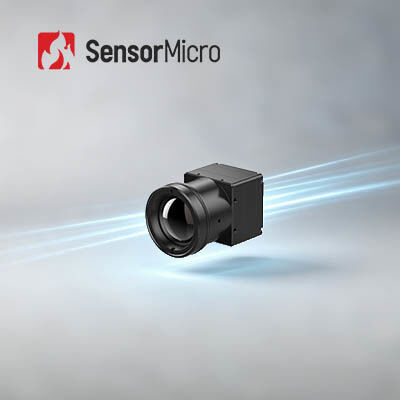
Long Wave COIN417G3 Thermal Imaging Core with 384x288 Resolution and 17μm Pixel Pitch

| Place of Origin | China |
|---|---|
| Brand Name | SensorMicro |
| Certification | ISO9001:2015; RoHS; Reach |
| Model Number | COIN417G3 |
| Minimum Order Quantity | 1 Piece |
| Price | Negotiable |
| Payment Terms | T/T |
Product Details
| Resolution | 384x288 /17μm | NETD | ≤30mK/F1.0/25℃ |
|---|---|---|---|
| Spectral Range | 8~14μm | Bare Core Size | 25.4mm×25.4mm×16.5mm |
| Analog Video | PAL/NTSC | Digital Video | RAW/YUV422 |
| Highlight | Thermal Imaging Core 400x300,VOx Thermal Imaging Core,384x288 Thermal Camera Core |
||
Product Description
Long Wave COIN417G3 Thermal Imaging Core with 384x288/17μm Resolution
Product Overview
COIN417G3 infrared camera core integrates 384x288/17μm wafer level package (WLP) infrared imaging detector, high performance signal processing circuit and advanced image processing algorithms including Non-uniformity Correction (NUC), 3D Noise Reduction (3DNR), 2D Noise Reduction (DNS), Dynamic Range Compression (DRC), and Edge Enhancement (EE). This thermal module delivers sharp, crisp thermal imaging with compact size and cost-effective design.
The COIN417G3 thermal module is suitable for Industrial Vision, Security Monitoring, Firefighting & Rescue, Outdoor Applications, Machine Vision, ADAS, and various other applications.
Main Features
- Comprehensive Functionality, Cost-Effective Design - Developed using high cost-performance wafer-level packaging detector with integrated advanced image processing algorithms
- Outstanding Performance, Superior Imaging - High sensitivity with typical NETD≤30mK and next-generation image algorithms for clearer, sharper thermal images
- Flexible Extension, Rapid Integration - Multiple optical lens options, supports USB2.0/DVP/LVDS/BT.656 interfaces, outputs RAW/YUV image data with serial port control
Product Specifications
| Model | COIN417G3 |
| IR Detectors Indicators | |
| Sensitive Material | VOx |
| Resolution | 384×288 |
| Pixel Size | 17μm |
| Spectral Response | 8μm ~ 14μm |
| Typical NETD | ≤30mK/F1.0/25℃ |
| Image Processing | |
| Digital Frame Rate | 25/30/50Hz |
| Start-up Time | 6s |
|
Analog Video
|
PAL/NTSC
|
|
Digital Video
|
RAW/YUV422
|
| Image Algorithm | Non-uniformity Correction (NUC) 3D Noise Reduction (3DNR) 2D Noise Suppression (DNS) Dynamic Range Compression (DRC) Edge Enhancement (EE) |
| Image Display | 10 Types (White Hot/Lava/Iron Red/Hot Iron/Medical/Arctic/Rainbow 1/Rainbow 2/Tint/Black Hot) |
| PC Software | |
| ICC Software | Module Control & Video Display |
| Electrical | |
| Standard External Interface | 50Pin: DF40C-50DP-0.4V(51), (HRS,Male) |
| Extension Board | USB3.0/USB2.0/VPC/USB2.0&VPC |
| Communication Interface | TTL-232/USB2.0 |
| Digital Video Interface | DVP8/DVP16/USB2.0/BT.656/LVDS |
| Supply Voltage | 4.5~5.5V |
| Typical Power Consumption | 0.65W |
| Mechanical | |
|
Bare Core Size(mm)
|
25.4mm×25.4mm×16.5mm
|
| Bare Core Weight(g) | 16.6±1 |
| Environmental Adaptability | |
| Operating Temperature | -40℃~+70℃ |
| Storage Temperature | -45℃~+85℃ |
| Humidity | 5%~95%, non-condensing |
| Vibration | Random Vibration, 5.35grms, 3-axis |
| Impact | Half Sine Wave, 40g/11ms, Impact Direction X Axis, 3 times |
| Certification | ROHS2.0/REACH |
| Optical Lens | |
| Optical Lens | Fixed Focus Athermal: 4.8mm/7mm/9.1mm/13mm/19mm/25mm/35mm |
| Protection Level | IP67(Front Lens) |
Product Advantages
- Diverse Product Portfolio - Wide range of formats including infrared detectors, camera cores, and modules
- Rich Product Variety - Multiple array resolutions, pixel sizes, wavebands, and lens options
- Outstanding Performance - Clear imaging, compact size, low power consumption, high sensitivity, and strong reliability
- Easy Integration - Multiple interface options for straightforward integration and rapid development
Frequently Asked Questions
1. What is infrared thermography?
Thermography is a non-invasive diagnostic technology based on object surface temperature detection. The infrared radiation emitted from an object is recorded and visualized as a temperature distribution map.
2. What can infrared thermography be used for?
Infrared thermal imaging can be used for home inspections, structural defect detection, electrical fault identification, mechanical fault analysis, physiological changes in people & animals, and many other applications.
3. What are the advantages of infrared thermography?
For non-destructive testing: Simple to test, quick response without damage, resulting in cost savings, increased work efficiency, and reduced manpower and equipment depreciation.
For medical thermography: Efficient for detecting hidden health problems, 100% safe without radiation and pain, making it an ideal tool for early health screening.
Recommended Products
