


All Products
-
Thermal Camera Core
-
Thermal Security Camera
-
Plug-in Thermal Camera
-
Cooled Infrared Detectors
-
Cooled Camera Modules
-
Optical Gas Imaging
-
Radiometric Thermal Module
-
High Resolution Thermal Camera Module
-
Thermal Camera For Fever Detection
-
Vehicle Mounted Thermal Camera
-
Integrated Dewar Cooler Assembly
-
Uncooled Infrared Detectors
Contact Person :
Wendy Wang
Phone Number :
+86 27 50185150
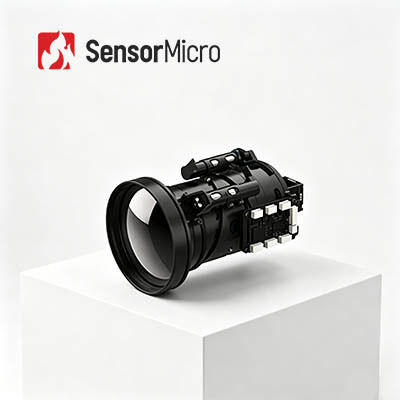
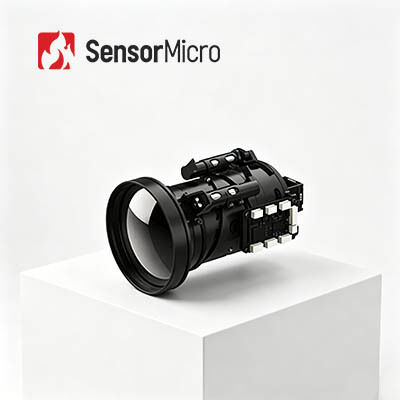
iSE612 Uncooled LWIR Thermal Camera Module with 640x512 Resolution and 12μm Pixel Pitch at 50Hz Frame Rate

| Place of Origin | China |
|---|---|
| Brand Name | SensorMicro |
| Certification | ISO9001:2015; RoHS; Reach |
| Model Number | iSE612 |
| Minimum Order Quantity | 1 Piece |
| Price | Negotiable |
| Payment Terms | T/T |
Product Details
| Type | Uncooled Infrared Module | Frame Rate | 50Hz |
|---|---|---|---|
| Resolution | 640x512 / 12μm | Typical Power Consumption | 0.8W@50Hz@23±3℃ |
| Typical NETD | ≤20mK | Spectral Response | 8μm ~ 14μm |
| Highlight | PLUG612 Thermal Camera Module,VOx Thermal Camera Module,640x512 Thermal Camera Module |
||
Product Description
iSE612 Thermal Camera Module Uncooled VOx LWIR 640x512/12μm for Surveillance Camera
Product Overview
Tailored for commercial and industrial infrared imaging scenarios, the iSE612 camera core utilizes high-performance self-developed thermal detector technology to deliver stable, high-definition thermal imaging. The ceramic encapsulated sensor ensures long service life and stable performance, with NETD controlled within 20mK to capture subtle thermal variations accurately.
Without needing shutter calibration during operation, it effectively removes frame stuttering and unstable picture issues common in traditional products, delivering smooth and reliable visual performance persistently.
Key Features
Smooth, Stable, and High Cost-effective
- No shutter calibration required during operation, eliminating image stuttering
- High cost-effective ApexCore ceramic-packaging detector, NETD≤20mK
Compact and Lightweight, Flexible for Integration
- Dimensions as small as 25.4×25.4×22.7mm, bare core weight ≤26±1.5g
- Space-saving structural design allows flexible system layout and integration
Rich Features for Seamless Integration
- Supports super-resolution algorithms, picture-in-picture, customizable OSD
- Sleep mode, one-click calibration, and compatibility with various Micro OLED displays
- Compatible with multiple optical lenses and extension components
Technical Specifications
| Model | iSE612 | |
|---|---|---|
| IR Detectors Indicators | ||
| Sensitive Material | VOx | |
| Resolution | 640×512 | |
| Pixel Size | 12μm | |
| Spectral Response | 8μm ~ 14μm | |
| Typical NETD |
≤20mK |
|
| Image Processing | ||
| Digital Frame Rate | 50Hz | |
| Start-up Time | 6s | |
| Digital Video | YUV420/YUV422/RGB888/RAW | |
| Image Algorithm | NUC/DRC/DNS/DDE/SFFC | |
| Shutterless | Supported | |
| Image Display | 10 Types (White Hot/Lava/Iron Red/Hot Iron/Medical/Arctic/Rainbow1/Rainbow2/Tint/Black Hot) | |
| Image Direction | Horizontal/Vertical/Diagonal | |
| Digital Zoom | 1x/2x/4x/8x | |
| Compensation Mode | Manual | |
| Electrical | ||
| Standard External Interface | 50pin: BP040SB-50-0114-B-R0 | |
| Communication Interface | TTL-232/USB2.0 | |
| Digital Video Interface | DVP8/BT.656/DVP16/BT.1120/USB2.0/MIPI-DSI-4LANE | |
| Extension Components | USB2.0/SDI/HDMI/GIGE/Cameralink/VPC/MIPI-CSI-2LANE | |
| Electrical Interface | ||
| Supply Voltage | 2.7V~5.3V | |
| Typical Power Consumption | 0.8W@50Hz@23±3℃ | |
| Mechanical/Lens | ||
| Bare Core Size | 25.4×25.4×22.7mm | φ36×24.3mm |
| Bare Core Weight | 26±1.5g | 28±1.5g |
| Optical Lens | Fixed Focus Athermal: 4.8/9.1/13/19mm |
|
| Impact | Half Sine Wave, 40g/11ms, Impact Direction X Axis, 3 times | 1500g@0.4ms |
| Vibration |
5.35g, Random Vibration, 3-axis |
|
| Shutter Components | Optional | |
| Environmental Adaptability | ||
| Operating Temperature | -40℃~+70℃ | |
| Storage Temperature | -45℃~+85℃ | |
| Humidity | 5%~95%, non-condensing | |
| Certification | ROHS2.0/REACH | |
Industrial Applications
The iSE612 thermal camera module is widely used in Industrial Vision, Firefighting and Rescue, Security Surveillance, Outdoor Observation, Machine Vision, Consumer Electronics, and more.
Frequently Asked Questions
What is the difference between low light, active IR and thermal imaging?
Low light needs natural light and transforms weak natural light image into enhanced electronic image through image intensifier. Active IR actively emits infrared light and uses infrared beam reflected by the target, offering poor concealment. Thermal imaging doesn't need any light and is a passive infrared night vision that detects infrared radiation difference between targets and scene, not affected by changes in lighting conditions, during night or even in fog, rain and other harsh environments.
Can you block thermal imaging?
In most cases, you cannot. However, infrared rays can't penetrate walls, and glass can block IR. To avoid detection, you can conceal behind glass or walls to block thermal imaging.
Recommended Products
-
 VIDEO
VIDEO -