


All Products
-
Thermal Camera Core
-
Thermal Security Camera
-
Plug-in Thermal Camera
-
Cooled Infrared Detectors
-
Cooled Camera Modules
-
Optical Gas Imaging
-
Radiometric Thermal Module
-
High Resolution Thermal Camera Module
-
Thermal Camera For Fever Detection
-
Vehicle Mounted Thermal Camera
-
Integrated Dewar Cooler Assembly
-
Uncooled Infrared Detectors
Contact Person :
Wendy Wang
Phone Number :
+86 27 50185150
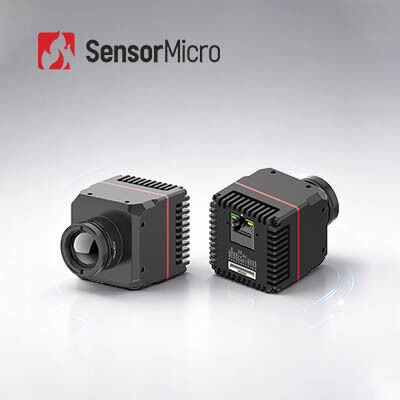
Network-Enabled Radiometric Thermal Module 640x512 Resolution with -20℃~550℃ Temperature Measurement Range for Thermal Camera Module Integration

| Place of Origin | China |
|---|---|
| Brand Name | SensorMicro |
| Certification | ISO9001:2015; RoHS; Reach |
| Model Number | iNT612R |
| Minimum Order Quantity | 1 Piece |
| Price | Negotiable |
| Payment Terms | T/T |
Product Details
| Resolution | 640x512 | Typical Power Consumption | 3W@23±3℃ |
|---|---|---|---|
| Spectral Range | 8~14μm | Pixel Pitch | 12μm |
| NETD | ≤20mK | Frame Rate | 25Hz/30Hz |
| Highlight | Firefighting LWIR Thermal Camera Module,0.8W Thermal Camera Module,Rescue Infrared Thermal Camera Module |
||
Product Description
Product Overview
The iNT612R is a network-enabled high-precision thermal imaging core designed for temperature measurement. It combines thermal imaging with temperature measurement and IP connectivity. With support for a wide range of network protocols and a comprehensive SDK, the iNT612R enables streamlined software development and system integration. Its compact form factor, high measurement accuracy, and wide temperature measurement range make it well suited for integration into security surveillance, industrial inspection, and other network-connected thermal imaging systems.
Main Features
Accurate Temperature Measurement, Sensitive Thermal Sensing
- 640 × 512 full temperature data output, with measurement accuracy of up to ±2°C or ±2%, whichever is greater
- Wide temperature measurement ranges of −20°C to +150°C and +100°C to +550°C, with customizable ranges available
Broad Compatibility, Always Connected
- Supports widely used network protocols, including TFTP, RTP, RTCP, RTSP, ONVIF, DHCP, GB/T 28181, UPNP, and NTP
- Supports multiple video encoding formats, including H.264, H.265, and MJPEG
Built-In Storage, Easy Development
- Supports up to 32GB of onboard storage
- Provides Windows and Linux SDKs for streamlined development and integration
- Supports PoE power and multiple serial communication interfaces
Product Specifications
| Model | iNT612R (Temperature Measurement) |
|---|---|
| IR Detector Indicators | |
| Sensitive Material | VOx |
| Resolution | 640×512 |
| Pixel Size | 12μm |
| Spectral Response | 8μm ~ 14μm |
| Typical NETD | ≤20mK |
| Image Processing | |
| Effective Pixels | 640×512 |
| Data Rate | 25Hz / 30Hz |
| Video Encoding | H.264 / H.265 / MJPEG |
| Bit Rate | Configurable from 100 Kbps to 8 Mbps |
| Image Encoding | JPEG |
| Start-up Time | ≤10s |
| Digital Video | YUV420+Matrix-TEMP |
| Image Algorithm | NUC / DRC / DNS / DDE / SFFC |
| Image Display | 10 Types (White Hot / Lava / Iron Red / Hot Iron / Medical / Arctic / Rainbow 1 / Rainbow 2 / Tint / Black Hot) |
| Protocols & Storage | |
| Network Protocols | TFTP, RTP, RTCP, RTSP, ONVIF, DHCP, GB/T 28181, UPNP, NTP |
| Storage | 32G EMMC |
| SDK / API | Supports Windows and Linux |
| PC Software | |
| Computer Software | Module Control & Video Display |
| Electrical Interface | |
| Standard External Interface | 12PIN (A1257WV-S-12P) + RJ45 |
| Communication Interface | RS232 / RS422 / RS485 (supports PELCO-D), bps: 4800 |
| Network | 100 Mbps / 1000 Mbps Ethernet |
| Temperature Measurement | |
| Operating Temperature | -10℃ ~ +50℃ |
| Temperature Measurement Range | -20℃ ~ 150℃, 100℃ ~ 550℃; supports customization and expansion |
| Temperature Measurement Accuracy | Greater of ±2℃ / ±2% |
| Partial Temperature Measurement | Supports output of maximum, minimum, and average values of temperature measurement areas |
| Power Interface | |
| Supply Voltage | DC: 9V ~ 15V; POE |
| Typical Power Consumption | 3W @ 23±3℃ |
| Mechanical / Lens | |
| Bare Core Size (mm) | 45mm × 45mm |
| Optical Lens | Fixed Focus Athermal: 4.8mm / 7mm / 9.1mm / 13mm / 25mm |
| Impact | Half Sine Wave, 40g / 11ms, Impact Direction, 3 times |
| Vibration | 5.35grms, Random Vibration, 3-Axis, 6 Direction |
| Protection Level | IP67 (Front Lens) |
| Environmental Adaptability | |
| Operating Temperature | -40℃ ~ +70℃ |
| Storage Temperature | -45℃ ~ +85℃ |
| Humidity | 5% ~ 95%, non-condensing |
| Certification | |
| Environmental Certification | ROHS2.0 / REACH |
Industrial Applications
The iNT612R thermal imaging module is applied in the fields of Industrial Vision, Firefighting and Rescue, Security Surveillance, Outdoor Observation, Machine Vision, and more.
- Industrial Vision
- Firefighting and Rescue
- Security Surveillance
- Outdoor Observation
- Machine Vision
Our Product Line
- High sensitivity and excellent performance — World-leading technology in the infrared industry
- Various infrared detectors available — Both uncooled and cooled IR detectors in different formats and pixel sizes
- Volume production to ensure fast delivery — Three production lines with annual production capability up to millions of detectors
Frequently Asked Questions
1. Can thermal cameras see through walls or other solid objects?
No, thermal cameras cannot see through walls or solid objects. They detect and measure infrared radiation emitted or reflected by objects in their field of view. However, certain materials, such as glass, allow infrared radiation to pass through, so thermal cameras can "see" through these transparent materials.
2. What are cooled and uncooled thermal modules?
Cooled and uncooled thermal modules are types of infrared (IR) imaging systems used for capturing and analyzing thermal radiation. They are commonly used in applications such as surveillance, firefighting, and industrial inspections.
3. What is the difference between cooled and uncooled thermal modules?
The main difference lies in the type of sensor technology used. Cooled thermal modules incorporate a cryogenic cooling mechanism to maintain the sensor at extremely low temperatures, typically below -200 degrees Celsius. This cooling enhances the sensitivity and reduces the noise of the sensor, resulting in higher image quality and better performance in long-range and high-resolution applications. However, cooled thermal modules are more expensive, larger, and require periodic maintenance.
On the other hand, uncooled thermal modules use microbolometer sensors that operate at room temperature. These sensors detect changes in temperature and convert them into electrical signals, which are then processed to create thermal images. Uncooled thermal modules are smaller, more compact, less expensive, and require no maintenance. However, they offer lower sensitivity and may not perform as well in demanding scenarios.
Recommended Products
