


All Products
-
Thermal Camera Core
-
Thermal Security Camera
-
Plug-in Thermal Camera
-
Cooled Infrared Detectors
-
Cooled Camera Modules
-
Optical Gas Imaging
-
Radiometric Thermal Module
-
High Resolution Thermal Camera Module
-
Thermal Camera For Fever Detection
-
Vehicle Mounted Thermal Camera
-
Integrated Dewar Cooler Assembly
-
Uncooled Infrared Detectors
Contact Person :
Wendy Wang
Phone Number :
+86 27 50185150
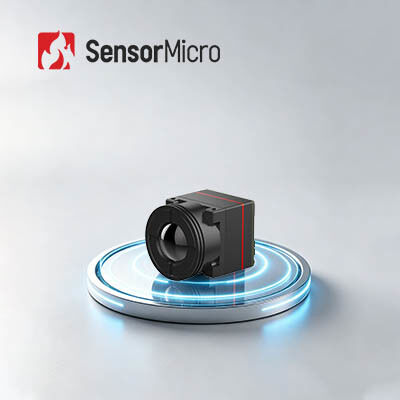
Compact & Lightweight Design Uncooled Infrared Camera Core with 640x512 Resolution and 12μm Pixel Pitch

| Place of Origin | Wuhan, Hubei Province, China |
|---|---|
| Brand Name | SensorMicro |
| Certification | ISO9001:2015; RoHS; Reach |
| Model Number | iTL612 Pro |
| Minimum Order Quantity | 1 Piece |
| Price | Negotiable |
| Payment Terms | L/C,T/T |
Product Details
| Resolution | 640x512 | Frame Rate | 25/30Hz/50Hz |
|---|---|---|---|
| Spectral Range | 8~14μm | Power Consumption | 0.5W |
| Typical NETD | ≤40mK | Pixel Pitch | 12μm |
| Highlight | Digital Video Uncooled Infrared Camera,640x512 Uncooled Infrared Camera,Uncooled Infrared Camera Core 12um |
||
Product Description
Compact & Lightweight Design Uncooled Infrared Camera Core 640x512 12μm
Redefining industrial SWaP standards for miniature thermal imaging cores, the iTL612Pro ultra-miniature infrared camera core achieves the perfect balance of ultra-compact size, ultra-light weight, low power consumption and high-definition imaging. Built with a high-end 640×512/12μm wafer-level detector and upgraded image optimization algorithms, it delivers professional-grade thermal imaging performance far beyond products of the same size.
Breaking the size and weight limitations of traditional infrared cores, its 17.3mm square cross-section and 13.7g ultra-light body greatly reduce system assembly barriers and structural burden. Coupled with ultra-low power consumption and highly expandable development interfaces, it empowers enterprises to develop more portable, miniaturized and high-efficiency infrared thermal imaging products, covering multiple industrial and commercial application fields.
Main Features
Unmatched Lightness and Minimal Load
- Ultra-Miniature Size: 17.3×17.3×23.4 mm (including 9.1 mm lens)
- Ultra-Lightweight: 13.7±0.5g (including 9.1 mm lens)
- Ultra-Low Power Consumption: As low as 0.5W
Mainstream FPA with Clear Imaging
- 640x512 Resolution for widespread integration
- Enhanced Image Clarity: Multiple New-generation image algorithms for improved image quality
Easy Development & Seamless Integration
- Multiple lens options available to suit various application scenarios
- Supports multiple image output interfaces: DVP8, LVDS, MIPI, USB 2.0, and BT.656
- RAW/YUV/Matrix-TEMP data output with serial port control
Product Specifications
| Model | iTL612Pro |
| IR Detectors Indicators | |
| Sensitive Material | VOx |
| Resolution | 640×512 |
| Pixel Size | 12μm |
| Spectral Response | 8μm ~ 14μm |
| Typical NETD | ≤40mK |
| Image Processing | |
| Digital Frame Rate | 25/30Hz/50Hz |
| Start-up Time | ≤5s |
| Digital Video | RAW/YUV/Matrix-TEMP |
| Image Algorithm | NUC/3DNR/DNS/DRC/EE |
| Image Display | 10(Black Hot/White Hot/Pseudo Color) |
| Electrical | |
| Standard External Interface | 30Pin_HRS interface:DF40C-30DP-0.4V(51) |
| MIPI External Interface | 34Pin_Panasonic Connector Interface:AXE634124 |
| Communication Interface | TTL-232/USB2.0 |
| Digital Video Interface | DVP8/LVDS/MIPI/USB2.0/BT.656 |
| Supply Voltage | 4.2-5.5V |
| Typical Power Consumption | 0.5W |
| Mechanical | |
| Size (including lens) | 17.3×17.3×23.4 (9.1mm lens) 17.3×17.3×30.2 (13mm lens) 17.3×17.3×38 (25mm lens) 17.3×17.3×54 (45mm lens) |
| Weight (including lens) | 13.7±0.5g (9.1mm lens) 20±0.5g (13mm lens) 27.3±0.5g (25mm lens) 51±0.5g (45mm lens) |
| Environmental Adaptability | |
| Operating Temperature | -40℃~+70℃ |
| Storage Temperature | -45℃~+85℃ |
| Humidity | 5%~95%, non-condensing |
| Vibration | Sine Vibration, Frequency: 10HZ~150HZ~10HZ, Peak Value: 0.15mm, Axial Direction: X, Endurance Time: 8min/axis, Cycles: 2 times |
| Impact | Half Sine Wave, 30g/11ms, Impact Direction X Axis, 3 times |
| Certification | ROHS2.0/REACH |
| Optical Lens | Fixed Focus Athermal: 9.1/13/25/45mm |
Industrial Applications
The iTL612 Pro thermal imaging module can be used in fields of Forest Firefighting, Power Maintenance, Photovoltaic Inspection, Security Monitoring, Wearable Devices, Portable Devices etc.
About Us
Our Vision: To push the boundaries of sensing and transform the way people connect with the world around them.
Our Mission: To harness the power of infrared sensing technology to transform industries worldwide, enabling smarter decisions, safer environments, and a more connected future.
Our Value: To create advanced infrared technology that makes the world a better place.
FAQs
1. What are the advantages of uncooled infrared detectors?
Uncooled infrared focal plane detector does not need cooled device, it can work at room temperature and has the advantages of fast start, low power consumption, small size, light weight, long life, low cost and so on.
2. What are the key considerations on an infrared detector / thermal module for your application?
• The detector resolution
• The pixel size
• The NETD
• The image quality
• The lens options
• The power consumption
• The size and weight
• The mechanical & electrical interface
• The budget
• The pixel size
• The NETD
• The image quality
• The lens options
• The power consumption
• The size and weight
• The mechanical & electrical interface
• The budget
3. What is Infrared Detector Resolution
That is, the number of pixels of thermal imaging. The higher resolution means more observation and temperature measurement points, thus smaller target at longer distance can be observed and measured. Usually the resolution of infrared thermal imaging ranges from 256x192, 384x288, 640x512, 800x600, 1024x768, 1280x1024, etc. With higher resolution, the cost of detector will be more.
4. Field of View (FOV)
It refers to the two-dimensional field of view of the object space observed by the optical system of infrared thermal imager. Taking the horizontal FOV as an example, assuming that the detector array size is A×B, the pixel size is d, and the lens focal length is f, then the horizontal FOV angle θ=2×acrtan (A×d/2f). After the detector array and pixel size are selected, the field of view only changes with the focal length of the optical system: with longer focal length, the field of view will be narrower; with shorter focal length, the field of view will be wider.
Recommended Products
