


All Products
-
Thermal Camera Core
-
Thermal Security Camera
-
Plug-in Thermal Camera
-
Cooled Infrared Detectors
-
Cooled Camera Modules
-
Optical Gas Imaging
-
Radiometric Thermal Module
-
High Resolution Thermal Camera Module
-
Thermal Camera For Fever Detection
-
Vehicle Mounted Thermal Camera
-
Integrated Dewar Cooler Assembly
-
Uncooled Infrared Detectors
Contact Person :
Wendy Wang
Phone Number :
+86 27 50185150
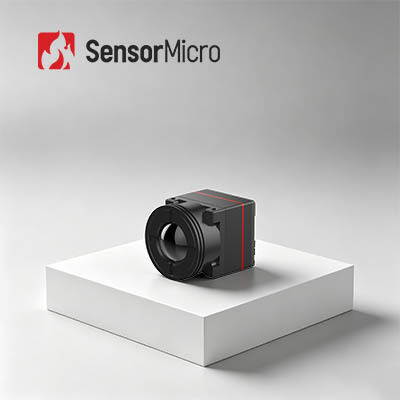
Ultra Compact 640x512 Resolution 12μm Pixel Pitch Uncooled Infrared Camera Core with 0.5W Power Consumption for Wearable Devices

| Place of Origin | Wuhan, Hubei Province, China |
|---|---|
| Brand Name | SensorMicro |
| Certification | ISO9001:2015; RoHS; Reach |
| Model Number | iTL612 Pro |
| Minimum Order Quantity | 1 Piece |
| Price | Negotiable |
| Payment Terms | T/T |
Product Details
| Frame Rate | 25/30Hz/50Hz | Resolution | 640x512 |
|---|---|---|---|
| Power Consumption | 0.5W | Typical NETD | ≤40mK |
| Spectral Range | 8~14μm | Pixel Pitch | 12μm |
| Highlight | USB2.0 Uncooled Infrared Camera,12um Uncooled Infrared Camera,DVP Infrared Camera Core 640x512 |
||
Product Description
Ultra Compact Uncooled Infrared Camera Core 640x512 12um for Wearable Devices
Product Overview
Engineered for extreme miniaturization and high reliability, the iTL612Pro infrared camera core integrates a premium 640×512/12μm wafer-level FPA detector and next-generation image processing algorithms to enhance overall imaging clarity and stability.
Featuring an ultra-compact dimensional design of 17.3×17.3×23.4 mm and a lightweight body of 13.7±0.5g, the module minimizes structural load for integrated devices. With an ultra-low power rating of 0.5W, it perfectly adapts to battery-powered and portable embedded systems.
Compatible with multiple lens configurations, the core supports comprehensive output options including DVP8, LVDS, MIPI, USB 2.0 and BT.656 interfaces, as well as RAW, YUV and Matrix-TEMP data output with serial port control, providing full technical support for customized system iteration and industrial integration.
Main Features
- Compact & Lightweight Design - Size: 17mm×17mm×22mm (with 9.1mm lens), Weight: 13g (with 9.1mm lens), Power consumption as low as 0.7W
- Clear Image & Accurate Radiometry - Brand new image process algorithm: NUC/3DNR/DNS/DRC/EE, Support Windows/Linux/ARM SDK, Support regional, point & isotherm temperature measurement
- Various Interfaces for Easy Integration - DVP/LVDS/USB2.0 interfaces, RAW/YUV image data output, serial port control
Product Specifications
| Model | iTL612Pro |
|---|---|
| IR Detectors Indicators | |
| Sensitive Material | VOx |
| Resolution | 640×512 |
| Pixel Size | 12μm |
| Spectral Response | 8μm ~ 14μm |
| Typical NETD | ≤40mK |
| Image Processing | |
| Digital Frame Rate | 25/30Hz/50Hz |
| Start-up Time | ≤5s |
| Digital Video | RAW/YUV/Matrix-TEMP |
| Image Algorithm | NUC/3DNR/DNS/DRC/EE |
| Image Display | 10(Black Hot/White Hot/Pseudo Color) |
| PC Software | |
| Infrared Module | Module Control & Video Display |
| Electrical | |
| Standard External Interface | 30Pin_HRS interface:DF40C-30DP-0.4V(51) |
| MIPI External Interface | 34Pin_Panasonic Connector Interface:AXE634124 |
| Communication Interface | TTL-232/USB2.0 |
| Digital Video Interface | DVP8/LVDS/MIPI/USB2.0/BT.656 |
| Supply Voltage | 4.2-5.5V |
| Typical Power Consumption | 0.5W |
| Temperature Measurement | |
| Operating Temperature | -10℃~+50℃ |
| Temperature Measurement Range | / |
| Temperature Measurement Accuracy | / |
| Partial Temperature Measurement | / |
| SDK | / |
| Mechanical | |
| Size (including lens) | 17.3×17.3×23.4 (9.1mm lens) 17.3×17.3×30.2 (13mm lens) 17.3×17.3×38 (25mm lens) 17.3×17.3×54 (45mm lens) |
| Weight (including lens) | 13.7±0.5g (9.1mm lens) 20±0.5g (13mm lens) 27.3±0.5g (25mm lens) 51±0.5g (45mm lens) |
| Environmental Adaptability | |
| Operating Temperature | -40℃~+70℃ |
| Storage Temperature | -45℃~+85℃ |
| Humidity | 5%~95%, non-condensing |
| Vibration | Sine Vibration, Frequency: 10HZ~150HZ~10HZ, Peak Value: 0.15mm, Axial Direction: X, Endurance Time: 8min/axis, Cycles: 2 times |
| Impact | Half Sine Wave, 30g/11ms, Impact Direction X Axis, 3 times |
| Certification | ROHS2.0/REACH |
| Optical Lens | Fixed Focus Athermal: 9.1/13/25/45mm |
Industrial Applications
The iTL612 Pro thermal imaging module can be used in fields of Forest Firefighting, Power Maintenance, Photovoltaic Inspection, Security Monitoring, Wearable Devices, Portable Devices etc.
Product Portfolio
Diverse Product Portfolio - A wide range of product formats including infrared detectors, camera cores, and modules to meet various integration requirements.
Rich Product Variety - Multiple array resolutions, pixel sizes, wavebands, and lens options combinations provide greater flexibility for diverse applications.
Outstanding Performance - Clear imaging, compact size, low power consumption, high sensitivity, and strong reliability--designed to perform under a wide range of environmental challenges.
Easy Integration - Multiple interface options make integration straightforward and enable rapid development across multiple application fields.
Frequently Asked Questions
What are the advantages of infrared thermography?
For non-destructive testing: Simple to test and quick to respond without damage, which results in saving costs, increasing work efficiency, reducing manpower and equipment depreciation.
For medical thermography: Very efficient to find hidden problems in human body, 100% safe without radiation and pain, which is an ideal tool for early health screening.
What is DRI Range?
DRI Range is a means of measuring the distance at which an infrared detector can produce an image of specific target and can be divided into detection range, recognition range, and identification range.
D (Detection): Ability to distinguish an object from the background
R (Recognition): Ability to classify the object class (animal, human, vehicle, boat…)
I (Identification): Ability to describe the object in details (a man with a hat, a deer, a Jeep…)
According to Johnson's criteria, when the probability of target detail visible at the DRI distance is 50%, the minimum number line pairs of the target is 1:3:6 (or 1:4:8), and the corresponding minimum number of pixels is 2:6:12 (or 2:8:16).
Assuming that the target diameter is H, the focal length is f, the pixel size is d, and the number of line pairs is n, then the view distance L=H×f/(2n×d)
Recommended Products
