


All Products
-
Thermal Camera Core
-
Thermal Security Camera
-
Plug-in Thermal Camera
-
Cooled Infrared Detectors
-
Cooled Camera Modules
-
Optical Gas Imaging
-
Radiometric Thermal Module
-
High Resolution Thermal Camera Module
-
Thermal Camera For Fever Detection
-
Vehicle Mounted Thermal Camera
-
Integrated Dewar Cooler Assembly
-
Uncooled Infrared Detectors
Contact Person :
Wendy Wang
Phone Number :
+86 27 50185150
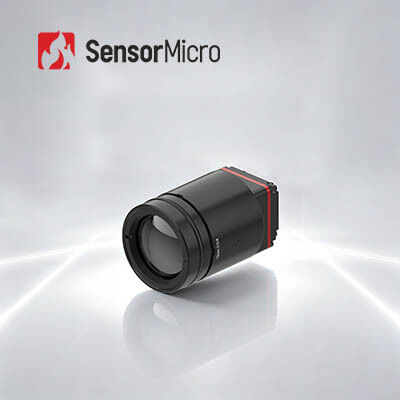
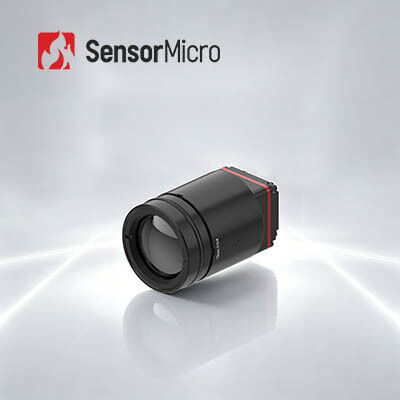
LWIR Uncooled Thermal Imaging Module with 1280x1024 Resolution 8μm Pixel Pitch and 25mm Lens

| Place of Origin | China |
|---|---|
| Brand Name | SensorMicro |
| Certification | ISO9001:2015; RoHS; Reach |
| Model Number | iTL1208 |
| Minimum Order Quantity | 1 Piece |
| Price | Negotiable |
| Payment Terms | T/T |
Product Details
| Resolution | 1280x1024 | Power Consumption | 1W |
|---|---|---|---|
| Spectral Range | 8~14μm | Pixel Pitch | 8μm |
| NETD | ≤30mK | Frame Rate | 25Hz/30Hz |
| Highlight | 3 Axis Thermal Camera Core,14um Spectral Range Thermal Module,Robots Lwir Camera Core |
||
Product Description
LWIR Uncooled 1280x1024/8μm Thermal Imaging Module with 25mm Lens
Product Overview
The iTL1208 serves as a turnkey infrared vision subsystem for custom embedded thermal imaging solutions. Optimized for seamless integration into complex single-board computer and embedded control systems, this compact camera core (22.6×22.6×34.5mm, 35.7g) eliminates redundant hardware design for your vision system projects.
Equipped with an 8μm 1280×1024 detector and 30mK low-noise thermal detection capability, it provides standardized high-quality thermal video stream output. Its native MIPI CSI interface matches most mainstream embedded mainboard chips; RAW/YUV dual data output reserves full algorithm development space, while serial port and I2C bus realize remote parameter debugging and automatic equipment linkage. It is the ideal vision core for customized unmanned system and embedded thermal detection solutions.
Main Features
- Extreme Lightweight Design - Compact size of 22.6×22.6×34.5mm and weight of 35.7g (including 12mm lens); among the highest levels of integration in its class
- High Sensitivity, Precise Detection - 8μm ultra-small pixel size with 1280×1024 resolution, delivering fine detail and clear images; typical NETD ≤ 30mK, enabling reliable detection of subtle temperature differences
- Simplified Development, Fast Integration - Multiple optical lens options available to meet diverse application requirements; supports MIPI CSI image output interface; RAW and YUV image data output, with control via serial port/I2C
Product Specifications
| Model | iTL1208 |
|---|---|
| IR Detectors Indicators |
Sensitive Material: VOx
Resolution: 1280×1024
Pixel Size: 8μm
Spectral Response: 8μm ~ 14μm
Typical NETD: ≤30mK
|
| Image Processing |
Digital Frame Rate: 25/30Hz
Start-up Time: ≤6s
Digital Video: RAW/YUV
Image Algorithm: NUC/3DNR/DNS/DRC/EE
Image Display: 10 Types (White Hot/Lava/Iron Red/Hot Iron/Medical/Arctic/Rainbow 1/Rainbow 2/Tint/Black Hot)
|
| PC Software | Module Control & Video Display |
| Electrical |
Standard External Interface: 34Pin_Connector Interface: BP04SD-34-0065-R0
Communication Interface: TTL-232/I2C
Digital Video Interface: MIPI-CSI
Supply Voltage: 4.5-5.5V
Typical Power Consumption: 1W
|
| Mechanical |
Size (including lens):
• With 5mm lens: 22.6mm×22.6mm×50mm (lens outer diameter Φ37mm)
• With 10mm lens: 22.6mm×22.6mm×45.3mm (lens outer diameter Φ33mm)
• With 12mm lens: 22.6mm×22.6mm×34.5mm (lens outer diameter Φ26.6mm)
• With 17mm lens: 22.6mm×22.6mm×35.4mm (lens outer diameter Φ27mm)
• With 25mm lens: 22.6mm×22.6mm×44.2mm (lens outer diameter Φ33mm)
• With 35mm lens: 22.6mm×22.6mm×50.9mm (lens outer diameter Φ43.2mm)
Weight (including lens):
• 85.5±4.5g (With 5mm Lens)
• 70.5±3.6g (With 10mm Lens)
• 35.7±2g (With 12mm Lens)
• 40.7±2.1g (With 17mm Lens)
• 71.0±3.6g (With 25mm Lens)
• 110±5.5g (With 35mm Lens)
|
| Environmental Adaptability |
Operating Temperature: -40℃~+70℃
Storage Temperature: -45℃~+85℃
Humidity: 5%~95%, non-condensing
Vibration: 5.35grms, Random Vibration, 3-axis
Impact: Half Sine Wave, 40g/11ms, Impact Direction X Axis, 3 times
|
| Certification | ROHS2.0/REACH |
| Optical Lens | Fixed Focus Athermal: 5/10/12/17/25/35mm |
Industrial Applications
The iTL1208 thermal imaging module can be widely used in fields of Forest Firefighting, Power Maintenance, Photovoltaic Inspection, Security Monitoring, Wearable Devices, Portable Devices etc.
DRI Range Explanation
DRI Range is a means of measuring the distance at which an infrared detector can produce an image of specific target and can be divided into detection range, recognition range, identification range.
- D (Detection): ability to distinguish an object from the background
- R (Recognition): ability to classify the object class (animal, human, vehicle, boat …)
- I (Identification): ability to describe the object in details (a man with a hat, a deer, a Jeep …)
According to Johnson's criteria, when the probability of target detail visible at the DRI distance is 50%, the minimum number line pairs of the target is 1:3:6 (or 1:4:8), and the corresponding minimum number of pixels is 2:6:12 (or 2:8:16).
Assuming that the target diameter is H, the focal length is f, the pixel size is d, and the number of line pairs is n, then the view distance L=H×f/(2n×d)
Recommended Products
-
 VIDEO
VIDEO -