


All Products
-
Thermal Camera Core
-
Thermal Security Camera
-
Plug-in Thermal Camera
-
Cooled Infrared Detectors
-
Cooled Camera Modules
-
Optical Gas Imaging
-
Radiometric Thermal Module
-
High Resolution Thermal Camera Module
-
Thermal Camera For Fever Detection
-
Vehicle Mounted Thermal Camera
-
Integrated Dewar Cooler Assembly
-
Uncooled Infrared Detectors
Contact Person :
Wendy Wang
Phone Number :
+86 27 50185150
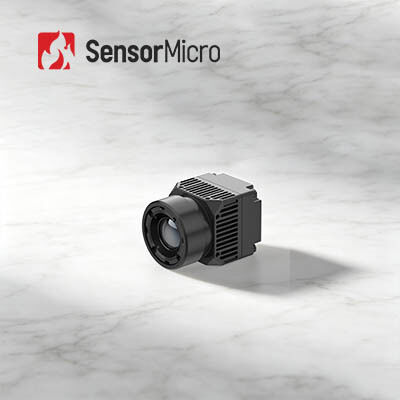
Uncooled 640x512 Resolution 8μm Pixel Pitch Thermal Imaging Camera for Medical Applications

| Place of Origin | China |
|---|---|
| Brand Name | SensorMicro |
| Certification | ISO9001:2015; RoHS; Reach |
| Model Number | iHA608W |
| Minimum Order Quantity | 1 Piece |
| Price | Negotiable |
| Payment Terms | T/T |
Product Details
| Resolution | 640x512 | Power Consumption | 0.6W |
|---|---|---|---|
| Spectral Range | 8~14μm | Pixel Pitch | 8μm |
| Typical NETD | ≤30mK | Frame Rate | 25Hz |
| Highlight | Uncooled 17um Thermal Imaging Camera,Medical Thermal Imaging Camera 384x288,Medical Uncooled Thermal Camera |
||
Product Description
Uncooled 640x512 8μm Thermal Imaging Camera for Medical Applications
Product Overview
The iHA608W utilizes ApexCore 640×512 (8μm) premium infrared detector customized for non-contact biological temperature detection, achieving precise measurement within ±0.5°C error range. Built-in medical dedicated algorithms sharpen thermal image details and precisely render temperature profiles with trustworthy data outputs. The 8μm tiny pixel design shrinks the overall device size, together with Type-C video and USB2.0 ports for efficient integration. Ideal for medical diagnosis, health screening and livestock thermal inspection applications.
By using thermal imaging technology, doctors can carry out 100% safe, no radiation, non-invasive, non-contact full body checkup to avoid further, unnecessary testing procedures. The heat distribution in various parts of human body can be quickly shown to early detect and diagnose physical abnormalities, so that any further treatment can be easier and more effective.
Main Features
-
Accurate Measurement, Smooth Imaging• Developed for non-contact biological temperature detection, featuring ±0.5℃ high measurement accuracy
• Matched with medical-grade lens and exclusive medical image processing algorithms for sharper thermal imaging -
Ultra-Compact Module for Easy Integration• Adopts 8μm ApexCore small-pixel infrared detector to miniaturize module structure
• Measures only 21×21×31.5 mm with weight controlled at 25±2 g, perfectly matching various compact devices -
Efficient System Integration and Reduced Development Complexity• Standard Type-C + USB2.0 interfaces for faster integration
• Windows / Android / Linux SDK offered to simplify development work
Product Specifications
| Model | iHA608W |
| IR Detectors Indicators | |
| Sensitive Material | Vox |
| Resolution | 640×512 |
| Pixel Size | 8μm |
| Spectral Response | 8μm ~14μm |
| Typical NETD | ≤30mK |
| Image Processing | |
| Digital Frame Rate | 25Hz |
| Start-up Time | ≤6s |
| Digital Video | RAW/YUV/TMP |
| Image Algorithm | NUC/3DNR/DNS/DRC/EE |
| Image Display | Medical Color/ pseudo-color |
| PC Software | |
| Software | Module Control & Video Display |
| Temperature Measurement | |
| Working Temperature | 10°C ~ +50°C |
| Measurement Range | 32℃ ~ +42℃ |
| Measurement Accuracy | ±0.5℃ after starting up for 2 minutes (When target temperature range is 32~42℃, and ambient temperature is 23±3℃) |
| Measurement Distance | 0.5m to 5m, and temperature measurements at various distance can be achieved through the SDK |
| SDK | SDKs for Windows/Android/Linux are available Enabling video stream analysis, module control, comprehensive array temperature measurement, temperature imaging, temperature window setting, and integration of multiple devices |
| Electrical | |
| Standard External Interface | USB(TYPE-C) |
| Communication Interface | USB |
| Digital Video Interface | USB2.0 |
| Supply Voltage | 5V±0.5 |
| Typical Power Consumption | 0.6W |
| Optical lens | |
| Focal length | 4mm |
| Lens Type | Fixed Focus Athermal |
| F# | 1 |
| FOV (H×V) | 69.2°×55.4° |
| Physical Dimensions | |
| Size (mm) | 21mm×21mm×31.5mm (With 4mm Lens) |
| Weight (g) | 25g±2 (With 4mm Lens) |
| Environmental Adaptability | |
| Operating Temperature | -10℃~+50℃ |
| Storage Temperature | -45℃~+85℃ |
| Humidity | 5%~95%, non-condensing |
| Vibration | 5.35grms, Random Vibration, 3-axis |
| Shock | Half Sine Wave, 40g/11ms, Shock Direction 3-axis, 6-direction |
| ESD | Contact Discharge: 6KV Air Discharge: 8KV |
| Certification | |
| Environment Protection | ROHS2.0/REACH |
Industrial Applications
The iHA608W thermal module is expected to be widely used in the fields of Disease Screening, Traditional Chinese Medicine Physiotherapy, Health Check-up, Rehabilitation etc. at present and in the future.

Our Advantages
- Deep Technical Expertise
With many years of experience in the research, development, and application of infrared sensor technology, we have built strong capabilities across chip design, wafer fabrication, packaging and testing, as well as system integration. Our solid foundation enables us to continuously deliver innovative and reliable products that meet evolving market demands. - Focused on Innovation and Practical Implementation in Infrared Sensing
We are committed to driving technological breakthroughs in thermal imaging, constantly pushing the boundaries in NETD, SWaP, and operating temperature. Our products consistently lead in applications across security, industrial monitoring, intelligent systems, and more. - Diversified Product Portfolio
Backed by independent R&D and multiple technical pathways, we offer a comprehensive range of infrared detection components—both cooled and uncooled—providing tailored solutions for a wide variety of industries. - Rigorous Reliability Validation Ensures Quality Assurance
Supported by a robust quality management system, our products undergo multiple testing procedures throughout production to ensure long-term stability and reliability. - Professional Technical Support and Joint Development Services
Our engineering team works closely with customers' R&D and product teams to accelerate system integration, improve efficiency, and shorten time-to-market. Your success is our shared mission.
Frequently Asked Questions
- What is the difference between low light, active IR and thermal imaging?
Low light needs natural light and transforms weak natural light image into enhanced electronic image through image intensifier; Active IR actively emits infrared light and uses infrared beam reflected by the target. It has very poor concealment; Thermal imaging doesn't need any light and is a passive infrared night vision that detects infrared radiation difference between targets and scene or different parts of an object. not be affected by the changes of the surrounding lighting conditions, during night or even in fog, rain and other harsh environments. - Can you block thermal imaging?
In most cases, you cannot. But infrared rays can't penetrate walls, and also the glass can block IR. So, if you don't want to be detected, you can conceal behind glass or walls to block the thermal imaging.
Recommended Products
-
VIDEO
-