


All Products
-
Thermal Camera Core
-
Thermal Security Camera
-
Plug-in Thermal Camera
-
Cooled Infrared Detectors
-
Cooled Camera Modules
-
Optical Gas Imaging
-
Radiometric Thermal Module
-
High Resolution Thermal Camera Module
-
Thermal Camera For Fever Detection
-
Vehicle Mounted Thermal Camera
-
Integrated Dewar Cooler Assembly
-
Uncooled Infrared Detectors
Contact Person :
Wendy Wang
Phone Number :
+86 27 50185150
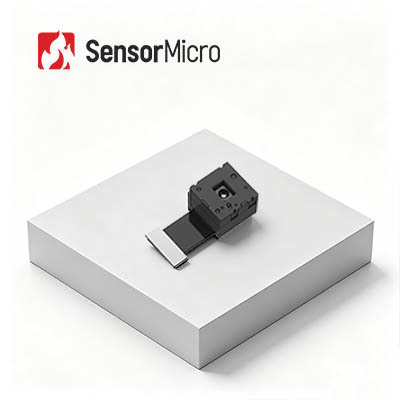
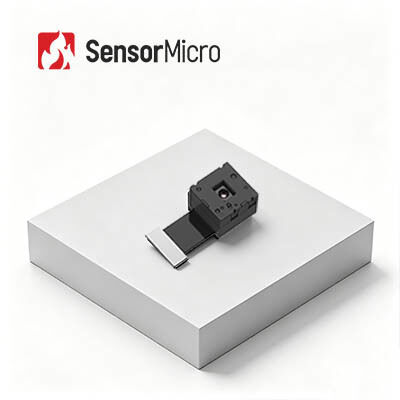
Mini Size TIMO112 Uncooled Infrared Camera Module with 120x90 Resolution and 12μm Pixel Pitch
| Place of Origin | China |
|---|---|
| Brand Name | SensorMicro |
| Certification | ISO9001:2015; RoHS; Reach |
| Model Number | TIMO112 |
| Minimum Order Quantity | 1 Piece |
| Price | Negotiable |
| Payment Terms | L/C,T/T |
Product Details
| Resolution | 120x90 | Lens (HFOV/FL) | 50°/ 1.6mm |
|---|---|---|---|
| Spectral Range | 8~14μm | Pixel Pitch | 12μm |
| Output Data | 14bit Raw | Frame Rate | 25Hz |
| Highlight | Compact Design LWIR Thermal Module,LWIR Thermal Module 640x512,Payloads Thermal Camera Core 12um |
||
Product Description
Mini Size SWaP TIMO112 Uncooled Infrared Camera Module 120x90 / 12μm
Ultra-compact Design LWIR 120x90 / 12 μm Uncooled Infrared Camera Module
The TIMO112 infrared camera module integrates a 120x90 / 12μm wafer level package (WLP) infrared thermal detector. It is an uncooled LWIR thermal imaging module with spectral range from 8 to 14μm.
TIMO112 thermal camera module features tiny size, light weight and low cost. Oriented for fully optimized SWaP, it provides a reliable solution for infrared system integration with limited space. It has thermographic function with measurement range from -20℃ to 550℃ for industrial temperature measurement.
The TIMO112 thermal module is specially developed for Smart Home, AIoT, Instrument and Meter, Intelligent Security, Night Observation and similar applications.
Main Features
- Ultra-Miniature Module with Ultimate SWaP-C Optimization
- Wafer-level packaged detector + wafer-level optics + micro-electromagnetic valve shutter
- The smallest infrared thermal module, enabling minimal thermal imaging functionality with maximum cost efficiency
- Compact size, lightweight, and low power consumption, ideal for integration into miniature devices
- Proven Performance and Rapid Response
- Ultra-low power design, consuming as little as 9mW
- Smooth imaging with a frame rate of 25Hz
- Flexible and Eco-friendly
- Supports SPI image interface, compatible with various embedded platforms
- Compliant with RoHS 2.0 environmental standards
Product Specifications
| Model | TIMO112 |
|---|---|
| Resolution | 120×90 |
| Pixel Size | 12μm |
| Spectral Response | 8~14μm |
| Focus Mode | Focus Free |
| Lens (HFOV/FL) | 50°/ 1.6mm |
| Weight (g) | 1.8 |
| Size (mm, without FPC) | 12.6mm×12.6mm×8.8mm |
| Number of PINs | 40PIN |
| Output Data | 14bit Raw |
| Frame Rate | 25Hz |
| Temperature Measurement Range | -20℃~+550℃ (-20℃~+150℃ | +100℃~550℃) |
| Temperature Measurement Accuracy | Greater of ±2℃ / ±2% |
| Operating Temperature | -20℃~+60℃ |
| Humidity | 5%~85% |
| Storage Temperature | -45℃~+85℃ |
| Certification | RoHS 2.0 / Reach |
Industrial Applications
The TIMO112 thermal imaging module can be used in applications such as Smart Home, AIoT, Instrument and Meter, Intelligent Security, Night Observation and similar fields.
About Us
SensorMicro is the world leading infrared detector manufacturer and service provider. We provide customers worldwide with high performance uncooled and cooled thermal imaging detectors and share our professional application experience.
SensorMicro delivers advanced infrared detectors, camera cores, and modules with versatile formats and wavebands. Designed for clarity, sensitivity, and efficiency, our products integrate seamlessly into diverse systems—empowering next-generation imaging and sensing applications across industries.
SensorMicro detectors have been widely used in thermography, security & surveillance, personal vision, automotive and consumer infrared products. Our volume production capability enables us to meet the growing demand from all existing and emerging markets.
FAQs
What is the difference between uncooled and cooled IR detectors?
There are currently two types of infrared thermal imaging sensors on the market: cooled and uncooled.
Uncooled IR detectors operate at ambient temperature. They are based on semiconductor industry technology and can be fabricated in large volumes with small size and low cost. Uncooled IR detectors are widely used in portable/handheld/mobile devices.
Cooled IR detectors are packaged in a unit that keeps them at extremely low temperatures supported by a cryo cooler. They are larger, more expensive and less reliable than uncooled sensors, mainly due to the complex cooling systems required. However, cooled systems are incredibly sensitive and usually work with long focal length optics to achieve long range missions.
Recommended Products
