


All Products
-
Thermal Camera Core
-
Thermal Security Camera
-
Plug-in Thermal Camera
-
Cooled Infrared Detectors
-
Cooled Camera Modules
-
Optical Gas Imaging
-
Radiometric Thermal Module
-
High Resolution Thermal Camera Module
-
Thermal Camera For Fever Detection
-
Vehicle Mounted Thermal Camera
-
Integrated Dewar Cooler Assembly
-
Uncooled Infrared Detectors
Contact Person :
Wendy Wang
Phone Number :
+86 27 50185150
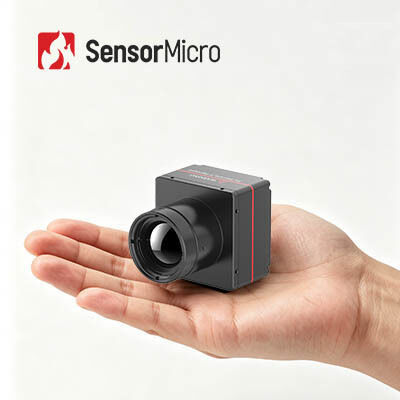
LWIR Uncooled Infrared Camera Core with 1280x1024 Resolution 12μm Pixel Size and Shutterless Operation for Clear Thermal Imaging
| Place of Origin | China |
|---|---|
| Brand Name | SensorMicro |
| Certification | ISO9001:2015; RoHS; Reach |
| Model Number | iSE1212 |
| Minimum Order Quantity | 1 Piece |
| Price | Negotiable |
| Payment Terms | T/T |
Product Details
| Resolution | 1280x1024/12μm | Spectral Range | 8~14μm |
|---|---|---|---|
| NETD | ≤30mK | Frame Rate | 25Hz/30Hz/50Hz |
| Supply Voltage | 2.7V~5.3V | Digital Video Interface | DVP16/BT.1120/USB3.0/MIPI-DSI-4LANE |
| Highlight | LWIR Uncooled Infrared Camera Core,Infrared Camera Core 1280x1024,Thermal Camera Core 12um |
||
Product Description
LWIR Uncooled Infrared Camera Core 1280x1024/12μm With Clear Thermal Imaging
Product Overview
The iSE1212 uncooled thermal camera core is developed by SensorMicro, specializing in the design, manufacture, sales and marketing of thermal imaging detectors and infrared modules.
This thermal module delivers thermal images up to 1280x1024 pixels, revealing the smallest details with exceptional clarity. The reduced 12µm pixel size provides superior spatial resolution and matches shorter optical lens focus to achieve the same range mission.
The iSE1212 infrared thermal core is applied across diverse applications, offering visual information solutions for day, night, low visibility and all weather conditions.
Main Features
- High-Definition Imaging with Smooth Visuals - Delivers megapixel thermal imaging with smooth, lag-free performance. Wider field of view, larger angle coverage, longer detection range, and enhanced detail.
- Shutterless Operation for Silent Performance - No shutter calibration required during use, eliminating image stuttering common in traditional designs. Silent operation helps avoid detection by targets.
- Feature-Rich and Integration-Friendly - Supports super-resolution algorithms, picture-in-picture, customizable OSD, sleep mode, one-click calibration, and compatibility with various Micro OLED displays. Compatible with a wide range of optical lenses and extended components, enabling easy secondary development and flexible system integration.
Product Specifications
| Model | iSE1212 | |
| IR Detectors Indicators | ||
| Sensitive Material | VOx | |
| Resolution | 1280×1024 | |
| Pixel Size | 12μm | |
| Spectral Response | 8μm ~ 14μm | |
| Typical NETD | ≤30mK | |
| Image Processing | ||
| Effective Pixels | 1280×1024 | |
| Digital Frame Rate | 25Hz/30Hz/50Hz | |
| Start-up Time | 7s | |
| Digital Video | YUV420/YUV422/RGB888/RAW | |
| Image Algorithm | NUC/DRC/DNS/DDE/SFFC | |
| Shutterless | Supported | |
| Image Display | 10 Types (White Hot/Lava/Iron Red/Hot Iron/Medical/Arctic/Rainbow 1/Rainbow 2/Tint/Black Hot) | |
| Image Direction | Horizontal/Vertical/Diagonal | |
| Digital Zoom | 1x/2x/4x/8x | |
| Image Brightness | Auto/Manual | |
| Image Contrast | Auto/Manual | |
| Compensation Mode | Manual | |
| Reticle | Supported | |
| System Function | ||
| Sleep Mode | Supported | |
| Menu Setting | Customizable | |
| Menu Language | Chinese / English | |
| Offset calibration | Supported | |
| Keypads | ≥4(Button functions customizable) | |
| OLED Driving | Support I2C, 16bit/ 24bit Parallel Port, datavalid and other drive screen signals Direct Drive Micro OLED MDP03/Micro OLED MDP02/OLiGHTEK SVGA060/Sony ECX334A Supports MIPI display signals and can directly drive the IBOE VX039FHP-NH4 screen. |
|
| PC Software | ||
| Computer Software | Module Control & Video Display | |
| Electrical | ||
| Standard External Interface | 50pin: BP040SB-50-0114-B-R0 | |
| Communication Interface | TTL-232/USB | |
| Digital Video Interface | DVP16/BT.1120/USB3.0/MIPI-DSI-4LANE | |
| Extension Components | USB3.0/SDI/HDMI/GIGE/Cameralink/VPC/MIPI-CSI-2LANE | |
| Electrical Interface | ||
| Supply Voltage | 2.7V~5.3V | |
| Typical Power Consumption | 1.2W@25Hz@23±3℃ | |
| Mechanical/Lens | ||
| Bare Core Size(mm) | 38×39×28 | 68×69×30.2 |
| Bare Core Weight(g) | 65±3 | 88.5±3 |
| Optical Lens | Fixed Focus Athermal: 14mm/19mm/25mm/35mm | Fixed Focus Athermal: 50mm/100mm Motorized Lens: 75mm/100mm/150mm Continuous Zoom: 15~100mm / 25~75mm / 28~90mm / 30~180mm / 25~225mm / 30~300mm |
| Shutter Components | Optional | |
| Protection Level | IP67(Front Lens) | |
| Environmental Adaptability | ||
| Operating Temperature | -40℃~+70℃ | |
| Storage Temperature | -45℃~+85℃ | |
| Humidity | 5%~95%, non-condensing | |
| Vibration | 5.35g, Random Vibration,, 3-axis | |
| Impact | Half Sine Wave, 40g/11ms, Impact Direction X Axis, 3 times | 500g@1ms |
| Certification | ROHS2.0/REACH | |
Industrial Applications
The iSE1212 infrared imaging module is widely used in Industrial Vision, Firefighting and Rescue, Security Surveillance, Outdoor Observation, Machine Vision, Consumer Electronics, and more.
About SensorMicro
Driven by user needs, SensorMicro is committed to the in-depth development and continuous improvement of infrared products and application solutions. We provide high-quality hardware products and share professional application experience, offering customized solutions tailored to the unique requirements of different industries.
Our global service network ensures timely technical support and after-sales service, making us a trusted partner for customers worldwide. Looking ahead, SensorMicro will continue to uphold the "Sense More" philosophy, deepen technological innovation in infrared thermal imaging, expand application boundaries, and contribute to the advancement of various industries through reliable, intelligent infrared solutions.
Frequently Asked Questions
How to choose proper infrared detector resolution?
It depends on the actual needs and applications of your products, and price is also a factor that needs to be considered. If image quality requirements are not high, you can choose infrared detectors with lower resolution such as 120x90, 256x192, or 400x300. If you need very clear images for special purposes such as remote monitoring, you can choose high-resolution infrared detectors of 1280x1024.
How to select right pseudo color for thermal imaging?
Gray white is more suitable for targets with small temperature differences. Red and blue is more suitable for scenes where problem points need to be found. Iron red is the standard color palette of the power industry. Note: regardless of which palette you choose, the thermal temperature measurement will not change at all.
How to choose a suitable infrared thermal camera lens?
Standard lenses can meet normal targets at appropriate distances. Telephoto lenses are suitable for relatively small targets that need to be viewed from long distances. To see more detail of objects at close distance, wide angle lenses are better. Macro lenses are for viewing very tiny targets at close distances, such as chip circuits.
Recommended Products
-
 VIDEO
VIDEO -