


All Products
-
Thermal Camera Core
-
Thermal Security Camera
-
Plug-in Thermal Camera
-
Cooled Infrared Detectors
-
Cooled Camera Modules
-
Optical Gas Imaging
-
Radiometric Thermal Module
-
High Resolution Thermal Camera Module
-
Thermal Camera For Fever Detection
-
Vehicle Mounted Thermal Camera
-
Integrated Dewar Cooler Assembly
-
Uncooled Infrared Detectors
Contact Person :
Wendy Wang
Phone Number :
+86 27 50185150
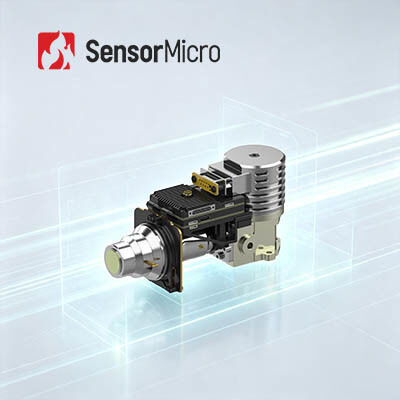
1280x1024 Resolution 15μm Pixel Size MWIR Cooled Infrared Camera Core with 50Hz Frame Rate for Long Range Monitoring

| Place of Origin | China |
|---|---|
| Brand Name | SensorMicro |
| Certification | ISO9001:2015; RoHS; Reach |
| Model Number | GAVIN GC1215MC |
| Minimum Order Quantity | 1 Piece |
| Price | Negotiable |
| Payment Terms | T/T |
Product Details
| Spectral Range | 3.7~4.8μm (MW) | Used For | Surveillance Camera |
|---|---|---|---|
| Resolution | 1280x1024/15μm | Size | 160×60×85mm |
| High Sensitivity | NETD 20mK(F2/F4) | Frame Rate | 50Hz |
| Highlight | 1280x1024 Cooled Thermal Module,Ultra Clear 12um Cooled Thermal Module,RS422 Thermal Security Camera |
||
Product Description
Ultra Clear 1280x1024 15μm Cooled Thermal Module for Long Range Monitoring
Product Overview
The GAVIN GC1215MC HD MWIR cooled infrared camera core features a self-developed 1280×1024/15μm MWIR cooled detector, providing four times the pixel count of a conventional 640×512 detector within the same active image area. This enables a wider field of view and reveals more image details. Equipped with multiple image processing algorithms, it delivers high-definition images directly, suitable for all-weather target detection under various visibility conditions and harsh environments.
Main Features
Megapixel Resolution, Exceptional Image Quality
- Powered by a 1280×1024/15μm mid-wave cooled infrared detector for sharp, detailed thermal imaging
- Integrates advanced image processing algorithms including DRC, 2D/3D noise reduction, and edge enhancement (EE) for superior clarity
High Reliability, Superior Sensitivity
- MWIR cooled thermal imaging ensures excellent adaptability and consistency across applications
- Outstanding thermal sensitivity
Easy Integration, Flexible Configuration
- Supports CameraLink interface with RAW/YUV image data output
- Multiple continuous zoom optical configurations available for different needs
Product Specifications
| Model | GAVIN GC1215MC MWIR Cooled Infrared Camera Core |
|---|---|
| Indicators | |
| Resolution | 1280×1024 |
| Pixel Size | 15μm |
| Spectral Response | 3.7μm±0.2μm~4.8μm±0.2μm |
| IR Detector NETD(23℃) | 20mK(F2/F4) |
| Image Processing | |
| Frame Rate | 50Hz |
| Dimming Mode | Linear/Histogram/Mixed |
| Digital Zoom | 1× to 8× continuous digital zoom |
| Image Direction | Horizontally/Vertically/Diagonally Flip |
| Image Algorithm | DRC, 2D/3D Image Noise Reduction, EE |
| Electrical | |
| Standard External Interface | J30JZ 25-pin HDMI Dedicated Output Interface |
| Analog Video | PAL/NTSC |
| Digital Video | Standard: DVP Option: Cameralink/USB3.0/GigE/SDI/HDMI/MIPI/Single-mode Optical Fiber/Multi-mode Optical Fiber |
| External Sync | Standard: LV-TTL Option: RS422/LVDS |
| Communication | Standard: USB2.0/LV-TTL Option: RS422/CAN/USB3.0/GigE |
| Power Supply | 24V±4V |
| Steady Power Consumption(23℃) | ≤16W |
| Cooling Time(23℃) | ≤7min30s |
| Size(mm) | 160×60×85 |
| Weight(g) | ≤850 |
| Operating Temperature | -40℃~+71℃ |
| Vibration | Vibration: High-speed transport intensity; Impact: Half Sine Wave, 40g/11ms, 3 Axis, 6 Direction, 3 Times/Direction |
| Optical Lens | |
| Lens Options | Fixed focus: 25mm/F1.6 |
Industrial Applications
The GAVIN GC1210MA thermal infrared camera module is suitable for long range monitoring systems and complex environments, such as scarcely populated areas, 24/7 all weather monitoring, and harsh weather locations.
Customized Services
- Product Customization: Adjust configurations and adapt algorithms to meet industry-specific requirements
- On-Site Technical Support & Training: Provide core customers with hands-on system setup and operational training
- Joint Innovation for New Products & Markets: Collaborate with customers to co-develop innovative infrared application solutions
Frequently Asked Questions
What is infrared thermal imaging?
Infrared thermal imaging is a method of using infrared radiation and thermal energy to gather information about objects, in order to formulate images of them, or get temperature information of the objects, even in low visibility environments.
How does Infrared Thermal Imaging Work?
Infrared thermal imaging system is a passive non-contact detection and identification of infrared technology. It focuses the infrared radiation of the scene on the focal plane array infrared detector through the infrared optical system that can pass through infrared radiation. The thermal detector converts the radiation signal of different intensity into the corresponding electrical signal, and then through amplification and video processing, forms the infrared image that can be observed by the naked eyes.
Recommended Products
