


All Products
-
Thermal Camera Core
-
Thermal Security Camera
-
Plug-in Thermal Camera
-
Cooled Infrared Detectors
-
Cooled Camera Modules
-
Optical Gas Imaging
-
Radiometric Thermal Module
-
High Resolution Thermal Camera Module
-
Thermal Camera For Fever Detection
-
Vehicle Mounted Thermal Camera
-
Integrated Dewar Cooler Assembly
-
Uncooled Infrared Detectors
Contact Person :
Wendy Wang
Phone Number :
+86 27 50185150
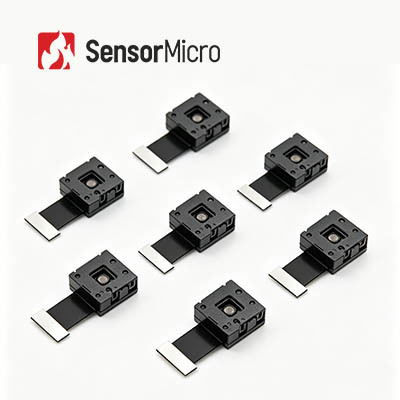
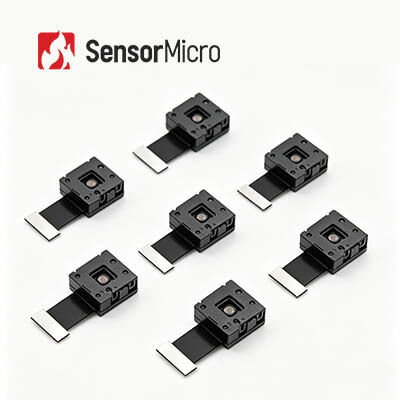
TIMO112 Miniature Thermal Camera Module with 120x90 Resolution and Temperature Measurement Function
| Place of Origin | China |
|---|---|
| Brand Name | SensorMicro |
| Certification | ISO9001:2015; RoHS; Reach |
| Model Number | TIMO112 |
| Minimum Order Quantity | 1 Piece |
| Price | Negotiable |
| Payment Terms | T/T |
Product Details
| Resolution | 120x90 | Pixel Pitch | 12μm |
|---|---|---|---|
| Temperature Range | -20℃~550℃ | Temperature Measurement Accuracy | Greater Of ±2℃ / ±2% |
| Frame Rate | 25Hz | Lens(HFOV/FL) | 50°/ 1.6mm |
| Highlight | CB360 Thermal Camera For Fever Detection,SDK Thermal Camera For Fever Detection |
||
Product Description
TIMO112 Miniature Thermal Camera Module 120x90/12μm with Temperature Measurement Function
Product Overview
The TIMO112 infrared camera module integrates a wafer-level packaged 120×90/12μm uncooled infrared detector with temperature measurement capabilities ranging from -20℃ to +550℃ and accuracy of ±2℃/±2%. With comprehensive SDK and standard interfaces, this thermal module enables easy integration for secondary development.
As a supplier of thermal infrared detectors and camera modules, we leverage years of industrial application experience to provide professional, efficient solutions across all industries through our core independently developed infrared detector technology.
Main Features
Ultra-Miniature Module with Ultimate SWaP-C Optimization
- Wafer-level packaged detector + wafer-level optics + micro-electromagnetic valve shutter
- The smallest infrared thermal module, enabling minimal thermal imaging functionality with maximum cost efficiency
- Compact size, lightweight, and low power consumption, ideal for integration into miniature devices
Proven Performance and Rapid Response
- Ultra-low power design, consuming as little as 9mW
- Smooth imaging with a frame rate of 25Hz
Flexible and Eco-friendly
- Supports SPI image interface, compatible with various embedded platforms
- Compliant with RoHS 2.0 environmental standards
Product Specifications
| Model | TIMO112 |
|---|---|
| Resolution | 120×90 |
| Pixel Size | 12μm |
| Spectral Response | 8~14μm |
| Focus Mode | Focus Free |
| Lens (HFOV/FL) | 50°/1.6mm |
| Weight | 1.8g |
| Size (without FPC) | 12.6mm×12.6mm×8.8mm |
| Number of PINs | 40PIN |
| Output Data | 14bit Raw |
| Frame Rate | 25Hz |
| Temperature Measurement | |
| Temperature Measurement Range | -20℃~+550℃ (-20℃~+150℃ | +100℃~550℃) |
| Temperature Measurement Accuracy | Greater of ±2℃ / ±2% |
| Environmental Adaptability & Certification | |
| Operating Temperature | -20℃~+60℃ |
| Humidity | 5%~85% |
| Storage Temperature | -45℃~+85℃ |
| Certification | RoHS 2.0 / Reach |
Industrial Applications
The TIMO112 thermal imaging module can be used in applications such as Smart Security, AloT, Night Observation, Instruments and Meters, Machine Vision, and more.
Standardized Service
- Complete Documentation: Product manuals, setup guides, and selection references for seamless implementation
- Development & Testing Assistance: Sample integrated testing, performance evaluation, and parameter verification
- Advanced Developer Toolkit: SDKs, APIs, algorithms, and debugging tools for deep integration
- Remote Technical Support: 24/7 support with quick response and timely resolution for critical issues
- Warranty: Original parts and strict process adherence to restore optimal performance
Frequently Asked Questions
What is infrared thermal imaging?
In nature, all objects with temperatures above absolute zero (-273℃) radiate infrared rays. By measuring the infrared radiation temperature difference between targets and background using infrared camera detectors, different infrared images (thermal images) are generated.
How do infrared detectors work?
Infrared radiation emitted by targets enters the thermal detector's sensing range. The infrared detector converts radiation signals of varying intensity into corresponding electrical signals, which are then amplified and processed to form visible infrared images.
What are the advantages of cooled infrared detectors?
Cooled infrared focal plane detectors operate at low temperatures provided by detector dewar coolers (DDC). They offer higher sensitivity for distinguishing subtle temperature differences compared to uncooled detectors, enabling detection, identification, and recognition of objects over distances exceeding ten kilometers. However, their complex structure results in higher costs than uncooled detectors.
Recommended Products
-
 VIDEO
VIDEO -