


All Products
-
Thermal Camera Core
-
Thermal Security Camera
-
Plug-in Thermal Camera
-
Cooled Infrared Detectors
-
Cooled Camera Modules
-
Optical Gas Imaging
-
Radiometric Thermal Module
-
High Resolution Thermal Camera Module
-
Thermal Camera For Fever Detection
-
Vehicle Mounted Thermal Camera
-
Integrated Dewar Cooler Assembly
-
Uncooled Infrared Detectors
Contact Person :
Wendy Wang
Phone Number :
+86 27 50185150
Uncooled LWIR VOx 384x288 / 12μm Infrared Thermal Module with Shutterless Design
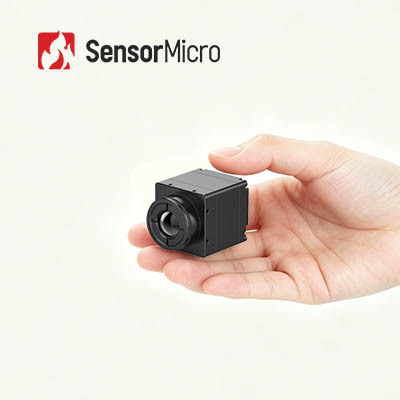
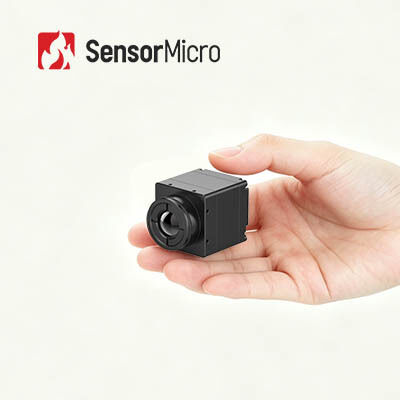
| Place of Origin | China |
|---|---|
| Brand Name | SensorMicro |
| Certification | ISO9001:2015; RoHS; Reach |
| Model Number | iSE412 |
| Minimum Order Quantity | 1 Piece |
| Price | Negotiable |
| Payment Terms | T/T |
Product Details
| Resolution | 384x288/12μm | Typical NETD | ≤30mK |
|---|---|---|---|
| Spectral Range | 8~14μm | Digital Frame Rate | 50Hz |
| Start-up Time | 6s | Digital Video | YUV420/YUV422/RGB888/RAW |
| Highlight | LWIR Camera Module Core,640x512 LWIR Camera Module,Uncooled Camera Module |
||
Product Description
Uncooled LWIR VOx 384x288 / 12μm Infrared Thermal Module, Thermal Imaging Camera Core
Product Overview
The iSE412 is part of the iSE series uncooled thermal camera modules, featuring a 384x288 / 12μm uncooled FPA infrared detector, professional signal processing circuitry, and advanced image processing algorithms.
This infrared thermal module is designed for industrial observation and infrared imaging applications. It supports adjustable imaging parameters to meet diverse operational requirements and delivers sharp, detailed thermal imagery with consistent performance.
Main Features
- Shutterless Design for Smoother Viewing
- No shutter calibration required during operation, eliminating image stuttering common in traditional shutter-based systems
- Silent operation ensures discreet use without mechanical noise
- Compact and Lightweight, Flexible for Integration
- Total system dimensions as small as 25.4×25.4×22.7 mm, bare core weight ≤26±1.5g
- Space-saving structural design allows flexible system layout and integration
- Feature-Rich, Seamless Integration
- Supports super-resolution algorithms, picture-in-picture, customizable OSD, sleep mode, one-click calibration, and compatibility with various Micro OLED displays
- Compatible with multiple optical lenses and extension components for easy secondary development and system customization
Product Specifications
| Model | iSE412 | |
| IR Detectors Indicators | ||
| Sensitive Material | VOx | |
| Resolution | 384×288 | |
| Pixel Size | 12μm | |
| Spectral Response | 8μm ~ 14μm | |
| Typical NETD | ≤30mK | |
| Image Processing | ||
| Effective Pixels | 384×288 | |
| Digital Frame Rate | 50Hz | |
| Start-up Time | 6s | |
| Digital Video | YUV420/YUV422/RGB888/RAW | |
| Image Algorithm | NUC/DRC/DNS/DDE/SFFC | |
| Shutterless | Supported | |
| Image Display | 10 Types (White Hot/Lava/Iron Red/Hot Iron/Medical/Arctic/Rainbow 1/Rainbow 2/Tint/Black Hot) | |
| Image Direction | Horizontal/Vertical/Diagonal | |
| Digital Zoom | 1x/2x/4x/8x | |
| Image Brightness | Auto/Manual | |
| Image Contrast | Auto/Manual | |
| Compensation Mode | Manual | |
| Electrical | ||
|
Standard External Interface
|
50pin: BP040SB-50-0114-B-R0
|
|
| Communication Interface | TTL-232/USB2.0 | |
| Digital Video Interface | DVP8/BT.656/DVP16/BT.1120/USB2.0/MIPI-DSI-4LANE | |
| Extension Components | USB2.0/SDI/HDMI/GIGE/Cameralink/VPC/MIPI-CSI-2LANE | |
| Electrical Interface | ||
| Supply Voltage | 2.7V~5.3V | |
| Typical Power Consumption | 0.8W@50Hz@23±3℃ | |
| Mechanical/Lens | ||
| Bare Core Size(mm) | 25.4×25.4×22.7 | φ36×24.3 |
| Bare Core Weight(g) | 26±1.5 | 28±1.5 |
| Optical Lens |
Fixed Focus Athermal: 4.9/9.1/13/19mm
|
Fixed Focus Athermal: 25mm/35mm
|
| Shutter Components | Optional | |
| Vibration | 5.35g, Random Vibration, 3-axis | |
| Impact | Half Sine Wave, 40g/11ms, Impact Direction X Axis, 3 times | 1500g@0.4ms |
| Protection Level | IP67(Front Lens) | |
| Environmental Adaptability | ||
| Operating Temperature | -40℃~+70℃ | |
| Storage Temperature | -45℃~+85℃ | |
| Humidity | 5%~95%, non-condensing | |
| Certification | ROHS2.0/REACH | |
Industrial Applications
- Industrial Vision
- Firefighting and Rescue
- Security Surveillance
- Outdoor Observation
- Machine Vision
- Consumer Electronics
Frequently Asked Questions
What are the advantages of uncooled infrared detectors?
Uncooled infrared focal plane detectors do not require cooling devices and can operate at room temperature. They offer advantages including fast startup, low power consumption, small size, light weight, long lifespan, and low cost.
What are the key considerations for an infrared detector / thermal module for your application?
Key considerations include:
- The detector resolution
- The pixel size
- The NETD
- The image quality
- The lens options
- The power consumption
- The size and weight
- The mechanical & electrical interface
- The budget
Recommended Products
-
 VIDEO
VIDEO -