


All Products
-
Thermal Camera Core
-
Thermal Security Camera
-
Plug-in Thermal Camera
-
Cooled Infrared Detectors
-
Cooled Camera Modules
-
Optical Gas Imaging
-
Radiometric Thermal Module
-
High Resolution Thermal Camera Module
-
Thermal Camera For Fever Detection
-
Vehicle Mounted Thermal Camera
-
Integrated Dewar Cooler Assembly
-
Uncooled Infrared Detectors
Contact Person :
Wendy Wang
Phone Number :
+86 27 50185150
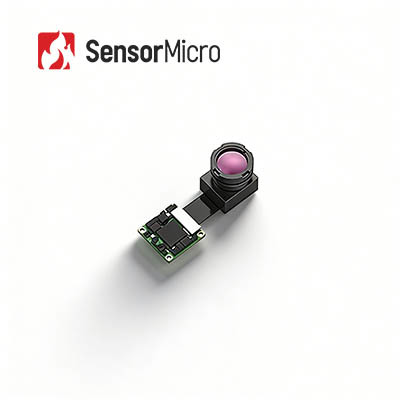
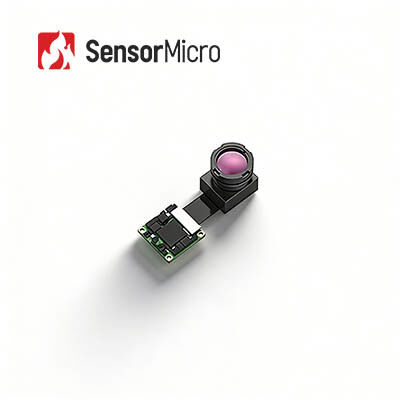
Light Weight 256x192 12μm Uncooled Infrared Thermal Camera Module Radiometric Thermal Module
| Place of Origin | China |
|---|---|
| Brand Name | SensorMicro |
| Certification | ISO9001:2015; RoHS; Reach |
| Model Number | Mini212G2 |
| Minimum Order Quantity | 1 Piece |
| Price | Negotiable |
| Payment Terms | T/T |
Product Details
| Temperature Range | -20℃~+550℃ | Resolution | 256x192/12μm |
|---|---|---|---|
| Operating Voltage | 3.3V±0.1V | NETD | ≤50mK |
| Spectral Range | 8~14μm | Typical Power Consumption | 330mW |
| Highlight | Uncooled Infrared Thermal Camera Module,Infrared Thermal Camera Module 256x192 |
||
Product Description
Product Overview
The Mini212G2 uncooled infrared miniature module is built on SensorMicro's self-developed TIMO212 infrared module. It integrates a 256×192/12μm wafer-level package (WLP) uncooled VOx infrared detector, high-performance signal processing circuit, and advanced image processing algorithm. It features an optional thermographic function with a measurement range from -20℃ to 550℃ for industrial temperature measurement.
Its lightweight and flexible design, combined with various industry-standard interfaces, makes this small infrared camera module ideal for OEM customers seeking secondary development and integration into all kinds of thermal imagers and infrared thermographic cameras.
Main Features
Miniature Module with Direct Thermal Imaging Output
- Equipped with a self-developed 256×192/12μm infrared detector, offering significant cost advantages.
- Ultra-compact structural design: only 17×17mm (PCBA) in size, weighing as low as 4g — ideal for space-constrained applications.
- Integrated ISP processing board and next-generation image algorithms deliver clear thermal images directly, ensuring strong versatility.
Precise Detection, Flexible Configuration
- High-precision temperature measurement with accuracy up to ±2℃; supports spot, area, and full-frame measurement.
- Multiple field-of-view lens options available to meet various observation requirements.
Rich Interfaces for Easy Integration
- Offers USB2.0, MIPI, DVP, BT.656, LVDS, and other digital video output interfaces.
- Fully compatible with industry-standard interfaces.
Product Specifications
| Model | Mini212G2 |
|---|---|
| Resolution | 256×192 |
| Pixel Size | 12μm |
| Spectral Response | 8~14μm |
| NETD | ≤50mK |
| Output Data | 14bit Raw |
| Frame Rate | Thermography: 25Hz, Imaging: 50Hz |
| Focus Mode | Focus Free |
| Lens (HFOV/FL) | 17.5°/10mm | 25°/7mm | 56°/3.2mm | 90°/2.1mm |
| Weight (g) | 7.1 | 6.4 | 4 | 6.8 |
| PCBA Size (mm) | 17×17 |
| Digital Video Interface | USB2.0 / MIPI / DVP / BT.656 / LVDS |
| Analog Video Interface | CVBS (PAL/NTSC) |
| Operating Voltage | 3.3V±0.1V |
| Typical Power Consumption | 330mW |
| Temperature Measurement Range | -20℃~+550℃ (-20℃~+150℃ | +100℃~550℃) |
| Temperature Measurement Accuracy | Greater of ±2℃ / ±2% |
| Operating Temperature | -40℃~+70℃ |
| Humidity | 5%~85% |
| Storage Temperature | -45℃~+85℃ |
| Certification | RoHS 2.0 / REACH |
Industrial Applications
The Mini212G2 infrared thermal camera module is widely used in thermography, security and monitoring, outdoor observation, firefighting and rescue, AIoT, intelligent hardware, and other applications.
Our Advantages
High Sensitivity and Excellent Performance
World-leading technology in the infrared industry.
Various Infrared Detectors Available
Both uncooled and cooled IR detectors in different formats and pixel sizes.
Volume Production to Ensure Fast Delivery
Three production lines with annual production capability up to millions of detectors.
Frequently Asked Questions
1. In which industries are focal plane array infrared detectors used?
Infrared focal plane detectors are the core component of thermal imaging systems and are key to detecting, identifying, and analyzing infrared information from objects. They have a wide range of applications in traffic, inspection, security monitoring, meteorology, medicine, and other industries.
2. What is the advantage of an uncooled infrared detector?
Uncooled infrared focal plane detectors do not require an Integrated Dewar Cooler Assembly (IDCA) device and can operate at room temperature. They offer advantages such as fast startup, low power consumption, small size, light weight, long life, and low cost. Although the sensitivity of uncooled infrared focal plane detectors is not as good as that of cooled infrared detectors, after years of development, their cost-performance ratio has become clearly superior to cooled detectors, offering broader application prospects.
Recommended Products
