


All Products
-
Thermal Camera Core
-
Thermal Security Camera
-
Plug-in Thermal Camera
-
Cooled Infrared Detectors
-
Cooled Camera Modules
-
Optical Gas Imaging
-
Radiometric Thermal Module
-
High Resolution Thermal Camera Module
-
Thermal Camera For Fever Detection
-
Vehicle Mounted Thermal Camera
-
Integrated Dewar Cooler Assembly
-
Uncooled Infrared Detectors
Contact Person :
Wendy Wang
Phone Number :
+86 27 50185150
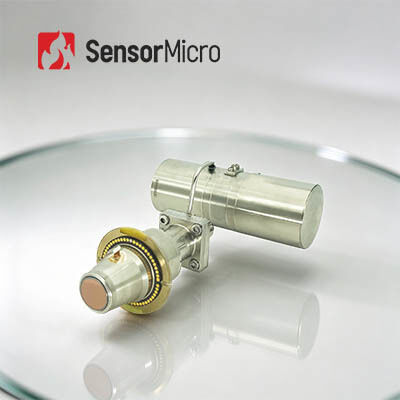
Security Monitoring MWIR Cooled Infrared Detector 640x512 15μm Integrated Dewar Cooler Assembly

| Place of Origin | China |
|---|---|
| Brand Name | SensorMicro |
| Certification | ISO9001:2015; RoHS; Reach |
| Model Number | C615M |
| Minimum Order Quantity | 1 Piece |
| Price | Negotiable |
| Payment Terms | T/T |
Product Details
| Application | Security Monitoring | Technology | Infrared Thermal Imaging |
|---|---|---|---|
| Spectral Range8~14μm | 3.7~4.8μm MW | Resolution | 640x512/12μm |
| Operation Temperature | -45℃~+71℃ | NETD | 16mK (F2); 18mK (F4) |
| Highlight | MWIR Cooled Infrared Detector 15um,Security Monitoring Cooled Infrared Detector,MWIR Cooled Detector 640x512 |
||
Product Description
Security Monitoring MWIR Cooled Infrared Detector 640×512 / 15 μm
The C615M MWIR is one of the HgCdTe/MCT cooled infrared detectors developed by SensorMicro. It features the widely adopted 640×512 / 15 μm specification, making it suitable for nearly all possible applications, including long-range surveillance systems, handheld thermal imagers, and gas leakage detection cameras.
The C615M RS058 is interchangeable with most mainstream Scorpio-like products when configured with the RS058 integrated Stirling cooler. The dewar design, cooler dimensions, and mechanical/electrical interface are nearly identical, so camera integrators can simply remove their old defective counterpart and connect the interchangeable C615M RS058 easily for further internal configuration.
Main Features
Sharp & Clear Imaging
- Good uniformity with an effective pixel rate > 99.5%
- High sensitivity with typical NETD as low as 16 mK
Guaranteed Continuous Supply
- Interchangeable standard interface
- Mass production with good consistency
Designed for Specific Applications
- Wavelength can be customized
- F-number can be customized
- Mounting surface can be customized
- Multiple cryocoolers available
Product Specifications
| Model | C615M MWIR Cooled Infrared Detector | ||
| Sensitive Material | MCT | ||
| Resolution | 640 × 512 | ||
| Pixel Size | 15 μm | ||
| Spectral Response | 3.7 μm ± 0.2 μm ~ 4.8 μm ± 0.2 μm | ||
| Working Mode | Snapshot; ITR/IWR Integration Modes; Windows Mode; Anti-blooming | ||
| Charge Capacity | 6.36 Me⁻ (ITR), 4.99 Me⁻ (IWR) | ||
| Dynamic Range | ≥ 75 dB | ||
| Output Channel | 4; up to 10 MHz per output | ||
| Max. Frame Rate | 120 Hz | ||
| Typical NETD | F2: 16 mK; F4: 18 mK | ||
| Effective Pixel Rate | ≥ 99.76% | ||
| Response Non-uniformity | ≤ 8% | ||
| Configurable Cryocooler | RS058 | RS046 | LS734 |
| Cryocooler Type | Rotary Stirling Cryocooler | Rotary Stirling Cryocooler | Linear Stirling Cryocooler |
| Steady Power Consumption (23℃) | ≤ 6 W | ≤ 5 W | ≤ 10 W |
| Max. Power Consumption (71℃) | ≤ 12 W | ≤ 11 W | ≤ 45 W |
| Power Supply | 24 V DC | 32 V DC | 24 V DC |
| Cooling Time (23℃) | ≤ 6 min | ≤ 5 min 30 s | ≤ 4 min |
| Maximum Size (mm) | 145 × 58.5 × 71 | 120 × 46.5 × 81.5 | Compressor: Φ46 × 122 Dewar: Φ40 × 114 |
| Weight (g) | ≤ 600 | ≤ 350 | ≤ 1200 |
| Operating Temperature | -45℃ ~ +71℃ | ||
Industrial Applications
The C615M MWIR cryogenically cooled infrared detector is widely used in many areas such as NDT, environmental monitoring, long-range surveillance, and scientific research.
Our Production Line
High Sensitivity and Excellent Performance
World-leading technology in the infrared industry.
Various Infrared Detectors Available
Both uncooled and cooled IR detectors in different formats and pixel sizes.
Volume Production to Ensure Fast Delivery
Three production lines with annual production capability up to millions of detectors.
FAQs
1. What is infrared radiation?
When talking about infrared thermal imaging, the first thing to consider is infrared radiation (IR). The wavelength of infrared radiation energy starts at about 700 nm and extends to about 1 mm. All objects emit a certain amount of heat in the form of infrared radiation, which is invisible to us because, in the entire electromagnetic spectrum, the naked eye can only see "visible light."
2. How does an infrared thermal imager work?
The core component of infrared equipment is the infrared thermal detector, which can sensitively detect the tiny temperature difference of surrounding objects. It then collects this radiation information from the object and outputs the temperature information for imaging based on the temperature difference information. The hotter the object, the more infrared radiation it produces. If the intensity is too high, you can feel it as heat.
Recommended Products
