


All Products
-
Thermal Camera Core
-
Thermal Security Camera
-
Plug-in Thermal Camera
-
Cooled Infrared Detectors
-
Cooled Camera Modules
-
Optical Gas Imaging
-
Radiometric Thermal Module
-
High Resolution Thermal Camera Module
-
Thermal Camera For Fever Detection
-
Vehicle Mounted Thermal Camera
-
Integrated Dewar Cooler Assembly
-
Uncooled Infrared Detectors
Contact Person :
Wendy Wang
Phone Number :
+86 27 50185150
320x256 Resolution 30μm Pixel Pitch Cooled Thermal Camera Core with 10mK NETD for Gas Leak Detection

| Place of Origin | China |
|---|---|
| Brand Name | SensorMicro |
| Certification | ISO9001:2015; RoHS; Reach |
| Model Number | LFM330Z3 |
| Minimum Order Quantity | 1 Piece |
| Price | Negotiable |
| Payment Terms | T/T |
Product Details
| Style | Cooled Infrared Module | Resolution | 320x256 / 30μm |
|---|---|---|---|
| NETD | 10mK | Spectral Range | 3.2±0.1~3.5±0.1μm |
| Frame Rate | 30Hz | Optional Lens | Fixed Zoom |
| Highlight | 320x256 Gas Leakage Detector,Cooled Gas Leakage Detector Camera |
||
Product Description
320x256 30μm Cooled Thermal Camera Core 23mm Lens for Petrochemical Industry
Gas Leak Detection Cooled Thermal Camera Core
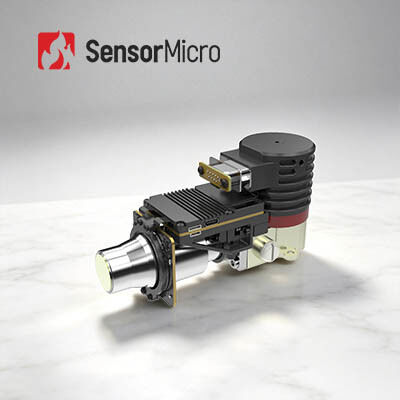
320x256 / 30 μm Gas Leak Detection Cooled Thermal Camera Core with 23mm Lens
The LFM330Z3 gas leak detection infrared camera module integrates a 320x256 / 30µm MCT cooled MWIR infrared detector and covers mid wavelength from 3.2 to 3.5μm.
This cooled infrared camera module can detect leaks of dozens of volatile organic compounds (VOCs). VOCs are human-made chemicals used and produced in the manufacture of paints, pharmaceuticals, and refrigerants, some of which may have short- and long-term adverse health effects. By using this thermal module, inspectors can quickly detect harmful gas leakage, playing a crucial role in safe production, efficiency improvement, and cost saving.
We specialize in the design, manufacture, sales, and marketing of thermal detector sensors and thermal image sensor modules. We provide customers with various infrared thermal imaging solutions that shorten secondary development time and significantly reduce costs.
Main Features
- Resolution: 320x256
- Pixel Pitch: 30µm
- NETD≤10mK, High Sensitivity
- Spectral Response: 3.2µm±0.1µm~3.5µm±0.1µm
- Wavelength Customizable Based on Different Requirements
- Support various interfaces and RAW/YUV image output
Product Specifications
| Module model | LFM330Z3 |
|---|---|
| Resolution | 320×256 |
| Pixel size | 30μm |
| Spectral response | 3.2±0.1μm~3.5±0.1μm |
| Typical NETD | 10mK (F1.5) |
| Frame rate | 30Hz |
| Digital video | Standard: DVP/LVDS/USB2.0 Optional: Cameralink/USB3.0/GigE/SDI/MIPI/Single-mode fiber/Multi-mode fiber |
| Communication | Standard: USB2.0/LV-TTL Optional: RS422/CAN/USB3.0/GigE |
| Cryocooler | RS058I | LS713 | LS734 |
| Cooling time (23 ℃) | ≤8min@12V | ≤6.5min@12V | ≤6.5min@24V |
| Stable power consumption (23 ℃) | ≤10W | ≤11W | ≤16W |
| Size (mm) | 142×58.5×80 | 108×116×73 | 130×131×80 |
| Weight (g) | ≤680 | ≤800 | ≤1610 |
| Working temperature | -40℃~+71℃ |
| Focal length | 23mm/55mm/25-75mm |
Industrial Applications
The LFM330Z3 gas leak detection thermal imaging camera is used for visualizing invisible VOCs (volatile organic compounds) and detecting gas leakage such as: Methane, Ethane, Propane, Butane, Pentane, Hexane, Heptane, Octane, Ethylene, Propylene, Isoprene, Methanol, Ethanol, Butanone, Benzene, Toluene, Xylene, Ethylbenzene, and more.
About Our Team
Focusing on infrared thermal imaging technology and driven by user needs, SensorMicro is committed to the in-depth development and continuous improvement of infrared products and application solutions.
In the field of gas leak detection, we have launched a series of infrared detectors and thermal modules from medium to long wave gas leak detection based on the spectral characteristics of different gases. Integrators can quickly develop various gas leak detection system solutions such as handheld devices and online monitoring systems based on our product portfolio and application solutions, ensuring environmental protection, energy efficiency, and safety production across industries such as petroleum, natural gas, chemical, power, and environmental monitoring.
Frequently Asked Questions
1. What is infrared thermal imaging?
In nature, all objects whose temperature is higher than absolute zero (-273℃) can radiate infrared rays. By using the infrared camera detector to measure the infrared radiation temperature difference between the target itself and the background, you can get different infrared images, which are also called thermal images.
2. How do infrared detectors work?
Infrared radiation emitted by targets enters the sensing range of the thermal detector. The infrared detector converts the radiation signal of different intensity into corresponding electrical signals, and then through amplification and video processing, forms infrared images that can be observed by the naked eye.
3. What are the advantages of cooled infrared detectors?
The cooled infrared focal plane detector operates at a low temperature provided by a detector dewar cooler (DDC). It has high sensitivity and can distinguish more subtle temperature differences than uncooled infrared detectors. It can detect, identify, and recognize objects at very long ranges of more than ten kilometers. The structure of cooled detectors is complex, resulting in relatively higher costs than uncooled detectors.
Recommended Products
