


All Products
-
Thermal Camera Core
-
Thermal Security Camera
-
Plug-in Thermal Camera
-
Cooled Infrared Detectors
-
Cooled Camera Modules
-
Optical Gas Imaging
-
Radiometric Thermal Module
-
High Resolution Thermal Camera Module
-
Thermal Camera For Fever Detection
-
Vehicle Mounted Thermal Camera
-
Integrated Dewar Cooler Assembly
-
Uncooled Infrared Detectors
Contact Person :
Wendy Wang
Phone Number :
+86 27 50185150
256x192 Resolution 12μm Pixel Pitch 3.2mm Lens Radiometric Thermal Module Uncooled LWIR Infrared Camera Module

| Place of Origin | China |
|---|---|
| Brand Name | SensorMicro |
| Certification | ISO9001:2015; RoHS; Reach |
| Model Number | Mini212G2 |
| Minimum Order Quantity | 1 Piece |
| Price | Negotiable |
| Payment Terms | T/T |
Product Details
| Resolution | 256x192 | Power Consumption | 330mW |
|---|---|---|---|
| Spectral Range | 8~14μm | Pixel Pitch | 12μm |
| Operating Voltage | 3.3V±0.1V | NETD | ≤50mK |
| Highlight | Uncooled LWIR Infrared Camera Core,Infrared Camera Core 256x192,Security Camera LWIR Infrared Core |
||
Product Description
Product Overview
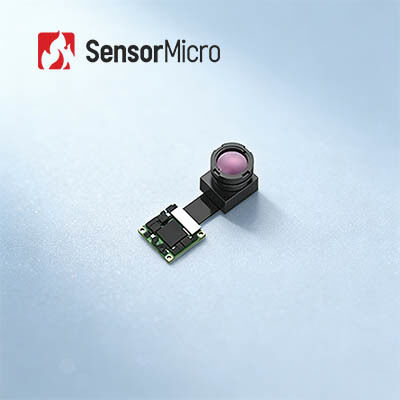
The Mini212G2 uncooled infrared miniature module is built on SensorMicro's self-developed TIMO212 infrared module. The addition of an infrared ISP processing board enables direct output of temperature matrices and thermal images, significantly reducing the development workload for customers. It integrates a 256×192/12μm wafer-level package (WLP) uncooled VOx infrared detector, high-performance signal processing circuit, and advanced image processing algorithm.
SensorMicro specializes in the design, manufacture, sales, and marketing of thermal imaging detectors and infrared modules. We provide customers with a variety of infrared thermal imaging solutions that shorten secondary development time and greatly reduce overall costs.
Main Features
Miniature Module with Direct Thermal Imaging Output
- Equipped with a self-developed 256×192/12μm infrared detector, offering significant cost advantages.
- Ultra-compact structural design: only 17×17mm (PCBA) in size, weighing as low as 4g — ideal for space-constrained applications.
- Integrated ISP processing board and next-generation image algorithms deliver clear thermal images directly, ensuring strong versatility.
Precise Detection, Flexible Configuration
- High-precision temperature measurement with accuracy up to ±2℃; supports spot, area, and full-frame measurement.
- Multiple field-of-view lens options available to meet various observation requirements.
Rich Interfaces for Easy Integration
- Offers USB2.0, MIPI, DVP, BT.656, LVDS, and other digital video output interfaces.
- Fully compatible with industry-standard interfaces.
Product Specifications
| Model | Mini212G2 |
|---|---|
| Resolution | 256×192 |
| Pixel Size | 12μm |
| Spectral Response | 8~14μm |
| NETD | ≤50mK |
| Output Data | 14bit Raw |
| Frame Rate | Thermography: 25Hz, Imaging: 50Hz |
| Focus Mode | Focus Free |
| Lens (HFOV/FL) | 17.5°/10mm | 25°/7mm | 56°/3.2mm | 90°/2.1mm |
| Weight (g) | 7.1 | 6.4 | 4 | 6.8 |
| PCBA Size (mm) | 17×17 |
| Digital Video Interface | USB2.0 / MIPI / DVP / BT.656 / LVDS |
| Analog Video Interface | CVBS (PAL/NTSC) |
| Operating Voltage | 3.3V±0.1V |
| Typical Power Consumption | 330mW |
| Temperature Measurement Range | -20℃~+550℃ (-20℃~+150℃ | +100℃~550℃) |
| Temperature Measurement Accuracy | Greater of ±2℃ / ±2% |
| Operating Temperature | -40℃~+70℃ |
| Humidity | 5%~85% |
| Storage Temperature | -45℃~+85℃ |
| Certification | RoHS 2.0 / REACH |
Industrial Applications
The Mini212G2 thermal imaging module is applied in the fields of AIoT, Machine Vision, Industrial Vision, Security Monitoring, Night Observation, and more.
Diverse Product Portfolio
A wide range of product formats including infrared detectors, camera cores, and modules to meet various integration requirements.
Rich Product Variety
Multiple array resolutions, pixel sizes, wavebands, and lens option combinations provide greater flexibility for diverse applications.
Outstanding Performance
Clear imaging, compact size, low power consumption, high sensitivity, and strong reliability — designed to perform under a wide range of environmental challenges.
Easy Integration
Multiple interface options make integration straightforward and enable rapid development across multiple application fields.
Frequently Asked Questions
1. What are the advantages of cooled thermal modules?
Cooled thermal modules offer several advantages, including:
- Higher Sensitivity: Cooled modules can detect smaller temperature differences, providing better image quality.
- Longer Range: They can capture thermal information over greater distances.
- Higher Resolution: Cooled modules typically offer higher pixel counts, resulting in sharper and more detailed images.
- Reduced Noise: The cooling process substantially decreases sensor noise, resulting in clearer images.
- Suitable for Advanced Analysis: Cooled modules are often used for scientific research, remote sensing, and specialized applications that require precise temperature measurements and analytics.
2. What are the advantages of uncooled thermal modules?
Uncooled thermal modules have their own set of advantages, including:
- Lower Cost: Uncooled modules are generally more affordable than their cooled counterparts.
- Compact Size: They are smaller and lighter, making them easier to integrate into various systems.
- No Maintenance: Uncooled modules do not require cryogenic cooling systems, simplifying maintenance requirements.
- Instant Startup: They can be quickly turned on and produce thermal images without the need for cooling.
- Energy Efficiency: Uncooled modules consume less power compared to cooled modules.
3. What are the typical applications of cooled and uncooled thermal modules?
Cooled and uncooled thermal modules find applications in various fields, including:
- Cooled Thermal Modules: Long-range surveillance, scientific research, high-resolution imaging, etc.
- Uncooled Thermal Modules: Personal night vision devices, handheld thermal cameras, automotive safety, building inspections, firefighting, and consumer electronics.
It is important to note that the specific application and its requirements often dictate the choice between cooled and uncooled thermal modules.
4. Are infrared thermometers accurate for measuring body temperature?
Infrared thermometers (also known as non-contact thermometers) can provide a quick estimation of body temperature. However, their accuracy can be influenced by various factors, such as the distance from the target, external temperature conditions, and the device's calibration. For medical purposes, it is recommended to use clinical-grade thermometers for precise measurements.
Recommended Products
