


All Products
-
Thermal Camera Core
-
Thermal Security Camera
-
Plug-in Thermal Camera
-
Cooled Infrared Detectors
-
Cooled Camera Modules
-
Optical Gas Imaging
-
Radiometric Thermal Module
-
High Resolution Thermal Camera Module
-
Thermal Camera For Fever Detection
-
Vehicle Mounted Thermal Camera
-
Integrated Dewar Cooler Assembly
-
Uncooled Infrared Detectors
Contact Person :
Wendy Wang
Phone Number :
+86 27 50185150
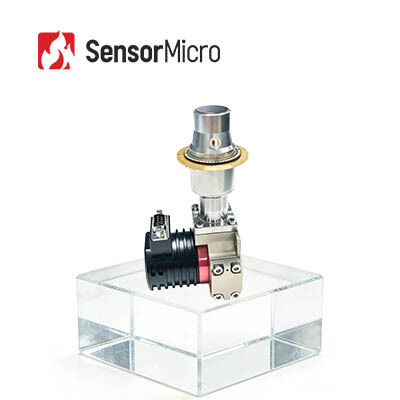
LWIR Cooled Optical Gas Imaging Camera with 320x256 Resolution and 20mK NETD for SF6/NH3 Gas Leak Detection

| Place of Origin | Wuhan, Hubei Province, China |
|---|---|
| Brand Name | SensorMicro |
| Certification | RoHS; Reach |
| Model Number | LFD330C2 |
| Minimum Order Quantity | 1 Piece |
| Price | Negotiable |
| Payment Terms | L/C,T/T |
Product Details
| Weight (g) | ≤600g | NETD | 20mK (F1.5) |
|---|---|---|---|
| Spectral Range | 10.3±0.1μm~10.9±0.1μm | Detector Resolution | 320x256 |
| Pixel Size | 30μm | Function | Gas Leak Detection |
| Highlight | 320x256 Gas Imaging Camera,MWIR Cooled Gas Imaging Camera,VOCs Visualizing Cooled Infrared Detector |
||
Product Description
LWIR Cooled Optical Gas Imaging Camera 320x256 for Visualizing SF6/NH3 Gas
Sulfur hexafluoride (SF₆) is commonly used in high-voltage power equipment and has a strong greenhouse effect. Ammonia, as a widely used refrigerant in industrial refrigeration systems, is highly toxic and volatile.
The LFD330C2 infrared detector for gas leak detection is developed based on Type II superlattice (T2SL) technology, delivering exceptional performance in sensitivity, stability, and integration flexibility. This makes it an ideal solution for detecting gases such as sulfur hexafluoride (SF₆), ammonia, and ethylene.
The LFD330C2 cooled LWIR infrared detector, with its high sensitivity, strong anti-interference ability and high spectral selectivity, has become an important technical means for SF₆/NH₃ gas leakage detection. It plays an irreplaceable role in ensuring industrial safety, protecting the environment and promoting the sustainable development of the industry in power, chemical, agricultural and cold chain fields.
Main Features
- Advanced Technology: Developed using T2SL technology with high quantum efficiency
- Easy Integration: Supports various interfaces and RAW/YUV image output
- High Sensitivity: Superior detection capabilities for precise gas visualization
Product Specifications
| Detector model | LFD330C2 |
|---|---|
| Resolution | 320*256 |
| Pixel size | 30μm |
| Spectral response | 10.3±0.1μm~10.9±0.1μm |
| Typical NETD | 20mK (F1.5) |
| Cooling time (23℃) | ≤7min@24V |
| Power consumption (23℃) | ≤25W@24V (Peak) ≤10W@24V (Stable) |
| Size (mm) | 142*58.5*71 |
| Weight (g) | ≤600g |
| Working temperature | -45℃~+71℃ |
| Storage temperature | -55℃~+71℃ |
| MTTF | ≥10000h |
Industrial Applications
The LFD330C2 cooled infrared detector is used for SF6/NH3 gas leakage detection and supports detection of 26 types of gases:
- Sulfur hexafluoride
- Anhydrous ammonia
- Cyanoacrylate ethyl ester
- Chlorine dioxide
- Acetic acid
- Freon-12
- Ethylene
- Methyl ethyl ketone
- Acetyl chloride
- Allyl bromide
- Allyl chloride
- Allyl fluoride
- Bromomethane
- Freon-11
- Furan
- Hydrazine
- Methylsilane
- Methylvinyl ketone
- Acrolein
- Propene
- Tetrahydrofuran
- Trichloroethylene
- Uranyl fluoride
- Vinyl chloride
- Vinyl cyanide
Core Technology
Strong R&D Capabilities
SensorMicro is one of China's earliest companies researching antimonide-based Type-II superlattice (T2SL) cooled infrared detectors. We pioneered the mass production and engineering application of such detectors domestically, with proven capabilities in R&D and manufacturing of high-end advanced devices, including MWIR, LWIR, large-format arrays, and high-operating-temperature (HOT) detectors.
Leading Technological Achievements
SensorMicro leads the development trend of SWaP³ technology in the industry, and is far ahead of similar products in the fields of large-format array, small pixel, high-temperature operation, miniaturization, high performance, and low power consumption.
Complete Supply Chain
From cutting-edge chip design and precise cooler manufacturing to high vacuum packaging processes, we have achieved stable supply chain, reliable quality, and significant cost advantages with integrated technology.
Frequently Asked Questions
What are the advantages of uncooled infrared detectors?
Uncooled infrared focal plane detectors do not require cooling devices and can work at room temperature. They offer advantages including fast startup, low power consumption, small size, light weight, long lifespan, and low cost.
What are the key considerations for an infrared detector/thermal module for your application?
• The detector resolution
• The pixel size
• The NETD
• The image quality
• The lens options
• The power consumption
• The size and weight
• The mechanical & electrical interface
• The budget
• The pixel size
• The NETD
• The image quality
• The lens options
• The power consumption
• The size and weight
• The mechanical & electrical interface
• The budget
Recommended Products
