


All Products
-
Thermal Camera Core
-
Thermal Security Camera
-
Plug-in Thermal Camera
-
Cooled Infrared Detectors
-
Cooled Camera Modules
-
Optical Gas Imaging
-
Radiometric Thermal Module
-
High Resolution Thermal Camera Module
-
Thermal Camera For Fever Detection
-
Vehicle Mounted Thermal Camera
-
Integrated Dewar Cooler Assembly
-
Uncooled Infrared Detectors
Contact Person :
Wendy Wang
Phone Number :
+86 27 50185150
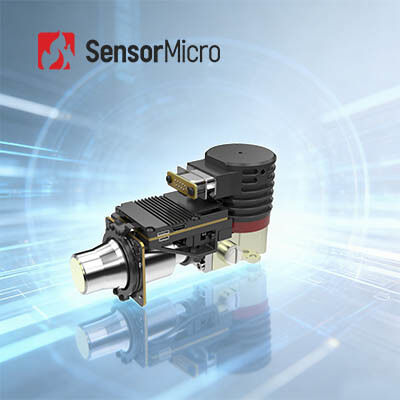
320x256 Resolution 30μm Pixel Size MWIR Cooled Optical Gas Imaging Thermal Module for Gas Leak Detection

| Place of Origin | Wuhan, Hubei Province, China |
|---|---|
| Brand Name | SensorMicro |
| Certification | RoHS; Reach |
| Model Number | LFM330Z7 |
| Minimum Order Quantity | 1 Piece |
| Price | Negotiable |
| Payment Terms | L/C,T/T |
Product Details
| Size (mm) | 142×58.5×80 | Spectral Range | 4.5±0.1μm~4.7±0.1μm |
|---|---|---|---|
| Function | Gas Leak Detection | NETD | 10mK (F1.5) |
| Detector Resolution | 320x256 | Pixel Size | 30μm |
| Highlight | ITR Integration Mode MWIR Module,Gas Leaks Visualizing MWIR Module,Cooled MWIR Imaging Module |
||
Product Description
320x256 30μm MWIR Cooled Optical Gas Imaging Thermal Module for Visualizing Gas Leaks
Product Overview
Cooled MWIR infrared cameras have become an indispensable tool for carbon monoxide gas leak detection, addressing the limitations of traditional detection methods with their non-contact measurement, real-time visualization, high sensitivity, and wide environmental adaptability. From industrial facilities to residential spaces, these cameras play a crucial role in safeguarding human life and property safety.
The LFM330Z7 thermal camera module provides a revolutionary solution for CO leak detection, leveraging high sensitivity, non-contact measurement capability, and real-time visualization advantages. It quickly scans wide areas, accurately locates leak sources from a distance, and provides clear imaging to help inspection personnel efficiently identify hidden dangers and ensure operational safety.
Main Features
- High sensitivity & reliability
- High effective pixel rate
- Minor leaks are clearly visible
- Support gas enhanced HSM algorithm (for module)
- Easy integration with various interfaces and RAW/YUV image output
Technical Specifications
| Module model | LFM330Z7 |
|---|---|
| Resolution | 320*256 |
| Pixel size | 30μm |
| Spectral response | 4.5±0.1μm~4.7±0.1μm |
| Typical NETD | 10mK (F1.5) |
| Frame rate | 30Hz/60Hz |
| Digital video | Standard: DVP/LVDS/USB2.0 Optional: Cameralink/USB3.0/GigE/SDI/MIPI/Single-mode fiber/Multi-mode fiber |
| Communication | Standard: USB2.0/LV-TTL Optional: RS422/CAN/USB3.0/GigE |
| Cooling time (23 ℃) | ≤8min@12V |
| Stable power consumption (23 ℃) | ≤10W |
| Size (mm) | 142*58.5*80 |
| Weight (g) | ≤680g |
| Working temperature | -40℃~+71℃ |
| Focal length | 23mm/55mm |
Industrial Applications
- Petrochemical industry: CO leaks during hydrocarbon combustion, catalytic reforming, and gas storage processes
- Metallurgical industry: CO detection during steelmaking and non-ferrous metal smelting processes
- Residential and commercial buildings: CO leaks from gas water heaters, furnaces, and boilers
- Scientific research and environmental monitoring: Studying CO emission mechanisms and tracking atmospheric CO distribution
Standardized Service
- Complete Documentation: Product manuals, setup guides, and selection references
- Development & Testing Assistance: Sample Integrated Testing, performance evaluation, and parameter verification
- Advanced Developer Toolkit: SDKs, APIs, algorithms, and debugging tools for deep integration
- Remote Technical Support: 24/7 support with quick response and timely resolution for critical issues
- Warranty: Original parts and strict process adherence to restore optimal performance
Frequently Asked Questions
What are the Key Advantages Over Traditional Detection Methods?
Cooled MWIR infrared cameras offer several irreplaceable advantages compared to traditional CO detection technologies, making them ideal for complex and high-risk environments.
Firstly, they enable non-contact and long-range detection. Cooled MWIR cameras can detect CO leaks from a safe distance, with detection ranges varying from tens to hundreds of meters depending on the lens configuration.
Secondly, they provide real-time visualization and wide-area coverage. Unlike point sensors that only monitor a single location, cooled MWIR cameras can scan large areas in real time, capturing the entire diffusion process of CO gas plumes.
Thirdly, they exhibit high sensitivity and anti-interference capability. The low NETD of cooled MWIR detectors enables the detection of trace CO concentrations, which is crucial for early leak warning.
Recommended Products
