


All Products
-
Thermal Camera Core
-
Thermal Security Camera
-
Plug-in Thermal Camera
-
Cooled Infrared Detectors
-
Cooled Camera Modules
-
Optical Gas Imaging
-
Radiometric Thermal Module
-
High Resolution Thermal Camera Module
-
Thermal Camera For Fever Detection
-
Vehicle Mounted Thermal Camera
-
Integrated Dewar Cooler Assembly
-
Uncooled Infrared Detectors
Contact Person :
Wendy Wang
Phone Number :
+86 27 50185150
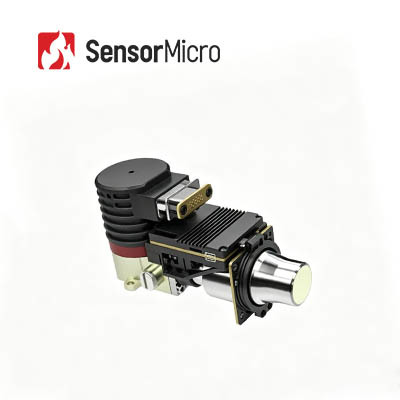
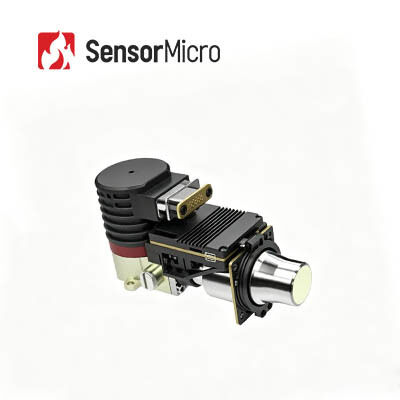
320x256 Resolution 30μm Pixel Pitch Cooled IR Camera Module with 20mK NETD for Optical Gas Imaging
| Place of Origin | Wuhan, Hubei Province, China |
|---|---|
| Brand Name | SensorMicro |
| Certification | ISO9001:2015; RoHS; Reach |
| Model Number | LFM330C2 |
| Minimum Order Quantity | 1 Piece |
| Price | Negotiable |
| Payment Terms | T/T |
Product Details
| Style | Cooled Infrared Module | Resolution | 320x256 / 30μm |
|---|---|---|---|
| Typical NETD | 20mK (F1.5) | Spectral Range | 10.3±0.1μm~10.9±0.1μm |
| Size | 142×58.5×80mm | Weight | ≤680g |
| Highlight | 320x256 Cooled Ir Camera Module,Cooled Ir Camera Module Lightweight |
||
Product Description
320x256/30μm Cooled IR Camera Module for Optical Gas Imaging
Product Overview
320x256/30 μm Cooled Infrared Camera Module with 25mm Lens
Sulfur hexafluoride (SF₆) is commonly used in high-voltage power equipment and has a strong greenhouse effect. Ammonia, as a widely used refrigerant in industrial refrigeration systems, is highly toxic and volatile.
The LFM330C2 thermal module is developed based on type II superlattice (T2SL) technology, which performs exceptionally well in sensitivity, stability, and integration flexibility. It is an ideal choice for detecting gases such as sulfur hexafluoride (SF₆), ammonia, and ethylene.
LFM330C2 is a cooled infrared thermal imaging module specially designed for gas leakage detection. It integrates a 320x256/30µm MCT cooled MWIR infrared detector and utilizes spectral wavelength filtering technology to visualize invisible gases that cannot be seen by the naked eye. Camera manufacturers can design their own gas leak detection cameras based on this module easily and efficiently.
Main Features
- Resolution: 320x256
- Pixel Pitch: 30µm
- NETD 20mK (F1.5), High Sensitivity
- Spectral Response: 10.3±0.1μm~10.9±0.1μm
- Wavelength Customizable Based on Different Requirements
- Integrate with DVP/CameraLink Interface Easily
Product Specifications
| Module model | LFM330C2 |
|---|---|
| Resolution | 320×256 |
| Pixel size | 30μm |
| Spectral response | 10.3±0.1μm~10.9±0.1μm |
| Typical NETD | 20mK (F1.5) |
| Frame rate | 60Hz |
| Digital video | Standard: DVP/LVDS/USB2.0 Optional: Cameralink/USB3.0/GigE/SDI/MIPI/Single-mode fiber/Multi-mode fiber |
| Communication | Standard: USB2.0/LV-TTL Optional: RS422/CAN/USB3.0/GigE |
| Cooling time (23 ℃) | ≤8min@24V |
| Stable power consumption (23 ℃) | ≤13W |
| Size (mm) | 142×58.5×80 |
| Weight (g) | ≤680 |
| Working temperature | -40℃~+71℃ |
| Focal length | 25mm |
Industrial Applications
The LFM330C2 thermal module supports detection of 26 types of gases:
- Sulfur hexafluoride
- Anhydrous ammonia
- Cyanoacrylate ethyl ester
- Chlorine dioxide
- Acetic acid
- Freon-12
- Ethylene
- Methyl ethyl ketone
- Acetyl chloride
- Allyl bromide
- Allyl chloride
- Allyl fluoride
- Bromomethane
- Freon-11
- Furan
- Hydrazine
- Methylsilane
- Methylvinyl ketone
- Acrolein
- Propene
- Tetrahydrofuran
- Trichloroethylene
- Uranyl fluoride
- Vinyl chloride
- Vinyl cyanide
Our Product Line
- High sensitivity and excellent performance
- World-leading technology in infrared industry
- Various infrared detectors available - both uncooled and cooled IR detectors in different formats and pixel sizes
- Volume production to ensure fast delivery - three production lines with annual production capability up to millions of detectors
Frequently Asked Questions
What is the difference between uncooled and cooled IR detectors?
There are currently two types of infrared thermal imaging sensors on the market: cooled and uncooled.
Uncooled IR detectors operate at ambient temperature. They are based on semiconductor industry technology and can typically be fabricated in large volumes with small size and low cost. Uncooled IR detectors are widely used in portable, handheld, and mobile devices.
Cooled IR detectors are packaged in a unit that maintains them at extremely low temperatures, supported by a cryo cooler. They are larger, more expensive, and less reliable than uncooled sensors, primarily due to the complex cooling systems they require. However, cooled systems offer incredible sensitivity and typically work with long focal length optics to achieve long-range mission capabilities.
Recommended Products
